
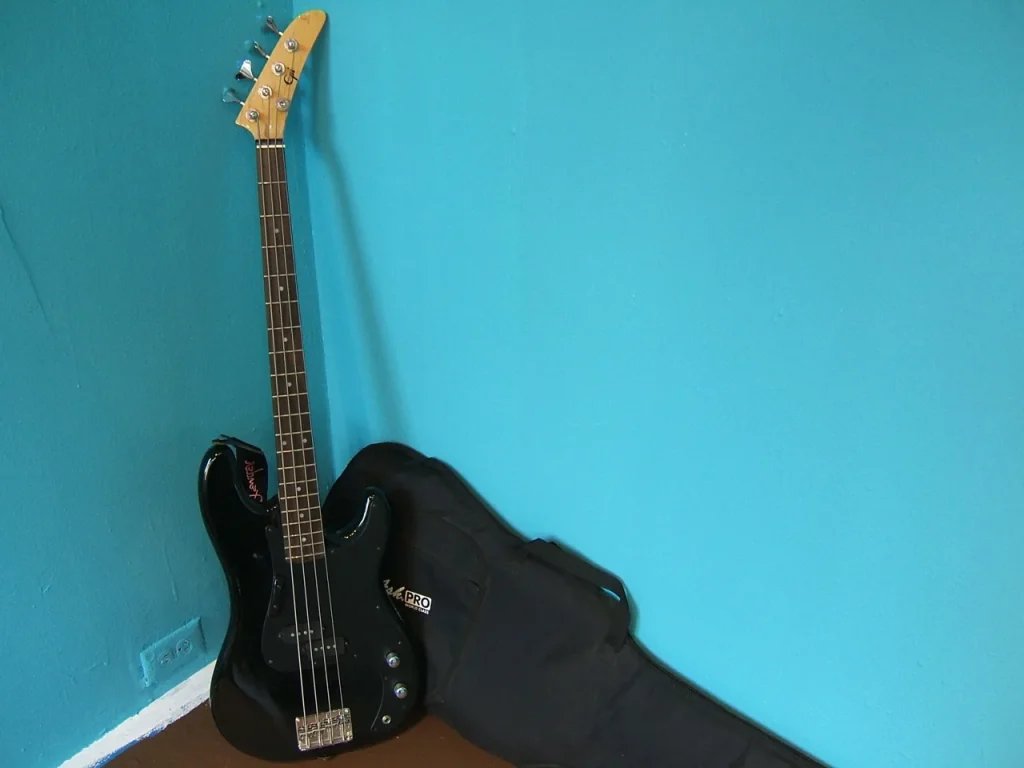
In this article, we will explore the differences between guitar and bass guitar. This will help beginner musicians choose the instrument that suits them best. Whether you are an experienced musician or a beginner, this comparison of guitar and bass will give you the key information.
We will cover the musical, technical and historical aspects of the classical guitar. It appeared in Europe in the 18th century. The bass guitar, meanwhile, was marketed by Leo Fender in the 1950s. This detailed analysis will help you understand each instrument better.
History and origins of the instruments
The history of the guitar goes back several centuries. It developed from the lute, an instrument popular in Europe. The classical guitar appeared in the 19th century. Its hollow body gives it a full acoustic sound.
The 1930s changed everything with solid-body guitars. They became popular across many genres. To learn more, read the article about the guitar.
Evolution of the guitar
Guitar making has changed considerably. There are classical models and electric guitars. Each type has its place in the history of the guitar.
These instruments suit different styles and also use modern technology. In this way, they meet the demands of live performance.
The birth of the bass guitar
The origins of the bass guitar lie in the need for a powerful instrument. Leo Fender created the first electric bass in 1951. The Precision Bass was followed by the Jazz Bass in 1960.
The Jazz Bass quickly became popular because of its distinctive sound and ergonomic design. The bass became essential to many musical styles.
The bass has continued to evolve. Multistring and extended-range models are now available. This evolution has enriched the history of the guitar and highlighted the role of the bass guitar.
Differences between guitar and bass guitar
To understand the difference between guitar and bass, we need to examine several aspects. The size and structure of the guitar differ markedly from those of the bass. The number of strings and tuning also have distinct technical characteristics.
Size and structure of the instruments
The guitar is smaller than the bass. Its length ranges from 24 to 25.5 inches. The guitar’s scale length ranges from 24 to 30 inches.
A standard bass has a length of 34 inches. This produces a deeper sound. Short-scale basses, at 30 inches, have a rich sound thanks to their thicker strings.
Bass strings are thicker and require longer necks. This makes the instrument more difficult to handle.
Number of strings and tuning
A guitar has six strings, while a bass has four. The latter’s strings are tuned to E, A, D and G. Basses can also have five or six strings, offering more musical possibilities.
A bass has a heavier string gauge. This gives it a more powerful sound. Guitar and bass tuning is similar, but the bass sounds an octave lower. This gives it a distinctive sound.

Sound differences between guitar and bass
The sound differences between guitar and bass play an essential role in music. Each instrument makes its own contribution. The depth of the bass and the clarity of the guitar create a rich range of sounds.
Sound character
The guitar is known for its higher tones and engaging melodies. The bass guitar produces deep, powerful notes. These differences show how both instruments contribute to the harmony.
Bass lines give songs depth. Guitar riffs bring energy.
The role of each instrument in a band
The guitar and bass have distinct but complementary roles. The guitar often draws attention with its riffs and melodies. The bass supports the rhythm and holds the harmony together.
Bassists are often unsung heroes. Their contribution shapes the sound of a song. They guide the band without drawing attention to themselves.
Comparison of playing techniques
Guitar and bass each have their own playing style. These differences let musicians play in various ways, from powerful riffs to bass lines that follow the beat.
Different playing styles
The guitar is known for solos and memorable riffs. The bass focuses on rhythm and sometimes on accompanying melodies. Its four strings lend themselves to techniques such as slap and tapping.
Ease of learning
Learning bass may seem simpler because it has fewer strings. However, the difficulty depends on the style of music. Bassists play a key role in rhythm and harmony.
When starting out, it helps to find suitable resources. Professional lessons can help you progress faster. They also help you understand each playing style better.
| Characteristic | Guitar | Bass |
|---|---|---|
| Number of strings | 6 strings | 4 strings, though 5 or 6 are possible |
| Sound | Higher pitched | Lower pitched |
| Main function | Solos and riffs | Rhythmic lines |
| Ease of learning | Varies by style | Varies by style |

Advantages and disadvantages of guitar and bass
Guitar and bass have their own roles in music. Each instrument has advantages and disadvantages. These differences affect which one musicians choose for their needs.
Advantages of the guitar
The guitar draws attention on stage. A guitarist can captivate an audience with impressive solos. This gives room for individual creativity.
The guitar offers great freedom of expression. You can play rich chords and complex melodies. The advantages of guitar and bass include the range of styles they can play, from rock to folk music.
Advantages of the bass
The bass plays a crucial role in many musical genres. It provides a solid rhythmic foundation. Active and passive basses offer rich, reliable sounds.
The disadvantages of guitar and bass include the complexity of the controls on some basses. However, these challenges are offset by the richness of sound they provide. Their fundamental role shapes the groove and harmony of a musical group.
| Aspect | Guitar | Bass |
|---|---|---|
| Creativity | Varied solos and melodies | Solid rhythm |
| Visibility on stage | High | Lower |
| Sound range | Varies by style | Deep and sustained |
| Playing techniques | Varied and complex | Essential to harmony |
It is essential for musicians to understand the advantages of guitar and bass. This helps them choose the instrument that suits their musical style and performances.
Conclusion
Comparing guitar and bass helps us understand their differences. The guitar is shorter and has a brighter sound. It suits many styles.
The bass is longer and has a rich sound. It adds depth that is essential to funk, jazz, rock and reggae.
Neither instrument is better. The choice depends on your tastes and goals. Explore both to find the one that suits you best.
Learning to play either instrument enriches your musical experience. Get started and discover the joys of guitar and bass.