

A manufacturer’s low profile in France does not tell the whole story about its instruments. In a review of the SI60MW, Washburn is described as relatively little known among the French public. In September 2007, one musician even said they had not seen any of its models in the shops of Pigalle.
Still, one useful point of reference deserves attention. According to a testimonial published on July 17, 2020, the Harvest D7S suits folk, pop and arpeggios. That account offers a concrete starting point for assessing comfort, sound projection and versatility.
A serious assessment must look beyond reputation. You need to examine the construction, neck, finish, tone, intended uses and budget. The aim is to distinguish the manufacturer’s general image from the qualities of each model.
We will therefore take a practical approach suited to musicians in France. Price, availability in shops and playing feel will help determine how suitable each model is, without relying solely on the name on the headstock.
Washburn acoustic guitars: is the brand any good?
A limited presence in shops is not enough to judge a manufacturer’s range. In France, the question deserves a more nuanced assessment. The available sources cover several models and reviews published over the years.
A brand that remains uncommon in French shops
Posts on a forum dedicated to Washburn, published on September 3 and 4, 2007, show that awareness of the brand varied. Some members already knew the name, while others were discovering it. Around the same time, one participant said they had found no Washburn models in the shops of Pigalle.
This difficulty trying the instruments may have led French musicians to look online. Specialist articles offer an initial basis for comparing body shapes, features and comfort. An online opinion is useful, but it cannot replace trying a guitar yourself.
A reputation built on a varied range of instruments
Reviews published between 2008 and 2013 cover several families of instruments. The SI60MW review dates from December 2, 2008. The WD10 SCE Heritage was reviewed on October 1, 2013, while the HB36 Vintage review appeared on December 5, 2012.
The variety of guitars matters more than a signature name alone. The SI60MW is associated with Nuno Bettencourt of the band Extreme. That visibility attracts attention, but each model must then be assessed for its intended use, playing feel and sound.
Washburn’s history and position in the guitar market
Washburn’s history can be traced through very different models, from affordable series to instruments aimed at enthusiasts. Posts in the “Opinions on the Washburn brand” forum, published on September 3 and 4, 2007, provide an initial basis for understanding this position.
A range spanning entry-level and high-end instruments
One contributor links the N4 to Nuno Bettencourt’s sound. The review dated December 2, 2008, also confirms a connection with a signature model. An association with an artist raises a line’s profile, but does not guarantee the same quality across all its products.
“good, without being extraordinary”
That judgment about a bass is a reminder that context matters. An instrument may suit a beginner but feel limited to an experienced musician. Dimebag Darrell, linked to both Washburn and Dean in the forum, also illustrates the brand’s presence across several styles.
To understand the range, you therefore need to assess guitars by their construction, intended use and sound. An artist’s signature is a guide, not conclusive proof. For those interested in how guitars are made, this electric guitar building project offers another perspective on technical choices.
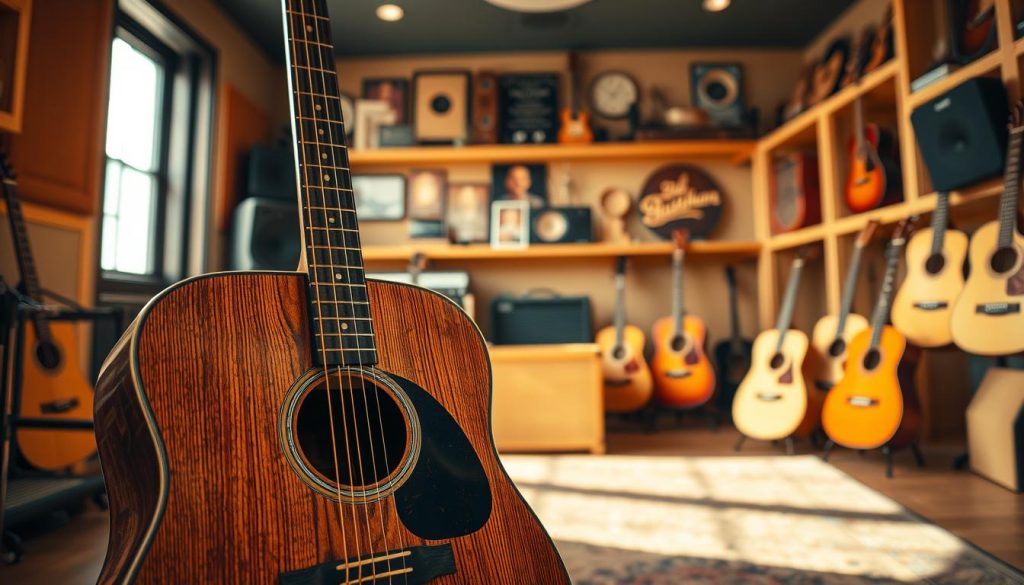
The build quality of Washburn acoustic guitars
Your first impression comes from how the guitar feels in your hands, well before the name on the headstock. The Harvest D7S offers a concrete basis for judging the care put into the instrument. Described on July 17, 2020, as a well-made guitar, it also has an understated appearance.
A slim neck that makes learning enjoyable
Its very slim neck makes open and barre chords easier. It also suits arpeggios without putting excessive strain on the fretting hand. For a beginner, that comfort can encourage steady progress. A positive assessment must nevertheless take the player’s hand shape and size into account.
A decent finish, with balance still to check
The articles on the WD10 SCE and HB36 Vintage invite comparisons between different expectations. An acoustic guitar emphasizes the body’s natural response. An electro-acoustic model adds the performance of its preamp and pickup. The HB36 Vintage review, published on December 5, 2012, is therefore a historical reference, not a current verdict.
Finish alone is not enough. Listen to the volume, check the balance between bass and treble, then test the intonation along the neck. Trying the guitar yourself in a shop remains important, especially when the available reviews date from 2012 to 2020.
Washburn acoustic models worth considering
The choice becomes clearer when you start with a specific use. The Harvest D7S provides a good foundation for folk, pop and arpeggios. The WD10 SCE Heritage is aimed more at stage playing, with a connection to an amplification system.
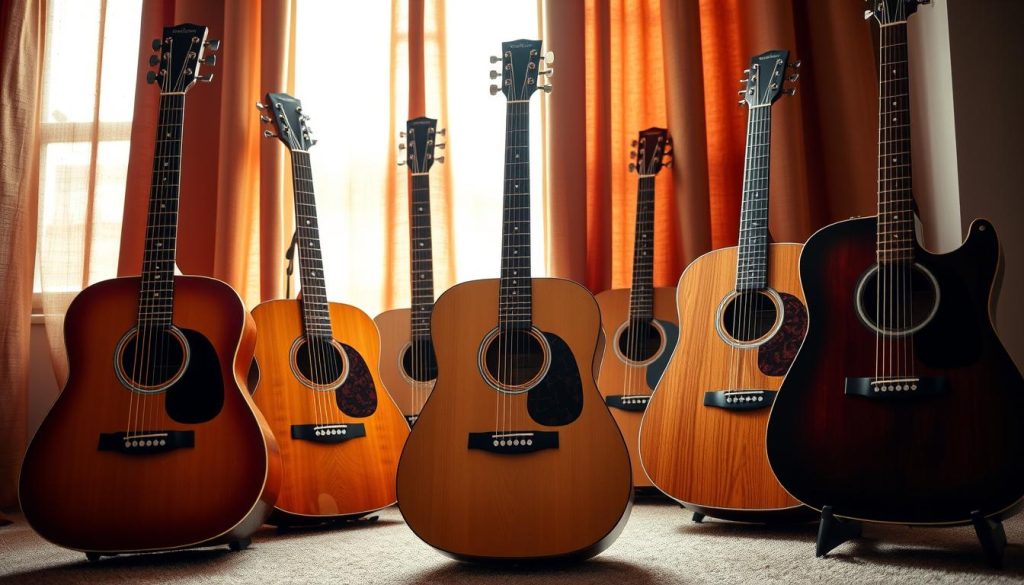
The Harvest series for folk and pop
The Harvest D7S stands out for its understated appearance and good construction. Its slim neck can make open chords, barre chords and arpeggio patterns easier. It favors versatility over a striking visual style.
- Folk and pop accompaniment
- Clear arpeggios for a measured playing style
- A format suited to rehearsals and playing at home
Electro-acoustic models for amplified playing
The WD10 SCE belongs to the Heritage series. Its review, dated October 1, 2013, helps establish its intended use. An equipped guitar makes the move to amplification easier, while the Harvest D7S is designed for a direct acoustic sound.
To choose between these guitars, consider their sound, whether they have a preamp and how comfortable they are on stage. The differences between models then become clearer: a favorable opinion for playing at home does not always predict the same result on stage.
Value for money among Washburn guitars
The WD10 SCE review, published on October 1, 2013, provides a concrete reference point. Its price was close to €300, an accessible amount for a first equipped instrument.
At that price, you need to check the neck, intonation and finish. A €5,000 model often offers greater consistency and fewer unpleasant surprises. Even so, a high price does not guarantee the same enjoyment for every musician.
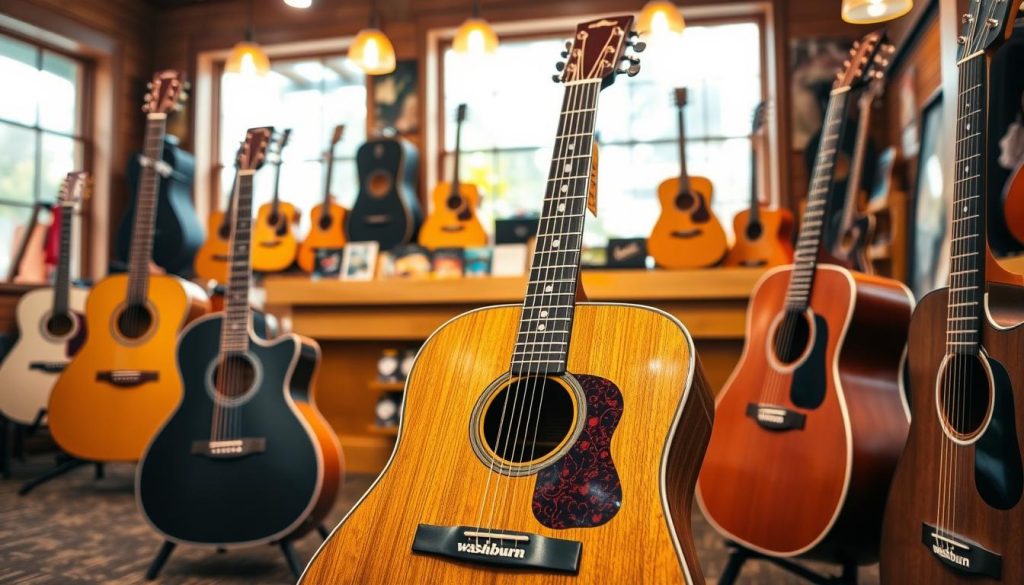
The differences become audible on an acoustic instrument, and even more so on an electro-acoustic model. The pickup, preamp and tonal balance directly affect how it can be used. Quality should therefore be assessed in terms of comfort, finish and playing context.
- Price around €300: a manageable budget
- Higher price: often better setup and finish
- High price: most worthwhile for regular use
A useful assessment connects price to real needs: accompaniment, arpeggios or amplification. When comparing products, the right price is the one that provides reliable use without paying for unnecessary features.
Which Washburn instrument should you choose for your skill level and needs?
Playing ability and musical setting provide a sound basis for choosing an instrument. A beginner primarily wants a comfortable neck. An experienced musician pays more attention to projection, intonation and response under the fingers.
A guitar for starting out or improving
The Harvest D7S is a sensible option for getting started. In a testimonial published on July 17, 2020, its very slim neck is described as easy to play. That feature can help with first chords, barre chords and regular practice.
Its sound suits folk, pop and arpeggios. It therefore provides a good foundation for progress at home. A musician used to a wider neck should still check how it feels.
A model for the stage, accompaniment and arpeggios
For amplified playing, the WD10 SCE in the Heritage series deserves attention. Its review from October 1, 2013, presents it as a guitar designed to combine acoustic playing with amplified sound. The SI60MW, associated with Nuno Bettencourt of Extreme, aims for a more distinctive approach.
Trying one in a shop is preferable. In September 2007, a forum member had found no models in Pigalle. You can also read the advice on choosing a bass guitar to broaden your thinking about a first purchase. Comfort should remain a priority, even with a large budget.
Conclusion
After comparing the models, Washburn deserves attention for specific instruments, beyond its still limited recognition in France. The Harvest D7S provides a versatile foundation for folk, pop and arpeggios. Its slim neck makes it easy to get comfortable with.
The WD10 SCE Heritage better meets the needs of a musician playing on stage. For a more distinctive approach, the SI60MW review highlights a remarkable finish and a powerful sound.
Prices ranging from €300 to €5,000 show how budget shapes expectations. The best choice depends on comfort, tone, skill level and trying the guitar in person. In a shop, a few minutes can sometimes be enough to confirm a purchase. Enjoyment while playing remains the most reliable guide.