
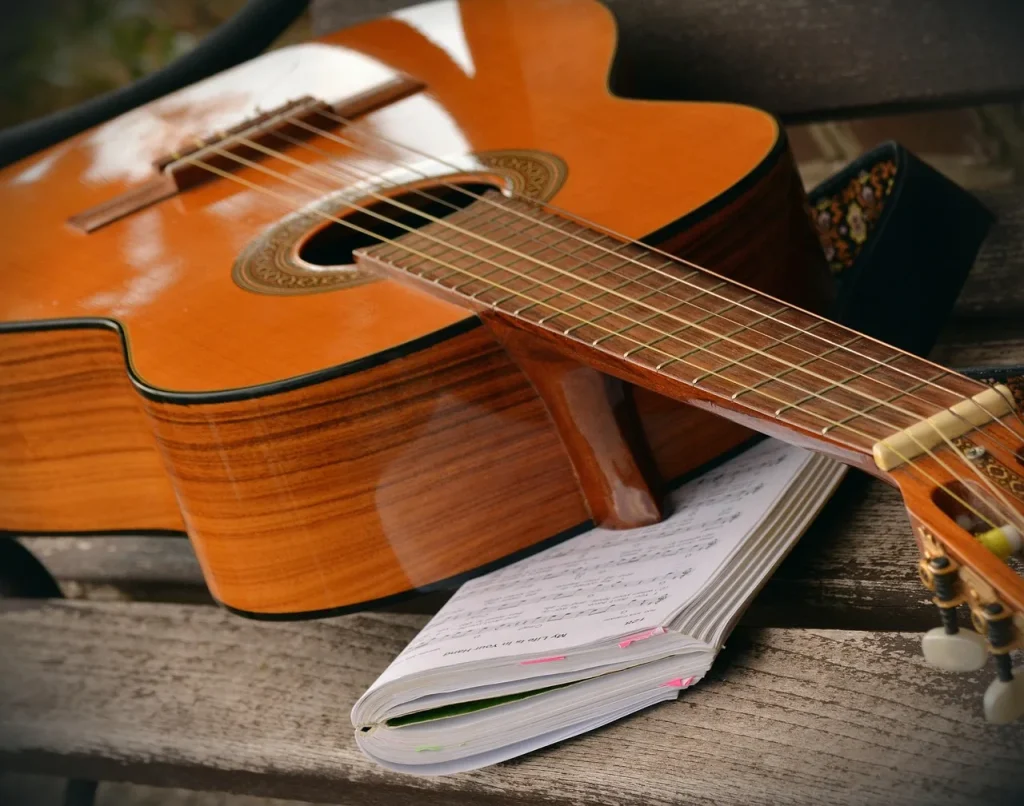
The guitar appeals to more than half of French people considering music lessons. It offers a direct way into rhythm, chords and the pleasure of playing. It suits beginners and experienced musicians alike, at home or on stage.
To choose a guitar, start by listening to what you want to play. Jimi Hendrix summed up the idea this way: “All I’m playing is the truth of the emotion.” A classical guitar suits a gentler repertoire, while a steel-string acoustic offers a warm, projecting sound. Electric guitars tend to attract rock fans.
This guide also compares acoustic-electric guitars, which are useful when you need amplification, along with several body sizes. Yamaha, a Japanese brand known worldwide, appears alongside Lâg, Fender, Cort, Gretsch, Takamine, Seagull, Martin, Taylor, Gibson and Godin. Each range has its own character, feel and price.
This ranking helps beginners and experienced players find an instrument that suits their style, budget and expectations. For more help, read our guitar guide.
What are the best acoustic guitar brands?
Before buying, consider the style you want to play and your level of experience. To choose a guitar, look at its body, scale length, neck width and string action. A guitar that is easy to handle makes lessons more productive and every practice session more enjoyable.
Compare quality, sound and comfort
Body shape affects volume and response. A Jumbo delivers strong projection. A Dreadnought suits powerful rhythm playing. An Auditorium balances bass and treble. A Concert is compact, gentle sounding and practical for smaller players.
Woods and musical response
Spruce adds clarity and attack. Sitka spruce suits energetic playing. Mahogany strengthens the midrange, while nato produces a balanced response. Rosewood adds depth and richness. A solid top changes with age; laminate construction is more stable and affordable.
How much should you spend at each level?
At €150 to €400, a guitar is often suitable for learning. Midrange models offer better finishes, intonation and comfort. Above €1,500, guitars tend to suit musicians who perform on stage or need an instrument for demanding playing. Let your needs guide your choice instead of relying solely on a brand logo.
The best acoustic guitar brands for beginners
Your first instrument should make you want to play every day. To choose a guitar, look for a comfortable neck, easy-playing strings and a body that is easy to hold. This will help you get through lessons without fatigue.
Cort and Yamaha: affordable, versatile instruments
Cort offers a reliable range that fits a beginner’s budget. Yamaha has guitars for both first steps and later progress. Their instruments offer good quality, stable setup and balanced sound.
A steel-string acoustic suits rock, pop and blues. A classical guitar remains a good choice for a softer feel. An electric guitar may suit a specific musical project.
Fender, Gretsch and Lâg: comfortable guitars for learning
The Fender CD 60 S appeals with its “Easy to Play” neck, low action and premium solid spruce top. The Gretsch Jim Dandy G9500 has a vintage Parlor body, ideal for blues.
Founded in Toulouse, Lâg makes lightweight guitars for right-handed and left-handed players. Its range includes steel-string acoustics, classical and electric guitars, connected versions and mini instruments. See this specialist buying guide too.
| Brand | Main strength | Best suited to |
|---|---|---|
| Cort | Versatility and a low price | Curious beginners |
| Yamaha | Comfort as skills develop | Committed students |
| Fender | Low action | Rhythm players |
| Gretsch or Lâg | Distinctive, lightweight designs | Players with a personal style |
Yamaha: versatile guitars with excellent value
Since the 1960s, Yamaha has supported musicians with a reliable, affordable range. Known worldwide for its pianos, drums and motorcycles, the Japanese brand also offers an instrument for every stage of a player’s development.
The Yamaha FG800 and essential steel-string acoustics
The Yamaha FG800 remains a benchmark for value for money. Its solid spruce top gives it a clear response. Its nato back and sides add warmth and balance to its sound.
Its Dreadnought body delivers powerful projection. It suits songwriters who sing while they play. This steel-string acoustic serves beginners in lessons and experienced musicians in rehearsal alike.
- Solid top: precise attack and natural development of its sound.
- Dreadnought body: high volume and a strong bass response.
- Versatile use: at home, while travelling, on stage or in daily practice.
The FG800 is therefore a straightforward, sturdy and expressive acoustic guitar. For beginners or guitarists seeking a dependable model, it delivers consistent quality without a steep price.
Lâg: French craftsmanship focused on comfort
Founded in Toulouse, Lâg brings a French touch to contemporary music. Its affordable range is designed for learning, improving and playing without fatigue. Its approach appeals to beginners and curious musicians alike.
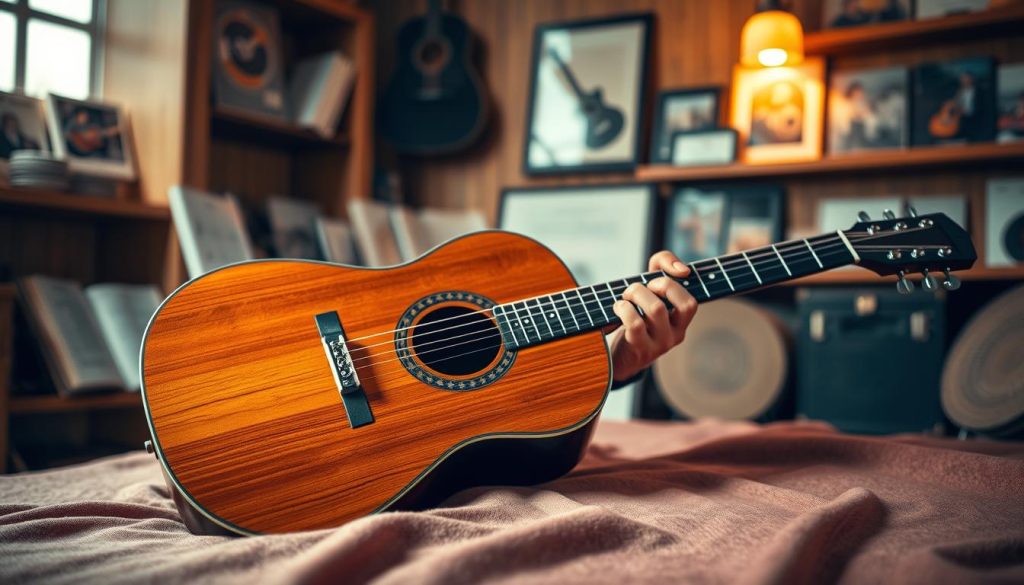
The Lâg T70A illustrates this craftsmanship. Its solid Engelmann spruce top produces a clear, lively sound. Its Auditorium body balances volume, comfort and precision. The neck is also easy to handle during lessons.
“Comfort turns every practice session into a desire to play.”
Basswood keeps the body light, while mahogany adds warmth and presence. Maple increases durability and gives a more defined response. These wood choices affect the weight, style and perceived quality over time.
- Right-handed and left-handed versions.
- Mini guitars suited to younger players.
- Classical and steel-string acoustics for varied repertoires.
Before buying, compare several guitars against your body size. This guitar guide can also help refine your choice.
Cort and Gretsch: affordable acoustic guitars with character
These two brands take different approaches: Cort focuses on versatility, while Gretsch cultivates vintage style. Their models suit beginners and enthusiasts who want to broaden their playing without exceeding a reasonable budget.
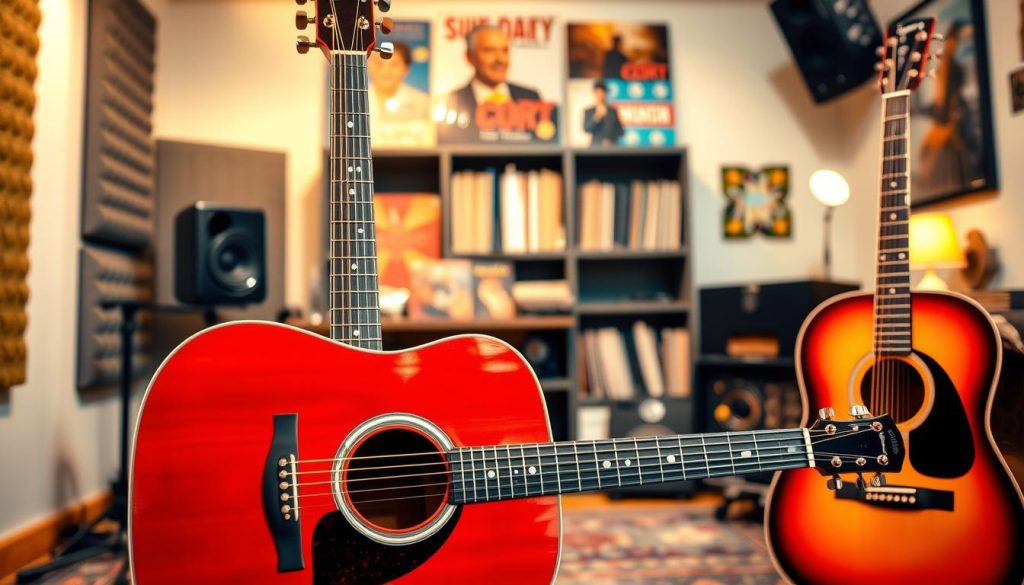
The Cort Earth 70 and its solid spruce top
The Cort Earth 70 OP pairs a solid spruce top with a mahogany back and sides. The result is a clear sound, ample volume and good value for money.
Light, easy to play and versatile, this steel-string acoustic is easy to handle during lessons. Its comfortable neck also supports regular playing, from strumming to arpeggios.
The Gretsch Jim Dandy for blues and Parlor guitar fans
The Gretsch Jim Dandy G9500 has a comfortable Parlor body. This steel-string acoustic stands out for its vintage style and a response suited to blues, acoustic pop and fingerpicking.
- Rounded bass and clear mids.
- A compact body that is easy to hold.
- A strong character for creative players.
To compare instruments, see this specialist buying guide.
| Model | Strength | Recommended style |
|---|---|---|
| Cort Earth 70 | Light weight and versatility | Rhythm, folk, learning |
| Gretsch Jim Dandy | Vintage Parlor body | Blues, pop, fingerpicking |
Fender: easy-playing, versatile acoustic guitars
Fender first established itself with the Stratocaster, Telecaster and Jazzmaster. Jimi Hendrix and Eric Clapton made history in rock with its instruments. Today, the brand also offers a range designed for learning and accompaniment.
The Fender CD 60 S is well suited to first chords. Its premium solid spruce top produces a clear tone. Its mahogany back adds warmth and balance. This steel-string acoustic works for pop, blues and some rock songs.
Its “Easy to Play” neck and low action make quick chord changes easier. Easy-playing strings add comfort during a lesson or a long session. Playing stays fluid, even for a beginner.
- An accessible instrument for improving without fatigue.
- Good sound quality for accompanying a singer.
- A versatile body for home, rehearsals or the stage.
Fender therefore meets the needs of musicians seeking a familiar style and straightforward handling. A version with electronics also makes plugging in easy when performing on stage becomes a goal.
Takamine and Seagull: dependable midrange choices
Between a first purchase and regular stage performance, these two brands offer a reassuring balance. Their ranges suit enthusiasts who want to improve with a reliable instrument without paying premium prices. Their build quality serves both lessons and rehearsals.
Takamine for precision and rhythm playing
The Takamine GD 20 NS has a Dreadnought body. It responds precisely to energetic chords and remains pleasant to play fingerstyle. Its projection supports a singer, while individual notes stay distinct in a room or on stage.
Seagull for rich midrange
Made and assembled by hand in Canada, the Seagull S6 Original emphasizes durable construction. Its Graph Tech Tusq nut and saddle support stable tuning and comfortable action. Its sound has rich mids and powerful projection.
Which model suits your style?
- Takamine GD 20 NS: rhythm, arpeggios and fingerpicking.
- Seagull S6 Original: accompaniment, stage use and expressive playing.
To refine your choice, see this value-for-money comparison.
| Model | Strength | Recommended use |
|---|---|---|
| Takamine GD 20 NS | Precision and projection | Rhythm, stage |
| Seagull S6 Original | Rich mids and comfort | Arpeggios, accompaniment |
Martin and Taylor: leading premium brands
When precision becomes a priority, Martin and Taylor hold an important place in the guitar world. Their ranges suit dedicated practice and performance alike. Prices often reflect the choice of woods, finish, electronics and time spent making each instrument.
Martin for historic tones and projection
The Martin D-28, introduced in 1931, remains a benchmark for its power. Its forward-shifted X-bracing enhances projection and gives it a full response. It suits strumming, singing and fingerpicking. For a more compact body, the Little Martin LX1 has a three-quarter-size body, a Sitka spruce top and a composite mahogany back. This small instrument retains good dynamics while travelling or performing. Read our Martin 000-28 review too.
Taylor for precision, electronics and modern comfort
Taylor emphasizes fluid playing, accurate intonation and practical electronics. The Custom 414ce, Builders Edition 816ce and 914ce V-Class illustrate its premium range. Models in the 800 and 900 series can cost more than €2,500 or even €4,000. Those prices reflect the craftsmanship, comfort and sound quality.
- Martin: powerful projection and tradition.
- Taylor: precision, direct amplification and innovation.
Gibson: a legendary brand for demanding guitarists
Gibson is one of the great American brands. Its history, premium finishes and wood selection attract demanding guitarists. The maker offers electric, steel-string acoustic and acoustic-electric guitars with a strong identity.
B.B. King, Mark Knopfler and Bob Marley have added to its reputation. Each connects Gibson with a different world: blues, rock or popular music. Its worldwide presence shows the brand’s lasting impact beyond its logo.
The Hummingbird Standard illustrates this premium range. At Thomann, it appears among instruments costing more than €3,000. Its spruce top and mahogany back and sides come with a carefully executed finish. Together, these features aim for quality, comfort and expressive playing. Such a purchase holds its value over time.
For learning or adding to a collection, Epiphone offers a more affordable option. The Les Paul Special Vintage costs less than €180. It suits lessons, enthusiasts and first attempts at rock. Its simple electronics make plugging in easy without a Gibson-sized budget.
A Gibson electric guitar offers refined feel and lasting durability. Epiphone focuses on progress and affordability, while Gibson retains its place in the premium market. These ranges therefore serve different goals.
Godin and specialist luthiers: choosing an instrument that lasts
A well-chosen instrument can accompany a musician for decades. Godin, a Quebec manufacturer, selects woods from the northern United States. The brand also pays particular attention to people and production practices.
Its models offer good comfort, pleasant necks and consistent quality. With proper care, a Godin guitar can remain reliable for a lifetime. A hard case, a room with a stable temperature and regular cleaning protect the instrument.
“A good instrument grows with the person who plays it.”
Specialist luthiers offer another approach. They adjust every detail, select particular woods and sometimes create one-of-a-kind instruments. This appeals to discerning players at any level, from lessons to the stage.
- Replace guitar strings every three to six months.
- Adjust that interval to how often you play and how much you perspire.
- Read this document on guitar-making woods.
For peace of mind when buying, Guitar Store offers a 30-day satisfaction-or-refund period and a three-year warranty.
Conclusion
Every musical goal calls for a considered choice. For beginners, the Yamaha FG800, Cort Earth 70, Lâg T70A and Gretsch Jim Dandy offer a solid starting point at prices that suit different budgets. These guitars work for rock, pop and first lessons.
For greater refinement, the Takamine GD 20 NS and Seagull S6 Original remain dependable choices. Martin, Taylor and Gibson focus more on the premium market, with strong projection, careful finishes and electronics useful on stage. These models meet the expectations of demanding players.
Before buying an acoustic guitar, try different body shapes and woods, as well as each instrument’s neck and overall comfort, in a store. Your style, needs and lesson schedule will guide your search. After buying, change the strings regularly and keep your guitar in a case. That will help preserve its quality over time in the French market.