

Left-handed guitarists account for nearly 10% of the market. Yet finding a suitable instrument can still be difficult. The selection is growing, however, with more models and body styles available in France.
A steel-string acoustic guitar usually has metal strings. Its sound combines sparkling highs, clear projection and deep bass. It works equally well for accompaniment and melodic playing.
Gibson, Epiphone, Martin, Cort, Yamaha and Takamine now offer models made for left-handed players. Each brand has a different range, with varying finishes, comfort and prices.
Body shape, wood species, neck, balance and build quality all affect your choice. It is worth comparing several instruments on a specialist site instead of settling for the first available model.
This approach helps you find an instrument that is enjoyable to play, durable and suited to your style. This guide covers the essential criteria for making a considered choice in a market that now offers more options.
Left-handed acoustic guitar: how do you choose the right one?
Before buying, observe your posture without trying to imitate anyone else. A natural playing position makes learning easier and reduces wrist strain.
Check your natural playing position
A left-handed player generally holds the guitar body on the left and the neck on the right. This position lets the dominant hand work the strings. It often suits beginners, particularly on a steel-string acoustic.
Try several guitars at a musician friend’s home or in a shop. Sit down, relax your shoulders and check how easily you can reach the frets. Comfort should guide your choice before appearance or price.
Left-handed, right-handed or ambidextrous player
An ambidextrous person can try each position for a few minutes. Compare the balance, neck and accuracy of your playing. Take a little more time if the selection of left-handed guitars is limited.
Mark Knopfler, Gary Moore and Joe Perry play instruments set up for right-handed players. Their experiences show that a different orientation can work. Still, every guitarist has their own preferences. The best choice is the one that makes each practice session easy and enjoyable.
Understand the differences between a left-handed and a right-handed guitar
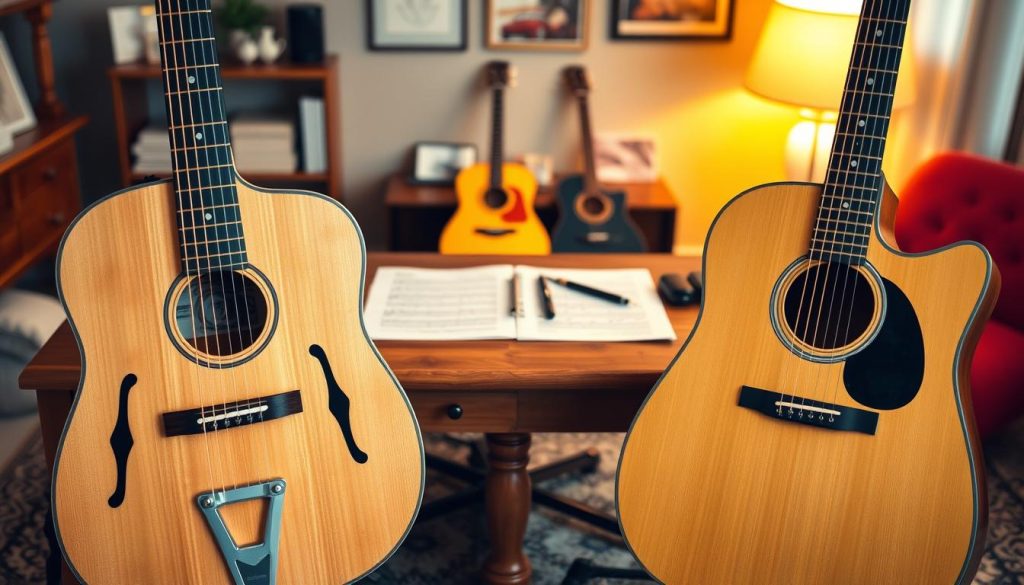
A steel-string or classical guitar is rarely completely symmetrical. Its design distributes tension, volume and comfort according to a specific orientation. Before buying, consult this guide to choosing a right-handed or left-handed guitar.
Why reversing the strings is not enough
Changing the order of the strings does not automatically turn a right-handed guitar into a left-handed one. The bridge and nut slots are made to fit each string’s diameter. String length is also compensated differently for low and high notes. Simply reversing the strings can therefore affect the guitar’s intonation.
It can alter the tonal balance and make the higher frets harder to reach. A professional setup may then be necessary. In a shop, inspect the headstock, neck, fretboard and bridge before buying.
Suitable nuts, bridges, bracing and cutaways
On guitars made for left-handed players, the bracing beneath the soundboard, cutaway, pickguard and preamp controls follow the intended orientation. The soundboard can therefore retain its natural response. Woods such as mahogany, spruce and rosewood then influence the tone, but cannot correct an unsuitable design.
- Check the string orientation and the quality of the nuts and saddles.
- Look at the cutaway, pickguard and preamp.
- Try each instrument with your dominant hand.
Choose a body shape that suits your playing style
Each body shape changes the attack, volume and feel under your fingers. The music you play is therefore the best guide. An acoustic guitar selection guide can also help you compare the options.
Dreadnought: accompaniment and volume
With its large body, this model produces a strong bass response and substantial projection. It suits chord playing, flatpicking and folk styles. Its tonal balance makes it a versatile choice, especially in a group or on stage.
Auditorium and smaller bodies: comfort and fingerpicking
Auditorium, 00, 000, concert, parlor and OM bodies offer greater comfort, whether seated or standing. Their precise response suits arpeggios and fingerpicking. These guitars also encourage expressive playing, with clear highs and controlled volume.
Jumbo, nylon-string acoustic and travel sizes
A jumbo delivers plenty of volume for country, folk or blues, but its size may not suit everyone. A nylon-string acoustic has softer strings and a warm tone, ideal for bossa nova, samba or singing accompaniment. Travel models fit easily into luggage and can sometimes be taken into an aircraft cabin.
Select the guitar’s woods and construction
The choice of woods shapes a guitar’s tonal character. It also affects its weight, response and balance. A guide to instrument types helps put each range into context.

Spruce, cedar, mahogany and other soundboard woods
A Sitka spruce top offers dynamic projection thanks to its straight grain and strong vibration. Lighter Engelmann spruce provides an open response. Cedar favors warmth and an immediate attack. Mahogany produces a dry, bright and powerful tone suited to folk music.
“A responsive soundboard reveals every nuance of your playing.”
Rosewood, sapele, ovangkol and koa: backs and sides
Rosewood enhances bass, midrange and overtones. Sapele provides punch and lively highs. Ovangkol offers a full sound. Honey-colored koa has a distinctive balance. Solid-wood construction often maximizes sound quality and resonance; laminate wood remains stable and affordable. Also check the neck, fretboard, strings and preamp for each brand.
| Construction | Sound advantage | Recommended use |
|---|---|---|
| Solid wood | Rich resonance | Regular playing |
| Laminate | Consistent sound | Limited budget |
Prioritize neck comfort and a good setup
A suitable neck makes every practice session more enjoyable. Its shape directly affects a guitarist’s comfort, accuracy and stamina. Try several neck profiles before choosing an instrument.

Neck profile, fretboard width and access to high notes
Flat, rounded, V, U and C profiles feel different in the hand. Compare them according to your hand and playing ability. Steel-string acoustic necks are often narrower than classical guitar necks.
Assess the fretboard width with the strings in place. Check the action, how easily you can play chords and whether you can reach the highest frets. A cutaway improves that access, but slightly reduces the projection of the instrument and its soundboard.
- Examine the neck shape, then relax your wrist.
- Try each guitar for a few minutes in the shop.
- Inspect the truss rod, an internal bar that adjusts the neck’s curvature.
An incorrectly adjusted truss rod can affect intonation. If in doubt, leave this adjustment to a specialist. Comfort should remain the priority, even when a finish catches your eye. You can also browse a selection of guitars to compare your options.
“A comfortable neck makes you want to play more often.”
Match the model to your budget and needs
Budget often sets the initial limits, but each need deserves careful consideration. Starting at €250 to €300, beginners and intermediate players can find reliable instruments.
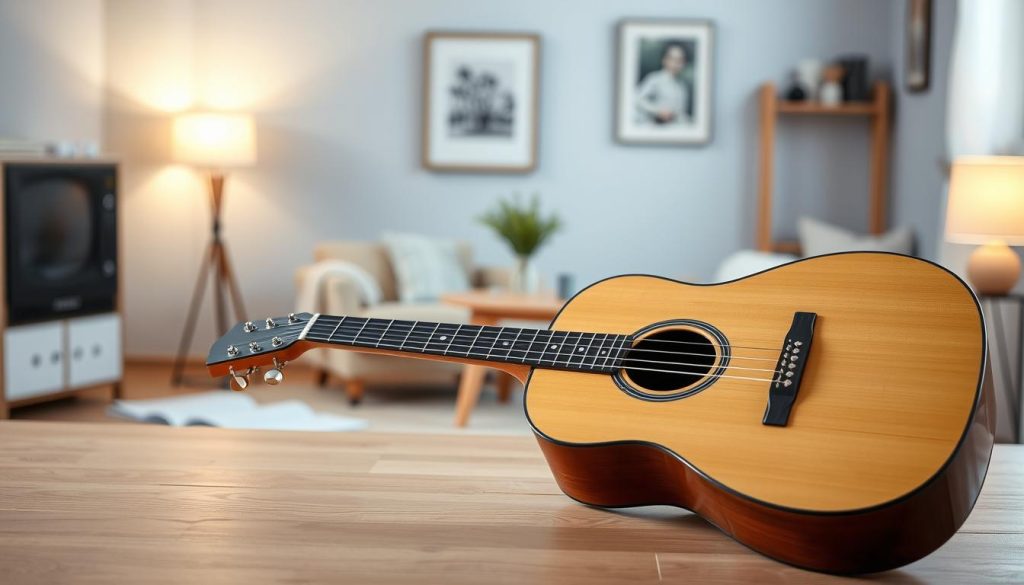
Left-handed acoustic guitars for beginners and intermediate players
The Eastone DR100 features a spruce top, okoume back and dreadnought body. The left-handed Cort Earth 70 combines a solid Sitka spruce top, laminate mahogany and an ovangkol fretboard. The Lag Tramontane TL88ACE stands out for its auditorium body, cutaway and preamp. Consult a guide to choosing your first instrument before buying.
Premium models for the stage
The Martin D-15M, Taylor 314ce LH and Gibson J-45 Standard offer higher-quality finishes. Taylor adds V-Class bracing and its ES2 system. The Eastman E1D rounds out this range with all-solid-wood construction.
Buying in a shop, online or secondhand
A shop lets you try the neck, strings, soundboard and setup. Thomann allows one month for returns. In Paris, Le Gaucher sells new and used instruments. GMG, near Bordeaux, checks its instruments. On Le Bon Coin and Reverb, ask for detailed photos and speak with the seller. You can also consult this guide to instruments for beginners.
| Player | Recommended model | Main advantage |
|---|---|---|
| Beginner | Eastone DR100 | Powerful sound and affordable price |
| Intermediate | Cort Earth 70 | Balance of comfort and quality |
| Stage performer | Taylor 314ce LH | ES2 preamp and precise projection |
Conclusion
A successful purchase starts with the right orientation, a comfortable neck and reliable intonation across all the strings. The setup matters as much as the appearance.
An acoustic guitar should also suit the music you play, the volume you want and your budget. Body shape, woods, fretboard and preamp all affect how it feels to play. A steel-string acoustic may suit accompaniment, while a compact body can favor arpeggios.
Eastone, Cort, Lag, Martin, Taylor and Gibson offer guitars at various prices. Consult this guide to choosing a guitar before making your decision.
Trying a guitar in a shop remains valuable. When buying online or secondhand, request photos, check the instrument’s condition and speak with the seller. Taking your time helps you make a lasting choice and keep the pleasure of playing.