

Plugging in a steel-string acoustic guitar calls for a different setup from an electric guitar. Vincent Aicardi discovered this during a jam session in a café: from the first chords, loud feedback filled the room. The experience shows why equipment, positioning, and settings matter.
The right choice depends first on your needs. Playing at home, rehearsing with a band, or performing onstage each calls for a different volume, set of connections, and format. Budget matters too, but the sound should remain natural.
This article compares dedicated combos, modeling options, and a direct connection to a PA system. It also examines common problems: feedback, an overly colored sound, and insufficient power.
The aim is simple: find a guitar amp that suits your acoustic guitar, vocal microphone, and playing space. You will have practical points to consider before buying and a clear view of each option’s trade-offs.
Which amp should you choose for an acoustic guitar?
Before comparing models, define how you will actually use it. At home, a 10 to 15 W model is often enough. That power can also suit quiet rehearsals without drowning out other instruments.
For a duo, trio, or small café, aim for 30 to 60 W. An amp rated at 100 W or more gives you headroom with a full band and an energetic drummer. Power alone, however, does not guarantee sound quality.
Identify your needs before comparing models
Consider your piezo pickup, any installed microphone, and whether you need to amplify your voice. A second channel can make it easier to balance the instrument and vocals. This helps you choose without paying for features you will rarely use.
Prioritize natural sound and good dynamics
Look for a clean, natural, precise sound. Adequate headroom prevents distortion when you play harder. An amp that is easy to adjust will also be more enjoyable over time.
Useful headroom matters more than an impressive volume rating. Try several amps with your own instrument: a model that reproduces the lows, mids, and highs evenly is more likely to suit you in the long run.
Why use a dedicated acoustic amp?
A dedicated system better preserves your instrument’s natural voice. It covers a broad frequency range and reproduces the air around each note. That helps retain its character, transients, and the nuances of every attack.
Preserve the guitar’s lows, mids, and highs
Dedicated amps often include a tweeter. This speaker reproduces high frequencies accurately, particularly for fingerstyle playing. The lows remain tight, while the mids retain their presence.
This more full-range response follows changes in your picking hand. The dynamics stay clear during percussive playing and quiet passages alike. The result sounds open, lively, and faithful to the instrument.
Limit coloration and signal distortion
Electric guitar amps, by contrast, shape the signal more strongly. Their circuits add character and can distort sooner. Modeling amps also offer a range of sounds, some far removed from the instrument’s original character.
“Transparency reveals every nuance, while coloration adds a character of its own.”
Modeling remains useful when you play in several styles. Dedicated acoustic amps, however, put clarity first. Carefully adjusted modeling can enrich the sound without overwhelming the guitar’s identity.
Acoustic amp or electric guitar amp?
The circuit type directly changes the sound’s character. An electric guitar often benefits from a strong sonic personality, while an acoustic guitar needs more space and subtlety.
Understand the differences in sound reproduction
An amp designed for electric guitar colors the signal. It may add compression, distortion, and pronounced mids. This response can reduce the air, harmonics, and dynamics of an acoustic instrument.
A dedicated model instead aims for a transparent, full-range sound. Every attack remains clear, from gentle playing to percussive rhythm. A modeling amp can still be useful at low volume or when you play several instruments.
- Natural sound: a dedicated system with a wide response that preserves detail.
- Versatility: modeling, effects, and saved settings.
- Vocals: check for an XLR microphone input, which is often absent.
Guitarists who sing should therefore consult this specialized buying guide. A simple rule: prioritize natural sound, or versatility if your needs vary.
| Option | Sound | Recommended use |
|---|---|---|
| Dedicated model | Transparent | Live performance and vocals |
| Electric guitar amp | Colored | Low-volume practice |
| Modeling amp | Flexible | Several instruments |
The main types of acoustic guitar amps
Three technologies dominate the market: solid-state, tube, and digital. Each suits a particular use, with trade-offs in weight, cost, and sound.
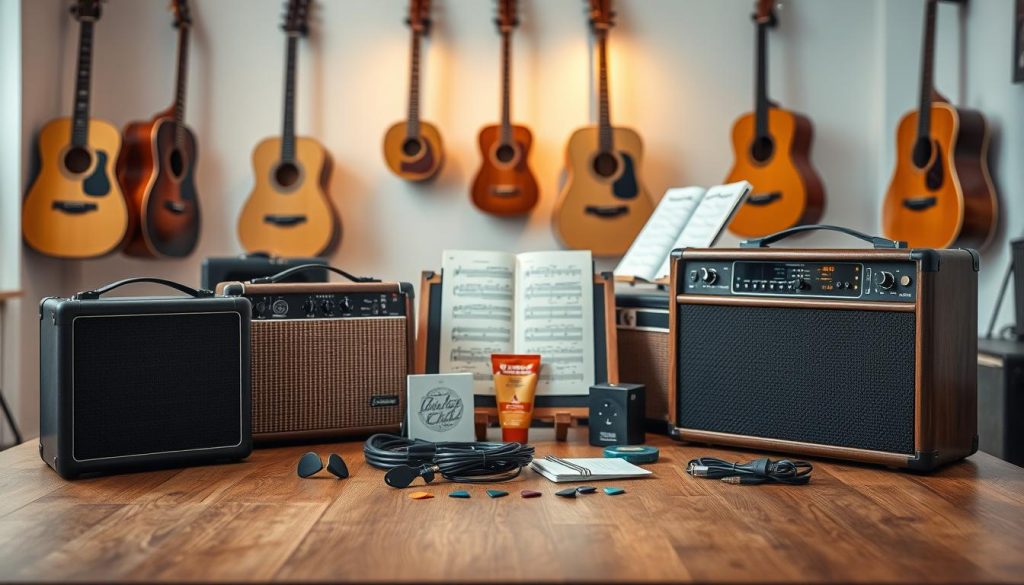
The acoustic combo designed for transparency
A combo is a simple, ready-to-use option. Its clear response works well with piezo pickups. It preserves detail and limits coloration. The format is practical at home and on a small stage.
The versatile modeling amp
A modeling amp often accepts several instruments. It may accommodate a steel-string acoustic, an electric guitar, and sometimes a bass. The Roland Micro Cube GX BK, Boss Katana 50 MKII, and Yamaha THR10IIW offer sounds inspired by Fender, Mesa Boogie, Vox AC30, or Marshall Plexi.
An FRFR speaker or PA system with a preamp and DI output
An FRFR speaker or PA system reproduces the signal neutrally. Paired with an acoustic preamp and DI output, it fits well into a live mix. The result then depends on the preamp, speakers, and settings.
| Type | Main advantage | Suitable setting |
|---|---|---|
| Combo | Transparency and simplicity | Home, duo, café |
| Modeling amp | Wide range of sounds | Versatile playing |
| FRFR or PA system | Neutral sound reproduction | Stage and mixing |
Combo or amp head: which format should you choose?
The format affects transport, setup, and future upgrades. A combo houses the preamp, power amp, and speaker in one cabinet. It connects quickly and needs little adjustment.
This option suits playing at home and rehearsals. Its weight is often manageable, and it requires few cables. These amps also take up less room in a car.
A stack separates the amp head from the speaker cabinet. This setup offers more flexibility: you can change cabinets, use a different power rating, or choose speakers better suited to the stage. The complete rig, however, is heavier and bulkier.
Configurations with 1 × 12″, 2 × 12″, and 4 × 12″ speakers change sound projection. A single speaker remains focused. Two create a bigger sound, while four deliver an imposing spread. Your choice therefore depends on the venue and required volume.
- Combo: practical, compact, and quick to set up.
- Head: easier to expand, but harder to transport.
- Speaker cabinet: check for an enclosure at least 4 cm thick.
“Less equipment to carry means more time for music.”
For a closer look at the difference, read this combo versus stack guide. For reliability, a rigid cabinet steadies the speaker and limits unwanted vibrations.
How much power do you need for your volume and venue?
Power depends mainly on the venue, your target volume, and the number of musicians. Enough headroom keeps the sound clear even when you play hard. It also helps prevent distortion as the volume rises.
A compact amp for home and quiet rehearsals
At home, in lessons, or during a quiet rehearsal, 10 to 15 W is often enough. In an apartment, 15 to 30 W provides more headroom without requiring a high volume.
This format remains light and easy to carry. It suits regular use, with good dynamics and volume that is easy to control.
More headroom for a duo or small stage
A guitar-and-vocal duo, a lightly played cajón, or a small stage calls for roughly 30 to 60 W. In a loud band, around 100 W from a solid-state amp provides useful headroom.
If the venue already has a PA system, a dedicated output lets you use a compact amp as your personal monitor. The audience hears the main PA, while you control your own volume.
| Situation | Suggested power | Advantage |
|---|---|---|
| Home or lessons | 10 to 15 W | Controlled volume |
| Apartment | 15 to 30 W | Comfortable headroom |
| Duo or small stage | 30 to 60 W | Good projection |
| Loud band | Around 100 W | Headroom to avoid distortion |
Channels, inputs, and connections to check
Check the connections carefully before buying. A guitar amp should work with a piezo pickup, soundhole pickup, or hybrid system. Also check the preamp quality, available gain, and ease of adjustment.
An instrument input suited to your pickup or microphone
The Fender Acoustasonic 15 illustrates this approach with two channels: a jack input for the instrument and an XLR input for a microphone. This format suits guitarists who sing and want one device for both signals.
Why a dedicated XLR vocal channel helps
An XLR channel accepts a vocal microphone and reproduces it clearly. The Behringer ACX-1000 even adds phantom power. This meets the need to use a condenser microphone without an external box.
Line output, DI, auxiliary input, and effects loop
A line or DI output sends the signal to the PA system while retaining your local monitor. A second output also makes recording easier.
The ACX-1000 has inserts on each channel and on the master. Its auxiliary input, adjustable from the front panel, accepts a phone or backing-track source. An effects loop expands your connection options as needed. Consult this selection of suitable models.
Feedback control and EQ: the essential criteria
Clear sound also depends on controlling feedback. Good settings preserve dynamics even as power and volume rise onstage.
Notch filter, phase reversal, and feedback control
Feedback is a loop between the guitar, speaker, and microphone or pickup. A notch filter cuts the troublesome frequency without reducing the entire signal. Reversing the phase can also calm feedback, especially when you face the audience.
The AER Alpha, sold for around €700, has no notch filter. The Behringer ACX-1000 offers two feedback filters per channel, giving you four filters to use with a stage monitor. That difference can matter during a rehearsal.
“Good settings are often more useful than higher volume.”
Adjust the bass, mids, and treble
Start by slightly reducing the low frequencies between 80 and 150 Hz. This cut limits the booming that excites the guitar body. The bass then sounds more precise.
If feedback persists, target the low mids between 200 and 400 Hz. Then adjust the mids gently. The highs should remain clear without becoming harsh. These changes give your amp more clarity and make the final adjustments easier. You can also read this Marshall amp review.
Which built-in effects are genuinely useful?
Not all built-in effects are essential. On a dedicated channel, prioritize a natural sound: clear tones, simple controls, and good dynamics.
Reverb and chorus in service of the sound
Reverb adds depth to arpeggios and quiet passages. Used lightly or moderately, it keeps the sound clear without blurring the attack.
Chorus creates a slight delay of a few milliseconds. This movement widens the sound, but it should remain subtle to preserve the definition of the strings.
The Fender Acoustasonic 15 as a simple example
The Fender Acoustasonic 15 is a clear example. Its subtle chorus works on the guitar channel. A single control makes it quick to adjust for live playing.
- Before using complex effects, find a balanced clean sound.
- Modeling presets add textures, but can reduce clarity.
- Heavy modeling processing is less suited to nuanced playing.
| Effect | Recommended use | Setting |
|---|---|---|
| Reverb | Depth for arpeggios | Short or medium |
| Chorus | A wider sound | Light |
| Digital preset | Varied textures | Use sparingly |
Bluetooth, apps, and modern features
Connected features simplify practice and make each session more engaging. They add convenience without replacing sound quality or the pleasure of playing. The Positive Grid Spark Mini includes Bluetooth and the Spark ecosystem in a compact format.
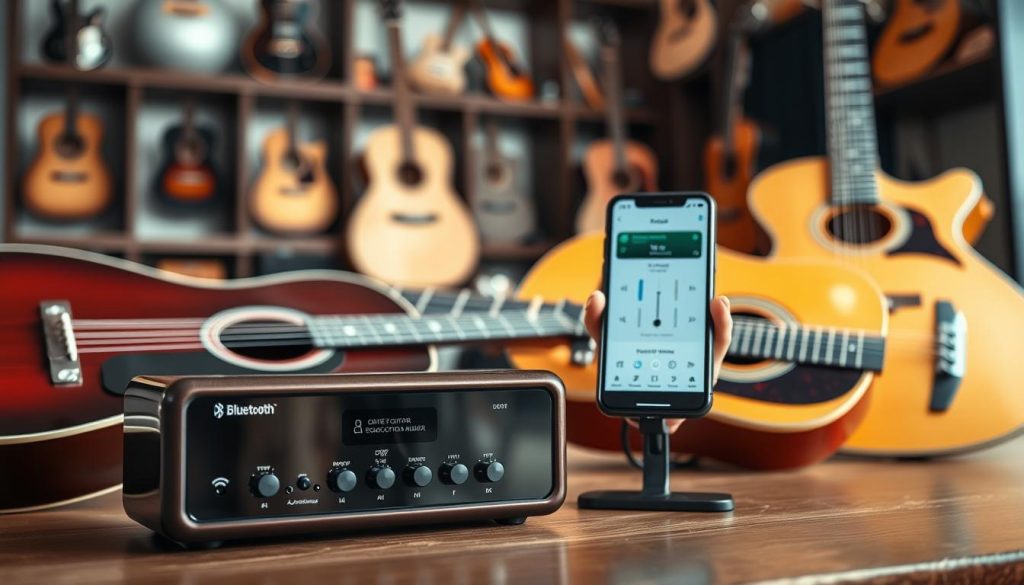
Backing tracks from a smartphone
Bluetooth lets you play a backing track from a smartphone without a separate player. You can practice rhythms, tempo, and transitions with less setup. The Spark app is a good example of a platform that combines presets, backing tracks, and mobile controls.
The Positive Grid Spark 2 goes further. This modeling amp combines smart backing tracks, a feature-rich app, and many effects. Modeling then becomes a practical tool instead of merely a catalog of sounds.
Looping, recording, and daily practice
Its looper records a cycle of 4 to 8 bars. This helps you test fingerstyle arrangements and save time. The Spark Neo also offers a wireless headphone system with Bluetooth streaming and a smart app.
- At home, the Spark Neo lets you play without disturbing others during late sessions.
- At home, headphones are useful when neighbors or children are asleep.
- A second modeling amp makes sense if its effects and presets help you practice.
This setup offers another useful example: modeling can save time and support regular practice.
What budget should you allow for a good acoustic amp?
Entry-level models often cost between €100 and €300. That buys a beginner’s amp, with differences in power, speakers, and features. From around €150, the balance of features and performance often improves.
At €120, the Fender Acoustasonic 15 offers two channels and an XLR input. It suits a musician who plays and sings. Its sound quality is appealing without requiring many adjustments.
Purchased used for €150, the Behringer ACX-1000 shows the value of secondhand gear. It offers inserts, effects, and an auxiliary input. Its price remains low compared with modern models.
Weigh the price against sound quality, headroom, and features you will use. It is better to invest in equipment suited to your needs than pay for unnecessary options. If you need vocals or have access to a PA system, you may be able to spend less. Sometimes a simple model is enough.
“A low price is appealing, but reliability reveals itself over several sessions.”
- €100 to €150: a simple starting point with few features.
- €150 to €300: more headroom and convenience.
- Before buying: check the price, power, and connections.
Comparing acoustic amp models
Specifications do not tell the whole story. The venue, volume, and need for portability are better guides. Here are some practical points to consider before buying.
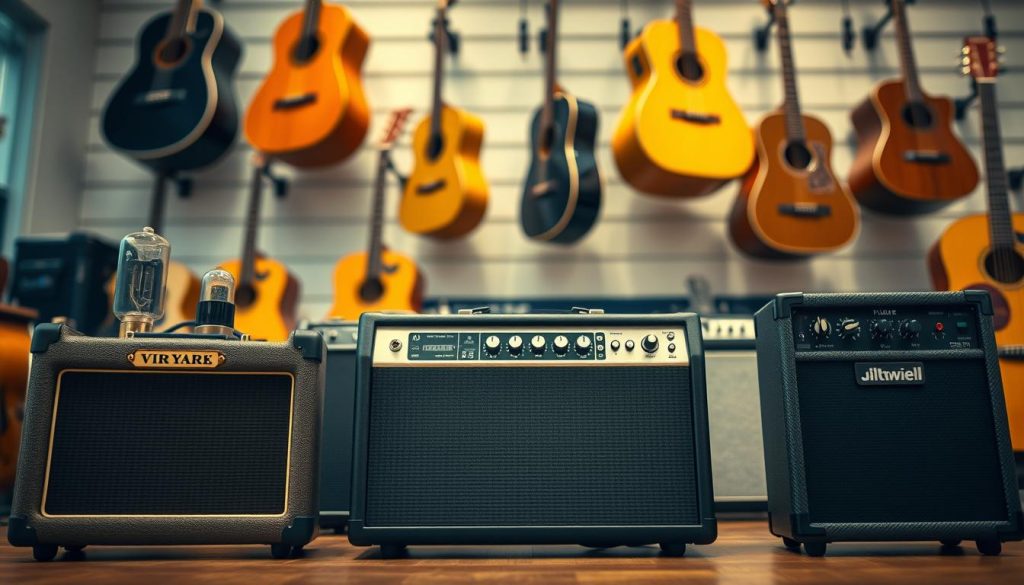
Positive Grid Spark Mini for home
With 10 W of power, the Spark Mini suits home practice very well. Bluetooth and modeling presets provide several sounds without extra cables. The Black finish costs around €199, compared with €190.38 for Pearl. Both versions offer the same features. Its 4.6/5 rating across 2,026 reviews shows its popularity.
Positive Grid Spark 2 for rehearsals
The Spark 2 increases power to 50 W. Its looper, app, and headroom make creating music with a group easier. At €289, it can also suit a small stage. The Spark Neo, sold for €189, serves a different purpose: this wireless headphone system is for quiet practice and does not replace a conventional amp.
Fender Acoustasonic 15 for guitar and vocals
The Fender Acoustasonic 15 provides 15 W, two channels, and an XLR input. This affordable €120 combo is a good example of a guitar-and-vocal solution. The Behringer ACX-1000, found used for €150, adds two notch filters per channel and more connections.
| Model | Power | Indicative price | Use |
|---|---|---|---|
| Spark Mini | 10 W | €190.38 to €199 | Home |
| Spark 2 | 50 W | €289 | Rehearsals and stage |
| Acoustasonic 15 | 15 W | €120 | Vocals and instrument |
Which amp suits your playing style?
How you play is often a better guide than a specification sheet. Each amp suits a particular purpose: learning, quiet practice, rehearsals, or the stage.
Recommendations for the way you play
Beginners who play and sing at home will find the Fender Acoustasonic 15 well suited to their needs. Its controls are simple, and its XLR input accepts a vocal microphone.
- Musicians who switch between an acoustic and an electric guitar could choose the Spark Mini. Its compact format combines versatility with easy transport.
- Guitarists who write music or rehearse regularly may find the Spark 2 more comfortable. Its 50 W offers useful headroom, and its looper supports creative work.
- The Spark Neo suits individual practice through headphones. It lets you play quietly and practice for longer.
- Onstage, check for an output to the PA system. If the model has no XLR channel, plan for a separate microphone connection.
The best choice is the one that fits the way you play.
Before buying, picture your next performance and the time you will spend practicing. This helps you avoid paying for features you are unlikely to use.
Strengths and limitations of modeling amps
Digital amps offer several sounds in a compact format. This type of amp can accommodate acoustic guitar, electric guitar, and bass. The Spark Mini and Spark 2 illustrate that versatility.
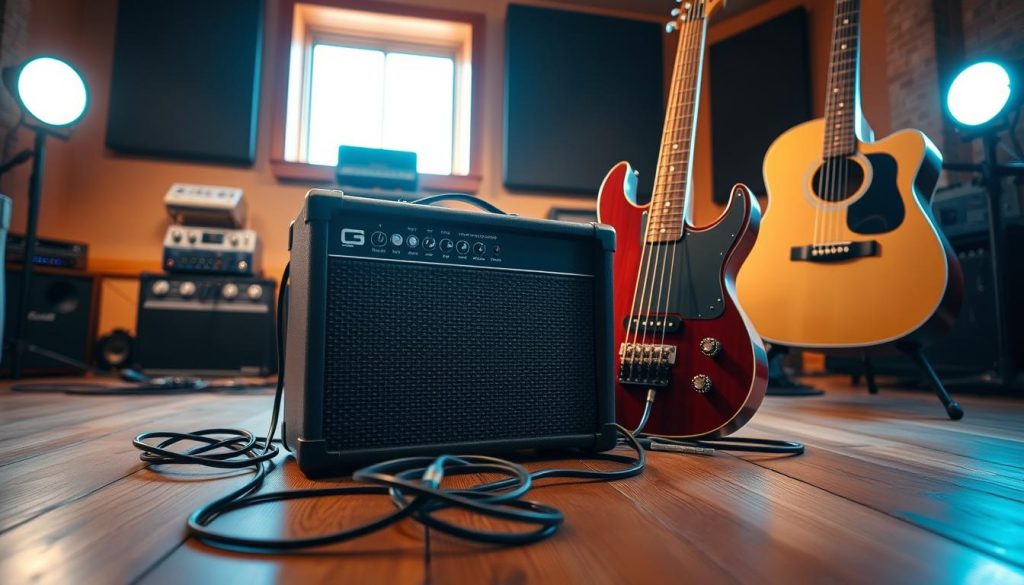
Their sound libraries can evoke Fender, Mesa Boogie, Vox AC30, or Marshall Plexi. This modeling encourages creativity through a wide range of effects. It also works well at low volume, making it suitable for apartment practice.
The balance of sound quality, price, weight, and features is their main strength. One device can sometimes replace several pieces of equipment. That convenience appeals to musicians who often switch instruments.
The limitation lies in acoustic reproduction. The sound is often more colored and less natural than that of an amp with a high-quality tweeter. Results also vary with the settings and speakers.
- Several models lack an XLR microphone input.
- An app may be needed to use every feature.
- The sound is less neutral than that of a dedicated combo.
Versatility brings more options, but sometimes at the expense of transparency.
Make your first adjustments and avoid feedback
Start with low gain to keep a clean sound. Then raise the volume in small steps. This preserves dynamics and reveals the quality of the pickup. At home, 15 W is often enough. Onstage, 50 to 100 W provides more headroom.
Place the amp slightly to one side, away from the soundhole and at waist height. Point it toward your ear rather than the guitar body. This reduces feedback at the same power level. A soundhole cover can also help in a resonant bar or small room.
- Reduce the lows between 80 and 150 Hz if the bass becomes boomy.
- Cut the mids between 200 and 400 Hz with a notch filter, and test phase reversal.
- Keep reverb and chorus subtle. Adding a second chorus can quickly blur the notes.
- Use the output to the PA system when you need more volume.
The Behringer ACX-1000 has a built-in limiter with an indicator LED. This protection helps the speakers handle peaks. Adjust the settings gradually instead of raising the volume too soon.
Conclusion
Your final choice should reflect how you play, rather than a long list of specifications. At home, 10 to 15 W is often enough for quiet sessions. The Spark Mini and Fender Acoustasonic 15 offer simple, compact setups with few controls.
For a duo or small stage, 30 to 60 W provides useful headroom. The sound stays clear before distortion sets in. The Fender remains a relevant example for accompanying vocals, while the Spark 2 is a more versatile example thanks to its looper. The Spark Neo supports quiet practice at home. A DI output sends the signal to the PA system.
Before buying, compare price, intended use, connections, feedback control, and natural sound. This article shows how a better-suited amp can encourage you to play. The article also recommends this first-amp guide to save time. A well-adjusted guitar, restrained effects, and a confident picking hand can often deliver a convincing sound with modest equipment.