
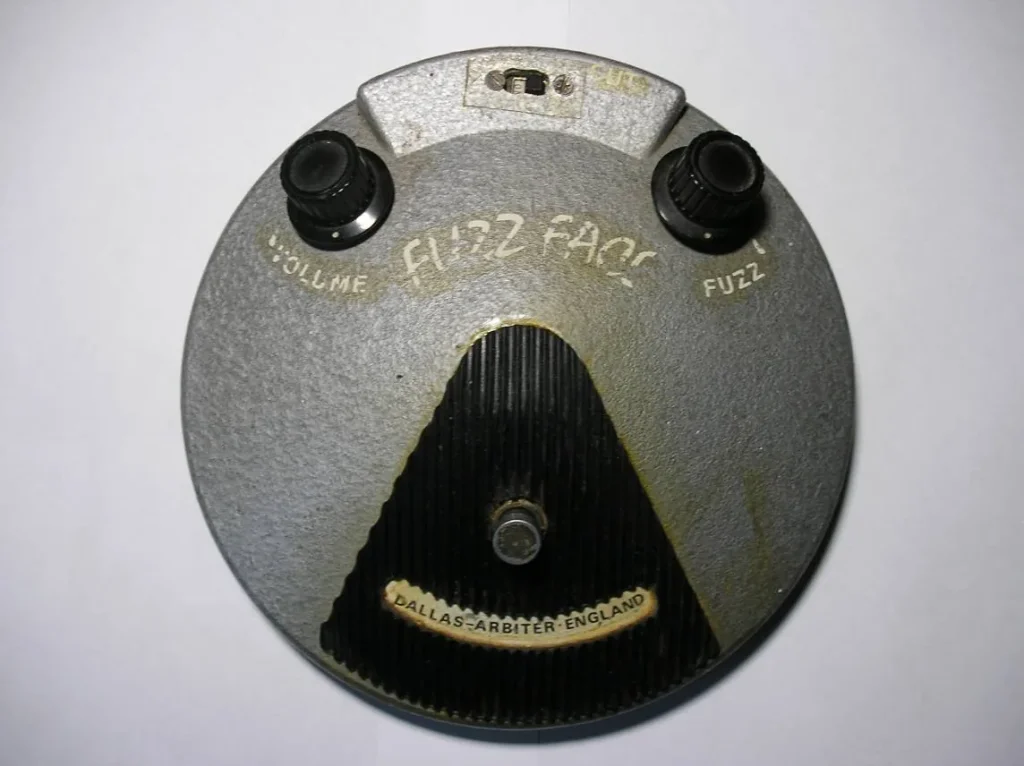
Using electric guitar effects and pedals lets you change the instrument’s original sound and create unique tones. Developing your own sound with effects is an exciting process that helps you stand out as a guitarist.
The different types of electric guitar effects include gain effects, signal processing, modulation, and spatial effects. Knowing the order in which to connect effects pedals is important for getting the sound you want. You also need to choose the essential pedals for a pedalboard and use the right accessories to make it easier to use.
| Effect type | Pedal examples |
|---|---|
| Gain | Overdrive, distortion, fuzz |
| Modulation | Chorus, phaser, flanger |
| Spatial effects | Delay, reverb |
However, this order is only a starting point: it can vary according to your preferences and the tones you want to achieve. Try different placements and adjust the pedal order to find the sound that suits you best.
Pedalboard essentials
To build an effective, organized pedalboard, you need a few essentials: a pedalboard, a suitable power supply, quality patch cables, and a sturdy frame. Here is an overview of these key components:
Pedalboard
The pedalboard is the foundation of your effects setup. It is a platform on which you arrange and secure your pedals. Pedalboards come in different sizes and materials, from compact models to larger versions that can hold many pedals. Choose one that meets your needs for pedal capacity and portability.
Power supply
A quality power supply is essential for powering your pedals properly. Choose a power supply with enough outputs for all your pedals, and make sure it provides clean, stable power to prevent noise and interference. Isolated power supplies are recommended to reduce unwanted noise.
Patch cables
Patch cables connect the pedals on your pedalboard. Using high-quality patch cables helps limit unwanted noise and maintain good signal transmission. Choose patch cables of suitable lengths to avoid tangles and keep your pedalboard organized.
Pedalboard frame
A sturdy, reliable frame is essential for keeping your pedals in place and within easy reach. Make sure your pedalboard has secure pedal fastenings and a non-slip surface to prevent the pedals from moving while you play. You can also use hook-and-loop tape or dedicated mounts to secure your pedals more firmly.
With these essentials, you can build a functional pedalboard, organize your pedals, power them properly, and get the sound you want during performances.
How can you create your own guitar sound?
To create your own guitar sound, you need to consider several factors and make informed choices. One of the first is whether to use analog or digital effects pedals. Analog pedals offer a warm, organic sound, while digital pedals provide a wide range of options and possibilities. Try different types of pedals to find those that best suit your musical style and tonal preferences.
Pairing your amp with your effects pedals is another important part of shaping your sound. Some pedals work better with certain types of amps, so it is essential to find the combination that best produces the sound you want. For example, if you use a tube amp, an overdrive pedal can add richness and energy to your sound. You may also want to use your amp’s effects loop, which lets you place effects between the preamp and power amp stages. This gives you more control over your sound and lets you explore new tones.
A preference for the original over a copy can also play a part in shaping your sound. Replica pedals are sometimes very close to the originals, but if you are after a specific sound, it may be worth investing in an original pedal. Of course, this depends on your budget and personal preferences.
Finally, remember the importance of accessories in shaping your guitar sound. High-quality patch cables can help reduce noise and preserve clarity. Investing in a reliable, stable power supply is also essential for powering your pedals properly. Take time to choose your accessories carefully to get the sound you want.
In short, developing your own guitar sound is an exciting process that takes experimentation, patience, and a little technical knowledge. By trying different types of pedals, finding the right combination of amp and effects, choosing an original over a copy when possible, and using the right accessories, you can create a unique sound that helps you stand out as a guitarist.
Analog or digital pedal
| Points to consider | Analog pedal | Digital pedal |
|---|---|---|
| Sound quality | Warm, organic sound | Wide range of options |
| Flexibility | Limited to the pedal’s features | Many adjustment options and presets |
| Price | Can be more affordable | Can be more expensive |
| User experience | Simple to use | Digital interface with menus and settings |
Playing without an amp
Amp and speaker cabinet emulators are relatively new additions to the world of guitar effects. These tools reproduce the sound and behavior of well-known amps and speaker cabinets, making it possible to get close to tones that may be out of reach with a simple pedal. Some speaker cabinet emulators use impulse responses, a technology based on real recordings of speaker cabinets in a studio, to create the impression of playing through real, high-quality speakers.
This new generation of guitar effects lets you play without an amp and record directly, without a physical amplifier or speaker cabinet. It offers flexibility and new creative possibilities. There is no need to carry heavy amps to gigs or rehearsals or worry about volume levels.
With an amp and speaker cabinet emulator, guitarists can achieve professional, realistic sounds using just a pedal and an audio interface to record directly onto a computer. It also makes creating music easier: musicians can adjust, experiment with, and refine their sound without hardware constraints. Whether in a home studio or onstage, an amp and speaker cabinet emulator offers a practical, versatile solution for guitarists of all levels.
Table: comparing the benefits of using an amp and speaker cabinet emulator
| Benefits | Amp and speaker cabinet emulator | Physical amp |
|---|---|---|
| Portability | Easy to carry, with no heavy amp | Bulky and heavy to carry |
| Flexibility | Makes it easy to experiment with and change your sound | Limited to the physical amp’s features |
| Recording | Allows direct recording to a computer | Requires separate microphone recording |
| Cost | Less expensive than buying a physical amp | Higher initial investment |
Conclusion
Electric guitar effects and pedals are essential tools for creating your own sound and exploring a wide range of unique tones. By choosing the right effects, placing them in the right order and using suitable accessories, you can personalize your tone and stand out as a guitarist. Whether you choose analog or digital pedals, the key is to experiment and find combinations that let you express your musical creativity.
Remember that shaping your sound is an ongoing process: take time to explore and discover what works best for you. The possibilities are endless, and every musician has a personal approach and a vision for their sound. Try new combinations, discover new effects, and create your own signature tone.
Whether you are a beginner or an experienced guitarist, using effects and electric guitar pedals can help you stand out and develop your own style. Draw inspiration from your favorite guitarists without limiting yourself to copying them. Stay curious, be creative, and let your emotions and ideas guide your exploration of sound. With the right tools and an attentive ear, you can create unique tones that reflect your musical personality.
FAQ
What are the different types of electric guitar effects?
The different types of electric guitar effects are gain effects, signal processing, modulation, and spatial effects.
In what order should effects pedals be connected?
In general, gain pedals are placed first, followed by modulation pedals and then spatial effects pedals. Where signal-processing pedals go depends on the effect you want.
What do you need to build a pedalboard?
To build a pedalboard, you need a board, a power supply for the pedals, and patch cables to connect them.
How can you create your own guitar sound?
To create your own guitar sound, consider several factors: whether to choose analog or digital effects pedals, how to pair your amp with your pedals, whether to use the effects loop and preamp, and which quality pedals to choose.
What is an amp and speaker cabinet emulator?
An amp and speaker cabinet emulator is a tool that reproduces the sound and behavior of well-known amps and speaker cabinets. Some speaker cabinet emulators use impulse responses, a technology based on real recordings of speaker cabinets in a studio.