
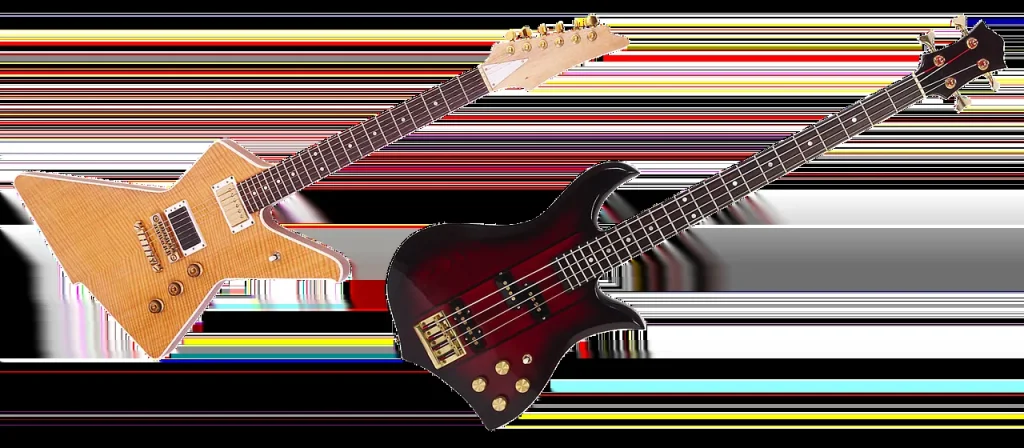
The electric guitar has a long history that stretches back to the invention of the lute, its direct ancestor. Over the centuries, the guitar evolved into a central instrument in modern popular music. Its development has been shaped by technical innovations and cultural changes. It continues to play an essential role in genres such as rock, blues, jazz and pop.
The modern electric guitar is the result of centuries of evolution. Its history reaches back to the origins of the electric guitar and runs through the eras of the Baroque guitar, classical guitar, folk guitar and blues before arriving at the electric guitar we know today. Each period brought new techniques, playing styles and sounds to this iconic instrument.
This article explores the stages in the history of the electric guitar, focusing on its origins, evolution and influence on contemporary popular music. Discover how electric guitar pioneers pushed the instrument’s boundaries, how the guitar influenced musical genres and how technological advances continue to change it.
The beginnings: from lute to Baroque guitar (15th–18th centuries)
The Baroque guitar, which developed from the lute, was already in use in the 14th century. It was in the 18th century, however, that it developed further and acquired its characteristic form, with gut strings and a slightly larger soundbox. The lute was a plucked string instrument that was very popular during the Renaissance. These instruments laid the foundations for the modern electric guitar in terms of shape and sound.
To understand the guitar’s evolution, we must recognize the lute’s importance in its development. With its gut strings and pear-shaped soundbox, the lute was widely played throughout Europe during the Middle Ages and the Renaissance. Players plucked its strings with their fingers, sometimes using a plectrum. The lute established plucked-string techniques that guitarists still use today.
By the late 16th century, the lute had begun to evolve into the Baroque guitar. Lute makers enlarged the soundbox and added a flat fingerboard to make the instrument easier to play. They kept the gut strings, which gave the Baroque guitar a warm, rich sound. The Baroque guitar was widely used in the classical music of its day, but it was also adapted for popular and folk melodies.
Today, the Baroque guitar is often played in early music ensembles and by musicians who specialize in Baroque music. It also influenced the shape and construction of modern guitars. The beginnings of the electric guitar reach back to this period, when lute makers were seeking to improve the instrument’s sound and playability. The Baroque guitar and the lute mark an important stage in the history of the electric guitar.
Characteristics of the Baroque guitar:
| Characteristic | Description |
|---|---|
| Shape | Larger soundbox, flat fingerboard |
| Materials | Wood (maple, spruce), gut strings |
| Playing technique | Strings plucked with the fingers |
| Musical styles | Classical, popular and folk music |
The classical guitar era (late 18th–early 19th century)
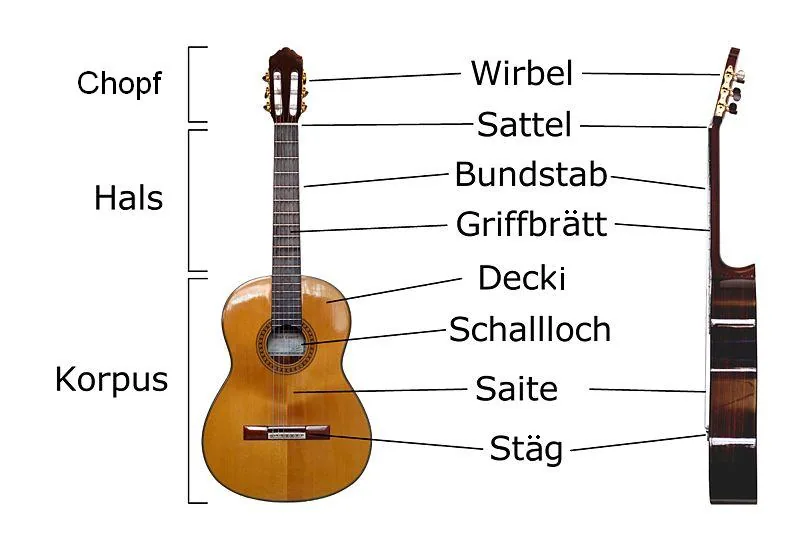
The classical guitar era brought major innovations that profoundly influenced the evolution of this iconic instrument. In the late 18th century, the classical guitar underwent a significant transformation thanks to the work of the Spanish luthier Antonio de Torres Jurado. Torres is considered one of the pioneers of the modern guitar’s development. He introduced technical improvements that radically transformed the classical guitar as we know it today.
Antonio de Torres Jurado introduced a series of changes to classical guitar design. He enlarged the soundbox, allowing it to produce a louder, more powerful sound. Torres also used curved sides, improving the instrument’s sound projection. These bold changes produced a more expressive and versatile guitar that could adapt to a wide range of musical styles.
Antonio de Torres Jurado’s influence on the classical guitar is undeniable. His innovations inspired many luthiers and opened up new possibilities for the instrument’s design and construction. Thanks to his contributions, the classical guitar grew in popularity and became one of classical music’s most cherished instruments. Even today, many professional guitarists prefer to play classical guitars inspired by Antonio de Torres Jurado’s groundbreaking work.
The classical guitar era (late 18th–early 19th century)
| Antonio de Torres Jurado’s improvements | Effects on the classical guitar |
|---|---|
| Enlarging the soundbox | Improved sound projection |
| Using curved sides | Improved sound and versatility |
As the classical guitar evolved, musicians explored new repertoires and composers wrote landmark pieces. Composers such as Fernando Sor, Mauro Giuliani and Francisco Tárrega wrote works that pushed the instrument’s boundaries. The classical guitar became a symbol of virtuosity and musical expression, and it continues to inspire musicians around the world.
Folk guitar and the blues (late 19th–early 20th century)
In the late 19th century, the acoustic guitar became popular in folk music and the blues. Traveling musicians, particularly African American musicians, used the guitar to express their emotions and culture. Renowned brands such as C.F. Martin and Gibson played a key role in developing and improving the acoustic guitars of this period.
The folk guitar, often associated with traditional music and songs about social issues, spread through artists such as Woody Guthrie, Pete Seeger and Bob Dylan. These musicians used the acoustic guitar to accompany their poetic, socially engaged lyrics, forging a deep connection between the guitar and the social movements of their time.
The blues, meanwhile, emerged in African American communities in the southern United States. Blues musicians such as Robert Johnson, Muddy Waters and B.B. King used the guitar to express sadness, pain and hope. Blues guitar is often characterized by fingerpicking and the use of seventh chords, which create a melancholy, expressive mood.
Inspired by these emotionally rich musical genres, the acoustic guitar became a symbol of freedom and creativity in popular music. C.F. Martin and Gibson made high-quality guitars with warm sounds and exceptional playability. Even today, the acoustic guitar remains a mainstay of folk music and the blues, and its distinctive sound resonates around the world.
Iconic instruments of the period:
| Brand | Model | Type |
|---|---|---|
| C.F. Martin | D-28 | Acoustic guitar |
| Gibson | L-1 | Acoustic guitar |
| Gibson | L-00 | Acoustic guitar |
The electric guitar era (1930s–1950s)
The 1930s saw the invention and development of the electric guitar. Two major pioneers of this era were Les Paul and Adolph Rickenbacker. Les Paul, known for his contributions to the electric guitar and multitrack recording, created his own line of iconic electric guitars bearing his name. Adolph Rickenbacker was an engineer and entrepreneur who founded the Rickenbacker company, a maker of innovative electric guitars.
These pioneers played an essential role in popularizing the electric guitar and exploring its sonic possibilities. The electric guitar opened new paths for music, particularly with the emergence of jazz, rock ’n’ roll and electric blues. Legendary guitarists such as Charlie Christian, Chuck Berry and Jimi Hendrix pushed the electric guitar’s boundaries and helped shape the sound of modern music.
“The electric guitar revolutionized the world of music by introducing new sounds and allowing musicians to explore new artistic paths.”
The electric guitar developed rapidly during these years, with many technical improvements, including the introduction of single-coil and dual-coil pickups, which made more powerful and versatile sounds possible. Innovations such as vibrato systems and electronic effects further expanded the instrument’s sonic possibilities. These advances laid the groundwork for the electric guitar’s continuing evolution over the following decades.
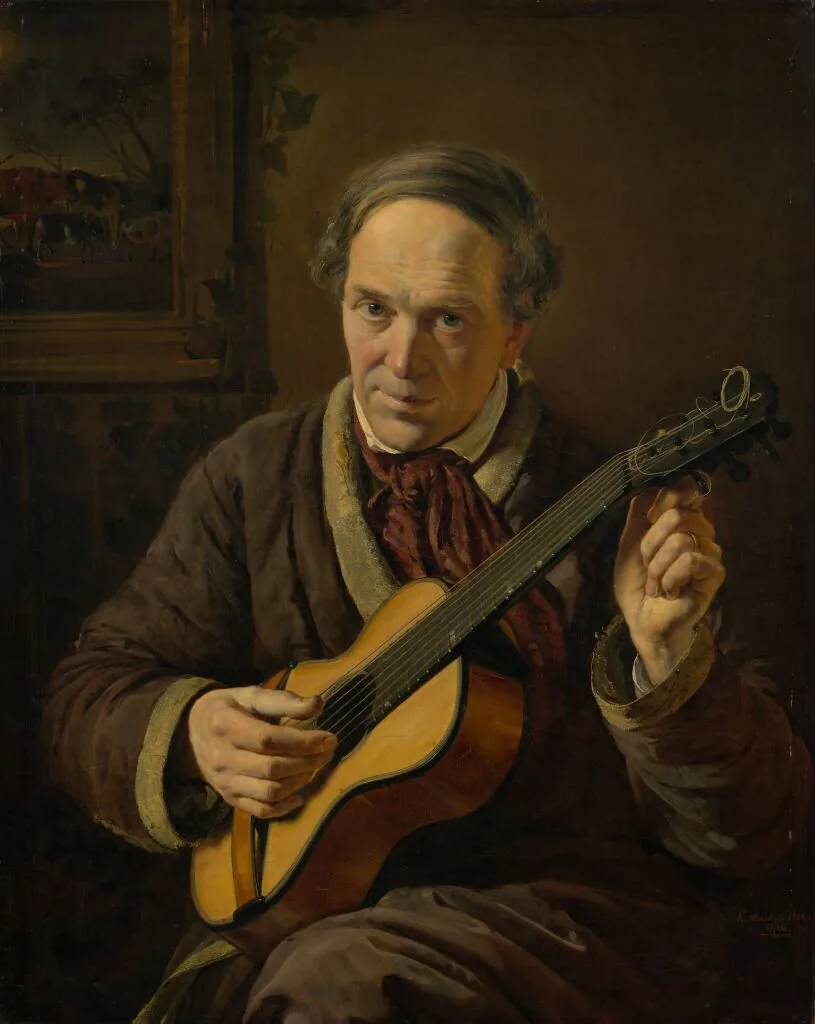
Slash, whose real name is Saul Hudson, is often associated with Guns N’ Roses. His melodic, expressive guitar playing is instantly recognizable. Songs such as “Sweet Child o’ Mine” and “November Rain” showcase his exceptional talent.
These famous guitarists have left an indelible mark on the history of popular music. Their creativity and virtuosity have inspired generations of musicians and continue to push the guitar’s boundaries in contemporary music.
The evolution of the electric guitar
Electric guitar making has seen many advances over the years, contributing to the evolution of this iconic instrument. Guitar makers have sought to improve build quality, sound and playability to give musicians increasingly capable instruments.
One major advance in electric guitar making was the introduction of humbucker pickups. This type of pickup uses two opposing coils to cancel interference and reduce background noise, producing a cleaner, more powerful sound. Humbucker pickups are often used on guitars intended for heavier genres such as rock and metal.
Vibrato systems are another important innovation in electric guitar making. Vibrato systems let guitarists create vibrato and bending effects by changing string tension. Famous guitarists such as Jimi Hendrix and Stevie Ray Vaughan have made extensive use of these systems to add expression and energy to their playing.
Electric guitar making has evolved to provide instruments that increasingly meet musicians’ needs for sound, playability and versatility. Technological advances have also enabled the integration of electronic effects, giving guitarists a wide range of sounds and effects to explore.
Table: the evolution of electric guitar making
| Period | Advances |
|---|---|
| 19th century | Introduction of humbucker pickups |
| 20th century | Development of vibrato systems |
| 21st century | Integration of electronic effects |
The evolution of electric guitar making has allowed guitarists to explore new sonic territory and push the boundaries of their creativity. Thanks to pickups, vibrato systems and electronic effects, the electric guitar continues to reinvent itself and offer new possibilities for musical expression.
It is fascinating to see how electric guitar making has evolved over time. There is still much to discover about the design and construction of these iconic instruments. Luthiers and manufacturers continue to innovate, creating ever more capable electric guitars suited to the needs of today’s and tomorrow’s musicians.
Conclusion
The history of the electric guitar is a remarkable journey. From its modest origins with the lute to its iconic status in contemporary music, the electric guitar has come a long way. It has witnessed many innovations and cultural changes, adapting to musicians’ needs over the centuries.
Today, the electric guitar continues to play an essential role in popular music. Legendary guitarists have pushed the instrument’s boundaries, creating new sounds and influencing generations of musicians. From the invention of humbucker pickups to advances in guitar making, the electric guitar has continually reinvented and modernized itself.
Whether you are a music enthusiast or a professional musician, the history of the electric guitar is a source of inspiration and fascination. It reminds us of the importance of creativity, innovation and evolution in music. So whether you decide to learn the electric guitar or simply listen to your favorite song, remember the extraordinary journey of the instrument that transformed modern music.
FAQ
In which musical genres does the electric guitar play an essential role?
The electric guitar plays an essential role in genres such as rock, blues, jazz and pop.
What are the origins of the modern electric guitar?
The modern electric guitar traces its origins to the lute and the Baroque guitar.
Who made technical improvements to the classical guitar?
The Spanish luthier Antonio de Torres Jurado made technical improvements to the classical guitar.
What role did the acoustic guitar play in blues and folk music?
The acoustic guitar became popular in folk music and the blues. Traveling musicians used it to express their emotions and culture.
Who were the pioneers of the electric guitar?
The electric guitar pioneers were Les Paul and Adolph Rickenbacker.
Which musical genres adopted the guitar as a main instrument?
Genres such as rock, folk, funk, punk and heavy metal adopted the guitar as a main instrument.
What are some electric guitar innovations?
Electric guitar innovations include humbucker pickups, vibrato systems and electronic effects.
What is the electric guitar’s role in music history?
The electric guitar has left an indelible mark on the music industry and continues to influence guitarists around the world.