
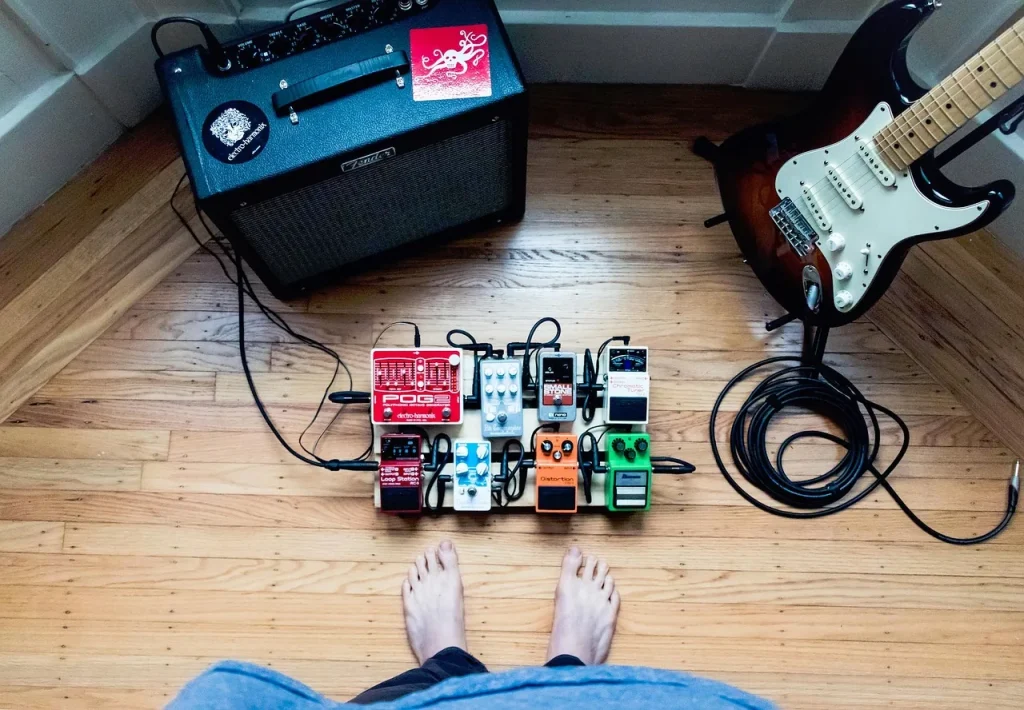
Electric guitar amplifiers are essential for shaping the sound of an electric guitar. They amplify the electrical signal produced by the guitar strings and send it to a speaker, allowing musicians to play at higher volumes and achieve a particular tone. Guitar amplifiers vary in their technology, including tube amplifiers and solid-state amplifiers, and in their sound quality, from entry-level models to high-end professional ones.
How electric guitar amplifiers work
Electric guitar amplifiers play an essential role in creating the sound of an electric guitar. Understanding how these devices work is therefore important for musicians who want to shape their sound precisely.
The operation of electric guitar amplifiers involves several key stages. First, the electrical signal produced by the guitar strings is sent to a preamplifier. The preamplifier adjusts this signal and lets musicians shape the sound with controls such as gain, bass, midrange and treble.
Next, the preamplified signal is sent to the power amplification section. This raises the signal to a level high enough to drive the amplifier’s speakers. The speakers then convert the amplified electrical signal into audible sound.
Together, these stages of preamplification, power amplification and conversion into sound contribute to the final sound of the electric guitar.
In short, electric guitar amplifiers amplify the electrical signal produced by the guitar strings and send it to the speakers. The preamplifier lets musicians shape the sound with various controls, while the power amplification section boosts the signal so the speakers can make it audible. Understanding how these devices work helps musicians achieve a sound that suits their playing style and preferences.
The different types of electric guitar amplifiers
There are different types of electric guitar amplifiers on the market, each with its own sonic characteristics. Musicians can choose among several options according to their playing style and sound preferences. Here is an overview of the main types of electric guitar amplifiers:
Tube amplifiers
Tube amplifiers are especially prized for their warm, vintage sound. They use preamp and power tubes to produce a rich, harmonically complex sound. Tube amplifiers are often favored by rock and blues musicians because they provide natural, organic distortion that adds character to their playing.
Solid-state amplifiers
Solid-state amplifiers are more modern and offer a clear, precise sound. They use transistors to amplify the guitar’s electrical signal. Solid-state amplifiers suit a variety of musical genres and are often chosen by musicians who want faithful reproduction of their guitar’s sound without additional distortion.
Combo amplifiers
Combo amplifiers are all-in-one amplifiers that house the preamplifier, power amplifier and speakers in a single enclosure. They offer a compact, practical solution for musicians who want equipment that is easy to carry and set up. Combo amplifiers come in different power ratings and sizes, making them versatile for studio sessions, rehearsals and live performances.
Separate amp heads and cabinets
Separate amp heads and cabinets consist of an amplifier head and an external speaker cabinet. This setup lets musicians customize their amplification system by pairing different amp heads with different cabinets. Separate amp heads and cabinets offer considerable flexibility in sound and power. They are often used by professional musicians who want full control over their sound.
In conclusion, the different types of electric guitar amplifiers give musicians many ways to shape their sound. Whether you prefer the warmth of a tube amplifier, the clarity of a solid-state amplifier or the simplicity of a combo amplifier, choose a model that suits your playing style and sound preferences. By combining your amplifier with other effects and settings, you can create a unique sound and fully express your musical creativity.
| Amplifier type | Sound | Use |
|---|---|---|
| Tube amplifiers | Warm, vintage sound; natural distortion | Rock, blues |
| Solid-state amplifiers | Clear, precise sound without distortion | All musical genres |
| Combo amplifiers | Practical and portable | Studio, rehearsal, stage |
| Separate amp heads and cabinets | Flexibility and control over sound | Professionals, experienced musicians |
Using a computer with electric guitar amplifiers
Musicians can now use a computer as a sound processing tool with electric guitar amplifiers. By connecting their instrument to an audio interface linked to a computer, they can use a wide range of amplifier modeling and effects software to shape their sound.
A computer offers considerable flexibility. Modeling software lets musicians recreate the sounds of different brands and models of iconic amplifiers, giving them access to a wide range of tones. The effects built into this software also open up many creative possibilities, from reverb and chorus to distortion.
To preserve signal quality, using a direct input box between the guitar and the audio interface is recommended. This box matches the signal’s impedance and helps preserve the integrity of the sound. It is also important to configure the audio interface correctly to reduce latency, the delay between the signal entering the computer and its output. Excessive latency can affect how the instrument feels to play.
Advantages and disadvantages of using a computer with electric guitar amplifiers
Using a computer offers many advantages to musicians who want to explore new sounds. It provides considerable flexibility and a broad selection of amplifier models and effects. A computer also makes it easy to save and recall settings, which helps with music creation.
Using a computer with electric guitar amplifiers has some drawbacks, however. A computer is a complex device that requires some technical knowledge. Musicians therefore need to take time to become familiar with the software and audio interfaces to get the most from them.
Adding a computer to the signal chain can also increase the risk of technical problems, such as bugs or crashes. A stable, reliable computer setup helps limit these risks.
Conclusion
Using a computer with electric guitar amplifiers gives musicians new ways to shape their sound. Amplifier modeling and effects software provides access to a wide range of tones and creative effects. To make full use of these tools, however, musicians need to understand them and have a stable setup. By combining a computer with traditional amplifiers, musicians can explore new musical directions and express their creativity with precision.
How amplification influences the sound of an electric guitar
Amplification plays an essential role in the sound and character of an electric guitar. Different amplifier types and settings can change the instrument’s sound considerably. Distortion, reverb and other effects also influence how that sound is perceived.
Tube amplifiers, for example, are known for their warm, vintage sound. They produce natural distortion valued in certain musical styles, especially rock and blues. Solid-state amplifiers offer a clearer, more precise sound, making them popular in genres that call for clarity, such as jazz and pop.
Reverb is another important aspect of electric guitar amplification. It creates a sense of space and adds depth to the sound. Some amplifiers have controls for adjusting its intensity. Musicians can set these according to their preferences and musical style.
| Amplifiers | Sound | Distortion | Reverb |
|---|---|---|---|
| Tube amplifiers | Warm and vintage | Natural distortion | Controls for adjusting reverb |
| Solid-state amplifiers | Clear and precise | Less natural distortion | Controls for adjusting reverb |
Musicians benefit from choosing an amplifier that suits their musical style and preferences. Amplification has a significant influence on the sound of an electric guitar. Trying different amplifiers, settings and effects can help each player find the sound that works for them. Whether you prefer a vintage sound rich in distortion or a clear, precise tone, amplification is essential to achieving the result you want.
Conclusion
Electric guitar amplifiers play an essential role in the instrument’s sound and tone. By amplifying the electrical signal produced by the strings, they let musicians play at higher volumes while achieving the sounds they want.
With the different types of amplifiers available on the market, musicians can choose the one that best matches their playing style and sound preferences. A tube amplifier offers a warm, vintage sound, while a solid-state amplifier produces a clearer, more precise sound. Each choice affects the sound of an electric guitar.
Using a computer with electric guitar amplifiers opens up even more possibilities for tones and effects. By connecting the guitar to an audio interface, musicians can use amplifier modeling and effects software to shape their sound with even greater precision.
In conclusion, electric guitar amplifiers are a key part of the instrument’s sound. Choosing a suitable amplifier and using it thoughtfully allows musicians to express their creativity and create sounds that reflect their playing style.
FAQ
What is an electric guitar amplifier?
An electric guitar amplifier is essential for shaping the instrument’s sound. It amplifies the electrical signal produced by the strings and sends it to a speaker, allowing musicians to play at higher volumes and achieve a particular tone.
How do electric guitar amplifiers work?
Electric guitar amplifiers amplify the electrical signal produced by the instrument’s strings. The signal first passes through a preamplifier, which adjusts it and lets musicians shape the sound using various controls. It is then boosted by the power amplification section and sent to the speakers. These convert the electrical signal into sound.
What are the different types of electric guitar amplifiers?
Electric guitar amplifiers vary according to the technology they use. Tube amplifiers offer a warm, vintage sound, while more modern solid-state amplifiers produce a clearer, more precise sound. There are also combo amplifiers, which house the preamplifier, power amplifier and speakers in a single enclosure, and separate amp heads and cabinets, which consist of an amplifier head and an external speaker cabinet.
How can you use a computer with electric guitar amplifiers?
Musicians can use a computer as a sound processing tool with electric guitar amplifiers by connecting their instrument to an audio interface linked to the computer. Amplifier modeling and effects software can then process the guitar signal. Using a direct input box between the guitar and the audio interface is recommended to preserve signal integrity, as is configuring the interface to minimize latency.
How does amplification influence the sound of an electric guitar?
Amplification plays a major role in the sound of an electric guitar. Different amplifier types and settings influence the instrument’s sonic character. For example, tube amplifiers can add natural distortion and warmth, while solid-state amplifiers can produce a clearer, more precise sound. Effects such as reverb, distortion and chorus also let musicians shape the sound of an electric guitar.
Why are electric guitar amplifiers important?
Electric guitar amplifiers play an essential role in the instrument’s sound and tone. They amplify the electrical signal produced by the strings, allowing musicians to play at higher volumes and achieve the sounds they want. The different amplifier types available, along with the option of using a computer for sound processing, give musicians many ways to shape their sound. Choosing an amplifier that suits their playing style and sound preferences lets them express their musical creativity with precision.