

Victor Hugo, born in 1802, associated music with a form of thought and freedom. Today, nearly 33% of people in France enjoy playing guitar regularly. That enthusiasm extends from beginners to dedicated players, whether at home, in lessons, or on stage.
Ibanez has a rich history. Hoshino Gakki established the brand in 1935 after acquiring the Salvador Ibanez e Hijos name in 1929. Since then, it has earned a place in the music world with accessible, carefully made instruments.
This guide presents a selection for different uses and budgets. You will find folk, classical, compact, and acoustic-electric models. Each guitar meets a particular need, from daily practice to live performance.
Comfort, materials, volume, and sustain will guide the comparison. The aim is simple: find a guitar that suits your ability, style, and plans without paying for features you do not need.
Ibanez acoustic guitars: which models should you choose?
The right instrument should suit the way you play, the space you have, and your budget. An Ibanez guitar can serve you for your first chords or for live shows. Each body shape, however, responds differently.
The brand’s acoustic body shapes
The V50NJP-NT and VC50NJP-NT offer dreadnought or folk-style bodies with generous volume. The EWP14WB-OPN has a compact mini-jumbo body. The GA15 uses nylon strings and suits classical guitar lessons.
The AW54CE and AW65ECE-LG add practical electronics for amplified playing. The AW4000 offers a more refined experience with its solid woods. These Ibanez guitars therefore cover a range of uses, from the living room to the stage.
Key criteria for your ability and budget
Look at the quality of the woods, body shape, neck, fingerboard, frets, and tuning stability. Comfort is the priority for a beginner. A more experienced musician may want greater projection and tonal nuance.
| Model | Type | Recommended use | Indicative price |
|---|---|---|---|
| V50NJP-NT | Dreadnought | Getting started | About €118 |
| EWP14WB-OPN | Compact | Travel | Midrange budget |
| AW4000 | Premium | Developing your playing | About €699 |
“The best choice is the one that makes you want to play every day.”
Why choose an Ibanez acoustic guitar?
The brand’s strength rests on a simple idea: make music accessible without limiting creativity. Its catalog had grown to 2,072 products in 2023. That breadth supports a strong balance of quality and price, with well-made instruments at different budgets.
A brand known for value
An Ibanez guitar works for both a first lesson and regular rehearsals. Its construction, comfort, and finish provide consistent quality. To compare the available models, see this overview of Ibanez instruments.
- A manageable budget for a confident start.
- Balanced sound and a comfortable feel.
- Plenty of choice for the stage or home.
Instruments for every guitarist
These guitars are part of a history of innovation. The seven-string Universe, created with Steve Vai in 1987, made its mark on electric guitar. In 2007, the RG2228 introduced an eighth string.
Ibanez guitars show real versatility. An electric or acoustic guitar from the brand can therefore accompany a beginner or an accomplished musician.
A good guitar makes you want to practice and keep improving.
Ibanez V50NJP-NT Jampack: an ideal starter package
If you want to begin without making several purchases, this guitar offers a straightforward, complete solution. Its folk dreadnought body provides comfortable volume, while its price of about €118 remains accessible to beginners.
An affordable dreadnought folk guitar
The spruce top, agathis body, mahogany neck, and rosewood fingerboard form a sound foundation. These woods produce a clear tone with reasonable sustain. The finish is understated, but the quality is sufficient for learning your first chords.
This guitar responds well to strumming. It gains power when you strike the strings more firmly. Its value appeals to people seeking a reliable instrument in an affordable range.
Included accessories and tuning limitations
The package includes a gig bag, strap, tuner, capo, and several picks. You can take the instrument to lessons from day one. You will still need to tune it regularly, as with any inexpensive guitar. An electric guitar would also require different equipment.
| Feature | Details | Benefit |
|---|---|---|
| Construction | Spruce, agathis, mahogany | Balanced sound |
| Package | Gig bag and accessories | Ready to play |
| Price | About €118 | Manageable budget |
Ibanez VC50NJP-NT: a comfortable acoustic for smaller budgets
Its light body makes the first steps easier and gives younger players confidence. This guitar has a construction similar to the V50NJP-NT, with a spruce top and agathis body. Together, they provide a straightforward starting point for learning chords and strumming patterns.
The mahogany neck and rosewood fingerboard feel comfortable in the hand. This guitar therefore suits teenagers and beginners looking for an instrument that is less tiring to play. Its sound remains clear in a living room or lesson.
The package adds a gig bag, strap, capo, tuner, and picks. You can play as soon as it arrives, with no urgent extra purchase. To compare this model with others, see this guide to Ibanez guitars.
Reviews sometimes mention a tuning machine that loses tension. It is therefore worth checking the tuning. Despite that issue, the ease of learning and modest price make this a sensible first instrument.
| Feature | Details | Advantage |
|---|---|---|
| Construction | Spruce, agathis, mahogany | Balanced response |
| Package | Gig bag and accessories | Ready to play |
| Players | Teenagers and beginners | Low weight |
Ibanez EWP14WB-OPN Piccolo: a compact guitar for travel
A small instrument can still offer a satisfying playing experience. The EWP14WB-OPN Piccolo combines a mini-jumbo body with six steel strings. Its reduced size makes it easier to carry without feeling like a toy. It suits travel, holidays, and playing at home.
A mini-jumbo body for children and adults
The nut measures 42 mm wide, so the neck remains easy to hold, even for small hands. Adults who prefer a less bulky instrument will also appreciate its feel.
Its main strengths:
- low weight for easier travel;
- a body that takes up little space in transit;
- construction quality that fits its accessible price.
The sound of ovangkol and steel strings
The ovangkol body produces rounded sounds with qualities between mahogany and rosewood. A mahogany neck and pine fingerboard complete its balanced response. The steel strings add a clear, bright attack.
“A smaller body with a sound all its own.”
This Ibanez guitar is therefore a practical choice for playing anywhere.
Ibanez AW54CE: a warm-sounding acoustic-electric folk guitar
The Artwood series offers an appealing option for folk, blues, and rock players. This guitar combines a natural presence with straightforward use on stage or at home.
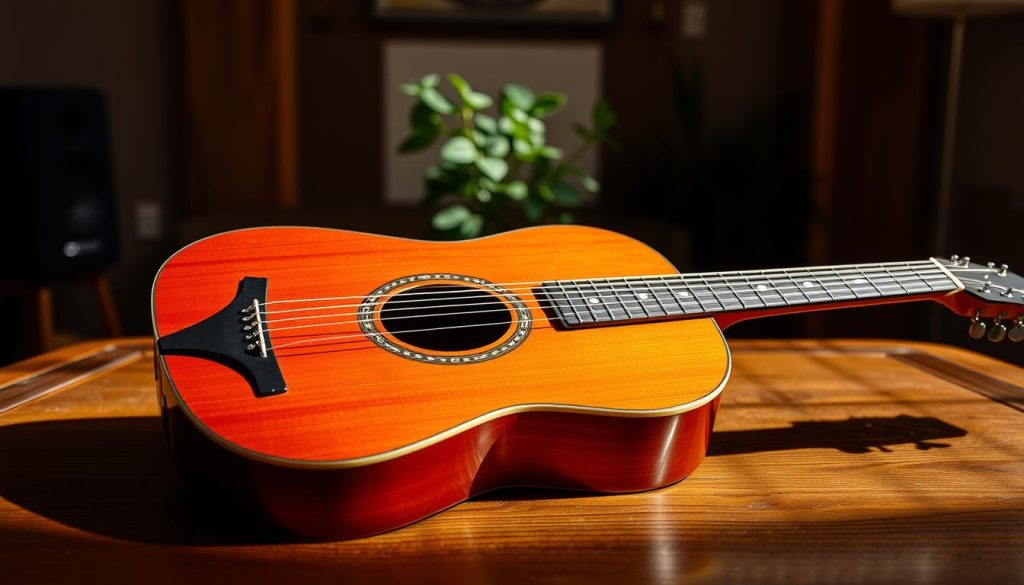
A solid mahogany top and vintage looks
The solid top, back, and neck made of mahogany give the instrument rich midrange and depth. The body also enhances sustain, while the matte finish emphasizes its vintage look.
This guitar produces warmer sounds than a model with a spruce top. Its construction suits both strumming and arpeggios. The price remains attractive at around €298, or under €300.
Fishman electronics and a cutaway for amplified playing
The Fishman Sonicore pickup and Ibanez AEQ210TF preamp make adjustments easy. Controls let you set volume, bass, and treble, and a tuner is built in. This acoustic-electric guitar can therefore be plugged in without complicated equipment.
The cutaway, indicated by “CE,” opens up access to the higher frets. It helps with solos and accompaniment. An electric guitar is still preferable for heavily distorted sounds, but this Ibanez guitar works well for amplified music.
“Warm sound, comfortable access, and a price that remains reasonable.”
Ibanez AW65ECE-LG: a versatile folk guitar for developing players
The AW65ECE-LG can accompany you through your first months of playing. This folk Ibanez guitar is aimed at newcomers but remains suitable for playing to a small audience.
Its solid cedar top produces warm, mellow, precise sounds. The mahogany neck feels familiar in the hand. Together, the woods support comfort and musicality.
Light-gauge strings demand less effort from your fingers. This guitar therefore makes chords, arpeggios, and simple-note exercises easier. It suits beginners who want to progress without excessive strain.
- Comfort for long practice sessions.
- A gentle response for pop songs and vocal accompaniment.
- Good overall quality at a still-reasonable price.
Thanks to its electronics, this acoustic-electric guitar plugs easily into an amplifier. It becomes a versatile instrument for more serious playing. Its volume suits small stages better than very loud concerts.
A balanced choice for learning, playing, and building confidence.
Ibanez AW4000: a premium solid-wood acoustic
In the Artwood series, the AW4000 is aimed at musicians seeking a bigger, more precise response. This Ibanez guitar has a resonance-focused construction and a documented price of €699.
The dreadnought body and sound projection
Its deep dreadnought body produces plenty of volume. It projects bass particularly well, even during energetic strumming. The solid body also encourages longer sustain, useful when accompanying a singer or band.
The solid mahogany body and sides reinforce the instrument’s stability. The guitar retains good note definition when you play more forcefully. It suits rehearsals, informal sessions, and small stages.
The warm tones of mahogany and spruce
The solid Caucasian spruce top adds openness and clarity. Paired with mahogany, it produces a warm, balanced sound rich in midrange. Sustain gives each note a stronger presence.
- Solid woods that encourage resonance.
- Projection suited to sustained strumming.
- Quality construction in a premium instrument.
Among the best guitars in its category, the AW4000 suits players who already know what they want.
Ibanez classical guitar: when should you choose nylon strings?
Nylon strings feel softer beneath your fingers. They reduce discomfort during early exercises and make it easier to explore chords. A classical acoustic guitar is therefore a good fit for beginners who want to progress without straining.
At 2.6 kg, the GA15 is easy to carry between home and lessons. Its body remains manageable, even through a long session. An indicative price of about €150 makes it accessible.
The GA15 for learning the fundamentals
The cedar top and mahogany sides combine warmth and simplicity. These woods provide suitable quality for practicing chords, tablature, and your first rhythms. The neck and fingerboard offer a steady grip.
With 18 frets, this instrument more than covers the needs of classical beginners. This type of Ibanez guitar can be more comfortable to start on than an electric guitar. To understand how string tension affects playing, see this guide to strings for beginners.
A softer feel often makes you want to practice longer.
Which Ibanez acoustic guitar body shape should you choose?
Body shape directly affects comfort, projection, and the pleasure of playing. Before buying an Ibanez guitar, consider your posture, experience, and practice space.
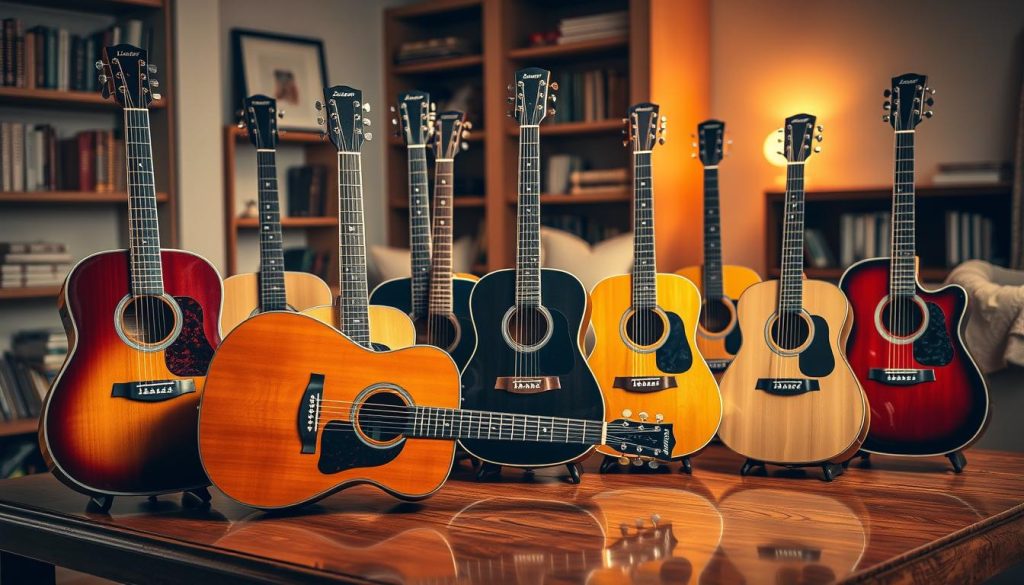
Dreadnought, mini-jumbo, or compact
The V50NJP-NT and AW4000 have dreadnought bodies. Their shape supports volume and strumming. The AW4000 projects more fully, making it suitable for players who like to fill a room with sound.
The EWP14WB-OPN Piccolo has a compact mini-jumbo body. It takes up less space while retaining the character of a steel-string instrument. Its 42 mm nut reassures players with small hands and those used to moderate string spacing.
Comfort, volume, and portability
The body shape should suit the length of your playing sessions. A larger instrument calls for a stable posture, while a compact body makes travel easier. Unlike an electric guitar, an acoustic guitar makes its body size, weight, and comfort immediate considerations from the first chord.
- Dreadnought: volume and strumming.
- Mini-jumbo: portability and comfort.
- Compact model: easier transport.
The best guitar is one you can hold naturally.
Which woods should you choose for the sound you want?
Wood affects a guitar’s tone, projection, and feel. Looking at the finish alone is not enough: the combination of body, top, and neck matters too. To explore the subject further, see this guide to guitar woods.
The most useful woods to compare are:
- Mahogany: a warm, rounded response rich in midrange. It also supports long sustain but can add weight to the instrument.
- Spruce: a clear attack and good projection, as on the V50NJP-NT. The AW4000 pairs solid mahogany with solid Caucasian spruce.
- Cedar: a soft, immediate response suited to the nuanced accompaniment of the GA15 and AW65ECE-LG.
- Rosewood: a smooth fingerboard that complements the tonal balance. Maple, basswood, and ash also have distinct characters.
The guitar should match the feel you want. Mahogany instruments produce fuller sounds, while spruce adds more brightness. Quality depends above all on how the guitar is assembled, the care taken in making it, and your own comfort.
How should you assess the neck, fingerboard, and frets?
Handling a guitar quickly shows whether it suits your playing ability. Before buying, look at the neck shape and how naturally your hand rests on it. Beginners and players with small hands may prefer a slim profile that is easy to move along.
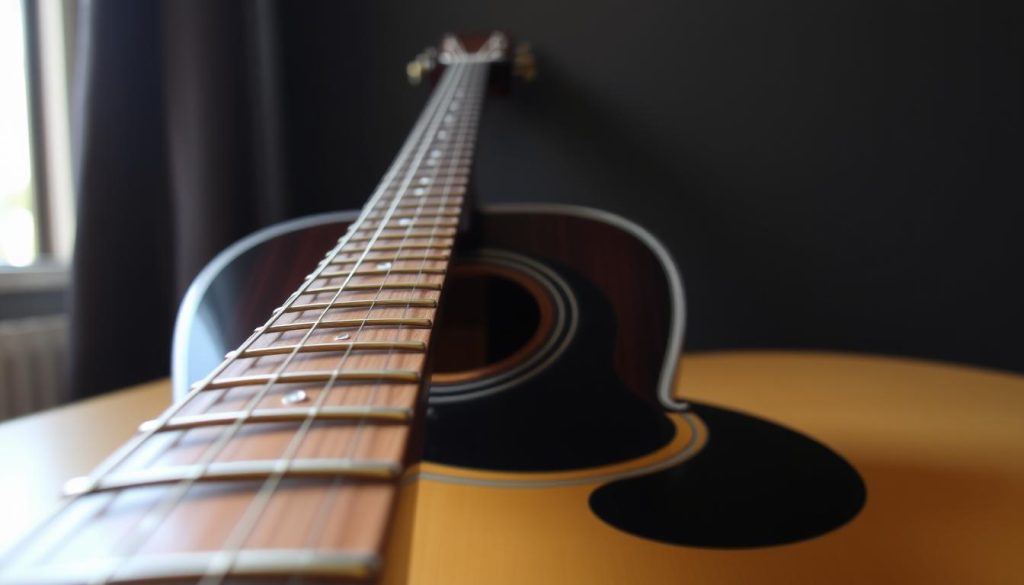
Neck profile and nut width
The nut determines the spacing between the six strings. The EWP14WB-OPN Piccolo’s 42 mm nut offers a useful point of reference. Closer spacing makes chords easier, while wider spacing helps with arpeggios.
Maple necks are often valued for their quick response. A rosewood fingerboard feels smooth under the fingers. On an Ibanez guitar, pay particular attention to a consistent feel and the ease of playing barre chords.
Access to high notes and playing comfort
More frets expand your melodic options. The GA15 has 18, enough for classical learning. Check each fret: it should be even, without catching your fingers or causing unwanted buzzing.
“The right neck lets you focus on the pleasure of playing.”
For more on this point, see this guide to frets.
Acoustic or acoustic-electric guitar: which should you choose?
Where you play often guides the decision. An unamplified acoustic guitar suits lessons, living rooms, and rehearsals without an amp. It is simple, light, and ready to play.
For stage use, an acoustic-electric guitar offers more flexibility. The AW54CE includes a Fishman Sonicore pickup and an Ibanez AEQ210TF preamp. You can plug it directly into a sound system.
- Built-in tuner for tuning the instrument quickly.
- Volume, bass, and treble controls.
- Good sound reproduction and balanced tones.
- A cutaway for reaching the higher frets.
The CE suffix indicates the cutaway and electronics. The cutaway helps with solos and complex arrangements. To compare this type with an electric guitar, consider your style, budget, and future stage plans.
If you do not need amplification, choose simplicity. For playing to an audience, electronics add real convenience.
| Use | Suitable option | Main advantage |
|---|---|---|
| Home and lessons | Unamplified model | Ready to play |
| Small stage | AW54CE | Direct connection |
| Melodic playing | Cutaway | Easier access to high notes |
How much should you budget for an Ibanez acoustic guitar?
Your budget depends mainly on your playing ability, the feel you want, and how you intend to use the guitar. Prices vary, but each range serves a particular need. Remember the additional costs before you buy.

Entry-level models for beginners
The V50NJP-NT Jampack costs about €118, including accessories. It suits beginners who want a package that is ready to play. The GA15, at around €150, has nylon strings that feel gentler during early exercises.
- €118: a complete package for playing folk guitar.
- €150: a softer feel for classical learning.
- Allow for a gig bag, strings, and a possible setup as well.
More advanced and premium instruments
At about €298, the AW54CE adds electronics useful in rehearsals or on a small stage. Experienced guitarists may consider the AW4000 at €699. Its solid woods offer greater projection and high-quality construction.
Ibanez guitars are available from retailers including Thomann and Amazon. Compare price, stock, delivery, and what you get for your budget. An acoustic guitar remains a sensible choice alongside an electric one.
Conclusion
This selection covers the essentials, from a first chord to stage performances. The V50NJP-NT and VC50NJP-NT offer complete packages at a low price, ideal for getting started. Their folk-style bodies suit accompaniment and daily exercises.
The EWP14WB-OPN Piccolo stands out for its small size, 42 mm nut, and portability. It suits children and adults alike. For developing players, the AW54CE and AW65ECE-LG add versatility and amplification.
The AW4000 is aimed at demanding musicians with its solid mahogany and Caucasian spruce top. The GA15 remains an excellent starting point for learning, thanks to its nylon strings, 2.6 kg weight, and 18 frets.
- Beginner: an affordable package and reassuring feel.
- Travel: a compact, comfortable body.
- Stage: built-in electronics.
- Experienced player: wood quality and projection.
The best model therefore depends on your experience, budget, musical style, and need for amplification. Ibanez guitars offer options for these needs, while an electric guitar serves different sound preferences.