
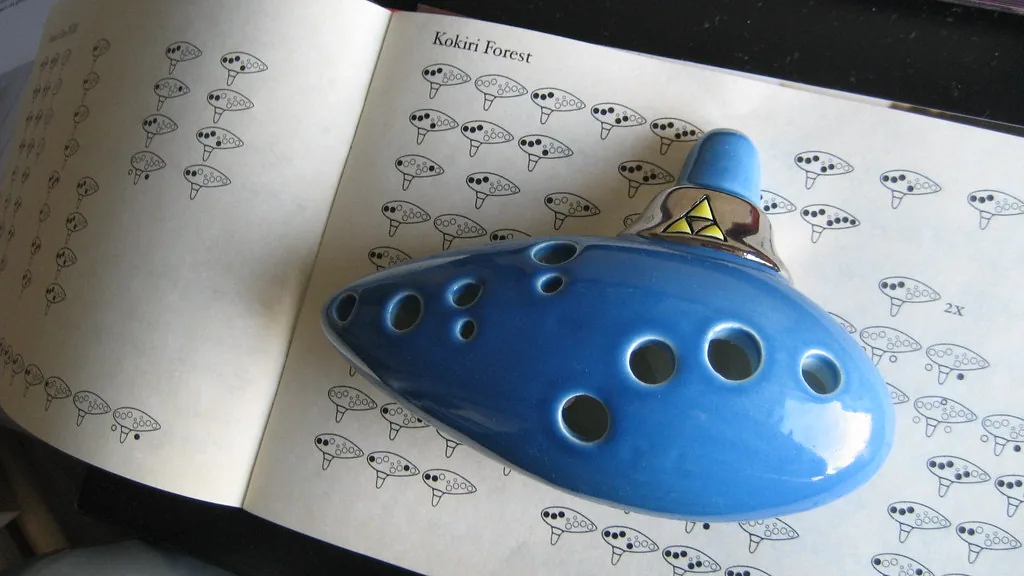
Goal: this article offers a clear look at the strengths and limitations of synthetic ocarinas to help you choose one in France today.
Context: material affects tone less than manufacturing precision and tuning. Good and bad models exist in both plastic and ceramic.
We compare the durability, price, weight, maintenance and hygiene of plastic with the appearance and tradition of ceramic. Synthetic models are light, affordable and easy to clean, but they are sometimes seen as toys and can retain moisture.
This guide draws on feedback about established brands and expert recommendations to help you avoid poorly tuned instruments. To buy with confidence, consult specialists rather than marketplaces.
Who this is for: beginners, children, travelers and musicians looking for a reliable everyday instrument. We will also cover sound quality, technical criteria (holes, range and chambers), uses and where to buy, including specialist retailers such as instruments-du-monde.
Why consider a plastic ocarina today?
In 2025, synthetic ocarinas are gaining ground thanks to their availability and improved manufacturing.
Affordability: models are available at every price point. Twelve-hole models remain the standard starting point. They offer accurate notes without requiring a large investment.
Practicality: low weight, durability and minimal maintenance make this instrument ideal for travel. You can slip it into a backpack without worrying that rain or cold weather will break it.
Ceramic retains a more prestigious image and sometimes has a richer finish, but it costs more and breaks more easily. To get a well-tuned instrument, avoid general marketplaces and choose specialist sellers.
- Easy to learn: a 12-hole model makes fingerings easier to understand.
- Growing market: more brands (STL, Stein/Focalink, Songbird) and learning resources.
- Do not confuse a toy with an instrument: intonation must be accurate across the full range.
| Criterion | Plastic | Ceramic |
|---|---|---|
| Price | Affordable | Higher |
| Durability | Good, suitable for travel | Fragile |
| Maintenance | Simple | More delicate |
| Sound quality | Depends on tuning | Often perceived as better |
Plastic ocarinas: advantages and drawbacks
Durability and low weight explain why synthetic models are popular for travel.
Durability, price and low weight for playing on the go
Plastic withstands drops well and weighs less than ceramic. That makes it practical for travel.
The price is often lower than that of a comparable instrument. For a beginner, it is a sensible choice.
Maintenance, hygiene and longevity
Cleaning is easy with ordinary household products. The material also tolerates temperature changes better over the long term.
Watch out for condensation: the plastic interior of the ocarina releases moisture more slowly. Take short breaks to maintain sound quality.
Suitable for children and travelers
For lessons and outings, safety comes first. Unlike ceramic, plastic does not create sharp edges if it breaks.
Hole placement and ergonomics are still essential: test the instrument’s intonation and response before buying.
Perceived limitations
Some musicians find plastic less pleasant to the touch and feel that it can look like a toy. There may also be fewer plastic models to choose from than ceramic ocarinas.
Finally, the environmental impact of plastic deserves consideration, although the longevity of a good instrument often offsets this drawback.
Sound quality and the real acoustics of a plastic ocarina
Manufacturing precision makes the difference. Sound quality depends first on the ocarina’s tuning, as well as the geometry of its holes and windway. Projection and intonation depend on these factors, not just the material.
Material and construction: tuning comes first
Good tuning ensures stable notes across the full range. Chamber shape, hole diameter and breath control determine the instrument’s response.
Microporosity and subtle differences in tone
Ceramic is more microporous than plastic and can add a slight tonal color. The difference is subtle and does not affect intonation when the instrument is well made.
- The body vibrates very little: air in the chamber produces the sound.
- Well-made synthetic models produce even notes.
- Watch for moisture: water retained inside an ocarina can temporarily change its tone.
| Acoustic criterion | Effect | Advice |
|---|---|---|
| Tuning | Determines intonation | Choose a properly tuned ocarina |
| Chamber | Affects tonal color and projection | Test note stability |
| Microporosity (plastic and ceramic) | Subtle difference in tone | Listen to comparisons of the same model |
Plastic or ceramic: which material suits your needs?
Before buying, decide where and how you will play most often. This will guide your choice of material, range and number of holes.
Beginners, children and traveling musicians: when plastic makes sense
For beginners, a 12-hole model remains the standard because it meets most learning needs. For a child, choose a more ergonomic 4- or 6-hole model.
On the go, plastic is recommended: it combines durability, a manageable price and easy maintenance. Frequent rehearsals, travel and changing weather make it a practical choice.
Tone, stage performance and collecting: when ceramic has the edge
Musicians seeking tonal color and projection often prefer ceramic ocarinas. On stage or in recordings, finish and projection can make a difference.
Bear in mind that bass and contrabass models play lower notes and often cost more. An alto ocarina offers an excellent balance; well-made synthetic versions are available too.
| Use | Recommended material | Note |
|---|---|---|
| Adult beginner | Plastic | 12-hole model recommended for learning |
| Child | Plastic | 4 to 6 holes, easier to hold |
| Stage performance and collecting | Ceramic | Richer tone and more refined finish |
| Travel and outdoor playing | Plastic | Durable and light |
Whatever your preference, prioritize tuning quality. To learn how to choose an ocarina, test its intonation, note response and stability before buying.
Essential selection criteria: holes, range, tuning and types
The number of holes, range and tuning determine what you can play and how comfortably you can play it.
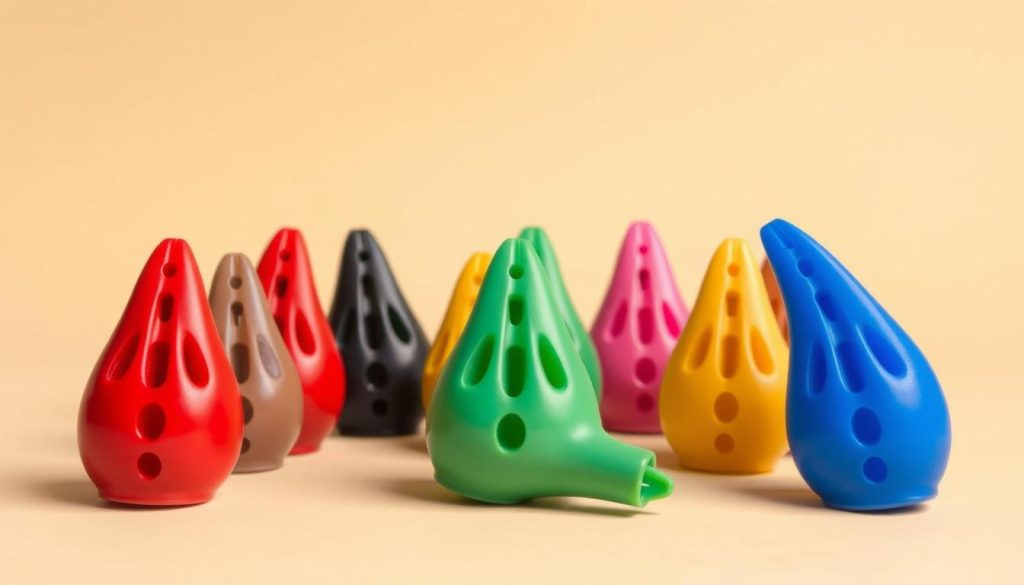
4, 6 or 12 holes and multi-chamber instruments
Models with 4 or 6 holes suit children. A 6-hole model offers up to 17 notes, enough for simple tunes.
Twelve-hole models cover up to 21 notes. They remain the recommended choice for starting out and progressing.
Two chambers and double or triple ocarinas
Double and triple ocarinas use two chambers or more to extend their range.
These designs expand the available notes and allow octave leaps. Asian and Pacchioni fingerings are common.
Common ranges and tunings
The soprano has a high range, the alto offers a good balance, and the bass or contrabass provides strong low notes in a larger instrument.
Common tunings are C, G, F and D. The alto ocarina in C (AC/C3) remains a practical standard for following tutorials.
- Tip: start with a 12-hole model, then move to a double ocarina if you want a wider range.
- Check: make sure the instrument is properly tuned before buying so its notes remain stable.
- Ergonomics: test the hole positions and chamber size so you can play for long periods without fatigue.
For buying advice on 6-hole models, see this guide to 6-hole models.
Price, quality and perception: finding the right balance
Models at every price point are available, but accurate intonation remains essential for making progress without frustration.
Avoid general marketplaces such as Amazon, Wish and AliExpress. Some sellers offer poorly tuned models. Investing in a reliable instrument makes learning less frustrating.
Practical buying benchmarks
- Budget: an alto in C from a recognized brand costs around €50; this often represents good value.
- Perception: ceramic looks more prestigious and costs more. A good synthetic model is still musically convincing.
- Total cost: consider maintenance, the risk of breakage, and international shipping times and charges.
Tip: compare audio demonstrations. Test intonation across the full range, especially for a 12-hole model intended for learning.
Finally, consider resale value and longevity. A well-made model holds its value for longer.
Where to buy a reliable ocarina in France and abroad
To buy with confidence, choose specialist retailers that stand behind their instruments’ tuning, provide after-sales support and offer audio demonstrations.
Established sites and brands
STL Ocarina offers a wide selection (12-hole models in C, doubles and triples). Its website is in English and the company is based in the United States: delivery takes about 2.5 weeks and shipping is free on orders over $100.
Ocarina World / Stein-Focalink is distributed in France and has a strong reputation. Its alto in C is often priced at around €42.
Songbird remains a reliable choice for variety and quality. The Night by Noble model (from Korea) is a benchmark among plastic ocarinas, with a matte finish and a sound close to that of many ceramic ocarinas.
Practical buying advice
- Choose specialist retailers over low-price marketplaces (Amazon, Wish, AliExpress) to reduce the risk of buying a poorly tuned instrument.
- Check for audio or video demonstrations, a return policy and clear specifications (range, tuning and number of holes).
- Choose a French retailer if possible: after-sales support will be simpler, delivery faster and costs easier to manage.
| Seller | Strength | Price and delivery guide |
|---|---|---|
| STL Ocarina | Wide selection, professional models | About 2.5 weeks; free shipping on orders over $100 |
| Ocarina World (Stein/Focalink) | Distribution in France, good reputation | Alto in C around €42 |
| Songbird / Noble | Good finish, varied models | Popular, well-rated models |
Final tip: first decide what you need (a 12-hole, double or triple model), compare a few instruments and ask for recordings before buying. This will help you choose an ocarina suited to your budget and intended use without compromising on quality.
Conclusion
In short, tuning quality matters most for stable notes, more so than the material.
This article shows that durability, price and easy maintenance make plastic a sensible everyday choice, while ceramic retains an advantage for tone and stage performance.
To start, choose a 12-hole model, ideally an alto ocarina in C. Test its intonation, the response of its holes and the stability of its chamber before buying.
Choose established brands and specialist sellers, request audio demonstrations and check after-sales support. That way, this instrument will encourage you to play often and make lasting progress.