
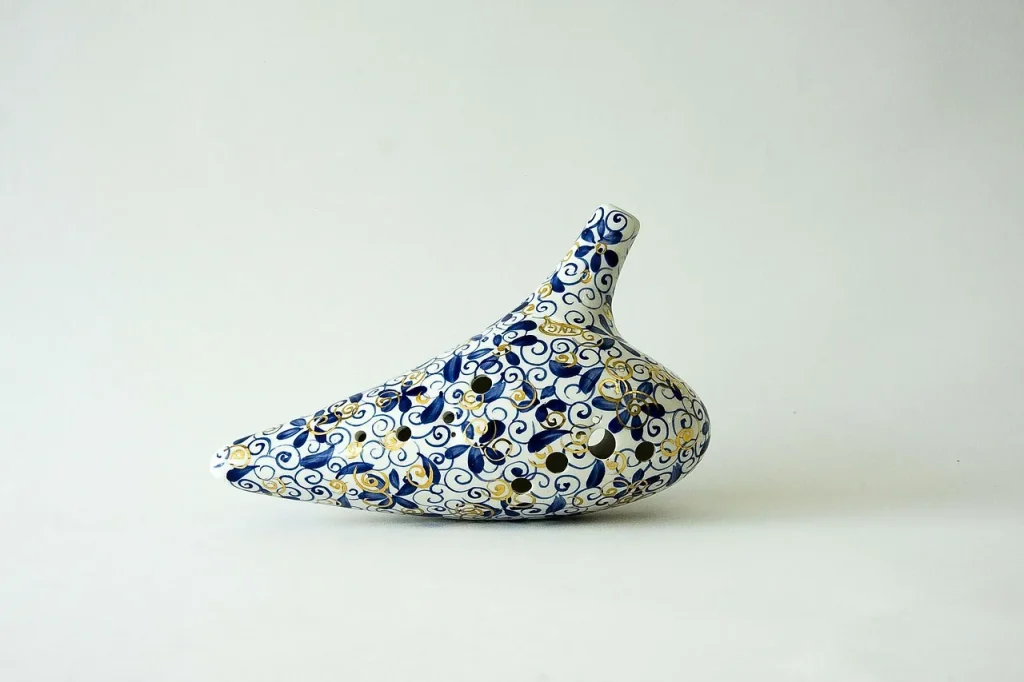
This guide brings together sheet music and tabs for playing the series’ best-loved melodies, from Ocarina of Time to Breath of the Wild.
It is for beginners and more advanced players alike. The simplicity of the melodic lines makes them accessible even if you cannot read music.
We follow a clear path: the history of the themes, essential pieces from each game, a closer look at Ocarina of Time and Majora’s Mask, and practical advice on breath control, rests and fingering.
You will also find reliable online resources—Palais Zelda, MuseScore, Zelda Universe and open-source repositories—along with recommended brands such as STL Ocarina, Songbird, Focalink and Night by Noble.
The goal: build a lasting repertoire by skill level, improve your intonation and musical expression, and follow an easy-to-use learning path.
Why these Zelda melodies became ocarina classics
The game’s music has played a genuine narrative role since 1998. Certain musical phrases accompany key places and moments, staying with players long afterward.
The structure of the themes makes them easy to follow. Many pieces have simple lines, few overlapping chords and long notes. These qualities make the ocarina ideal for playing the motifs expressively.
Zelda’s Lullaby shows this emotional power: a symbol of family and royalty, it is easy to adapt for other instruments because its notes are simple.
The games have evolved, too: Breath of the Wild favors minimalism, while Twilight Princess has darker tones. These variations enrich the experience and inspire new interpretations.
Accessibility and legacy: many melodies are built on a simple set of notes. This supports gradual learning and has inspired thousands of amateur arrangements online.
- Themes that act as narrative cues → easier to remember.
- Clear structure → well suited to wind instruments.
- Consistent leitmotifs → smoother technical progress.
This background gives you a useful starting point for choosing pieces and organizing your practice.
Essential Zelda ocarina tabs by game
Each game offers pieces that can help you build a repertoire and develop your skills.
Ocarina of Time and Twilight Princess
Start with Zelda’s Lullaby, Epona’s Song and Bolero of Fire.
These themes are short and have clear melodic lines. They call for precise finger placement and good breath control.
Twilight Princess offers contrasts: Kakariko Village for brightness and Midna’s Desperate Hour for tension. These pieces develop sensitivity and dynamics.

Breath of the Wild and Skyward Sword
Breath of the Wild favors minimalist textures. Start with Korok Forest, then move on to Zora’s Domain and Revali as your skills develop.
Skyward Sword features lyrical lines such as Ballad of the Goddess and Skyloft. They are ideal for working on phrasing with a wind instrument.
Wind Waker and seafaring colors
Wind Waker combines seafaring rhythms with flowing melodies. The official 2003 collection helps you study the harmony through traditional piano scores.
“Choose quality resources: Palais Zelda and MuseScore offer reliable arrangements.”
One possible path is Korok Forest → Zora’s Domain → Revali / Midna. This supports steady progress and better quality of performance.
Essential Ocarina of Time classics for your repertoire
Some Ocarina of Time melodies are ideal for practicing intonation and breath control. Here are three pieces that let you work on specific skills without excessive complexity.
Zelda’s Lullaby — simplicity and intonation
Zelda’s Lullaby is a central motif associated with the Temple of Time. Work on intonation by articulating each note and leaving expressive rests.
Start slowly to steady your fingering and strengthen your interpretation of this key theme.
Epona’s Song — transitions and metronome
Epona’s Song calls for smooth transitions. Use a metronome to work through the melody in sections.
Keep a steady tempo for 12 to 18 measures before increasing the speed.
Bolero of Fire — rhythmic precision and breath control
Bolero of Fire requires crisp syncopation and steady airflow. Practice at a slow tempo first, then at a moderate one.
Check your intonation by making short recordings and comparing them with audio references. Choose detailed scores that show fingering and rests.
- Sample session: 5 minutes of warm-up, 10 minutes of practice in sections and 5 minutes of playing through the piece with a metronome.
- Fingering: rest your fingers on the holes without pressing hard, maintain a stable posture and control the mouthpiece to produce a clear note.
Musical expression comes from balancing notes, rests and breath more than from speed.
A closer look at Majora’s Mask and other classic video games
In some classic games, meter and rests become melodic elements in their own right.
Oath to Order — changing meter, rests and balance
Oath to Order (Greg54’s arrangement) uses subtle changes of meter. Practice the transitions step by step.
Keep the beat precisely. Observe the rests that shape the piece to maintain its balance.
Start at 60 BPM, then gradually raise the tempo until you can play the transitions smoothly.
Song of Healing — a simplified version for beginners
Simplified versions of Song of Healing are available. Its repeated motifs help you develop fluency.
Isolate short, difficult passages. Listen to the inflections, work on each passage again, then put it back into the whole piece.
“For stable notes, sustain your phrases and airflow, and cover the holes properly.”
| Piece | Skill to practice | Method |
|---|---|---|
| Oath to Order | Changes of meter, rests | Start at 60 BPM, increase the tempo and isolate the transitions |
| Song of Healing | Repeated motifs, steady tempo | Isolate short passages and practice active listening |
| Other adaptations | Each piece’s distinctive mood | Compare fan arrangements with official versions |
Scores and traditional sheet music from other games also help with analysis and adaptation. Together, these provide a clear way to master each note while maintaining steady airflow.
Playing Zelda’s Lullaby on a 4-, 6- or 12-hole ocarina
Learning the lullaby calls for careful work in sections and breath control suited to your instrument.

Essential fingerings: on a 4-hole ocarina, cover the holes completely for a pure note. On a 6-hole model, use alternate fingerings for semitones. A 12-hole model has a wider range; adjust your air pressure when changing octaves.
Managing rests and breath vibrato
Take discreet breaths between phrases. Pauses become expressive when you keep their duration consistent.
Breath vibrato comes from slight changes in airflow. Start without vibrato, then add a little at a time while maintaining your intonation.
Guided practice plan
Practice in 4-measure sections. Repeat each section 6 to 8 times, then link them together.
- Session: 5 minutes of warm-up, 20 minutes of practice in sections and 10 minutes of playing through with a metronome.
- Mark tricky holes with tape to help you play each note reliably.
| Version | Skill to practice | Practical tip |
|---|---|---|
| 4 holes | Clear notes | Cover the holes completely and blow gently |
| 6 holes | Semitones | Use alternate fingerings and an annotated PDF |
| 12 holes | Octaves and phrasing | Adjust your air pressure and mark the holes |
Final tip: print an annotated score, listen to a reference recording, then record yourself to check your intonation, rhythmic consistency and musical expression.
Choosing tabs for your ocarina and skill level
Your choice of sheet music depends as much on your instrument as on your technical level. A good selection reduces fingering mistakes and helps you stay motivated.

4, 6 or 12 holes: compatibility, transposition and simplicity
For each hole count, check that the fingerings match your instrument. Ocarinas with 4, 6 or 12 holes have different ranges and require suitable fingerings.
If you are a beginner, choose short, clear scores. Keep things simple so you stay eager to play.
Key (C, F, G): intonation, reference notes and mistakes to avoid
The key affects the pitch you hear and whether you need to transpose. On a 12-hole ocarina, C is often a good starting point because it gives you more notes to work with.
Check your intonation with a tuning reference or an audio recording. Adjust your air pressure to correct small differences.
“Avoid unverified scores: accurate fingerings and breath markings make a difference.”
| Criterion | What to check | Practical tip |
|---|---|---|
| Readability | Clear symbols | Choose an annotated score |
| Fingerings | Consistency with the number of holes | Test them before relying on them |
| Markings | Rests and breath | Prioritize quality |
Where to find free sheet music and quality tabs
Finding good sheet music online makes learning easier. Choosing a reliable source helps you avoid fingering errors and incomplete files.

Recommended resources and rights
Palais de Zelda has a long-standing collection of reference material. MuseScore offers a collaborative library with filters to sort resources by level and key.
Zelda Universe is useful for community feedback and practice forums. GitHub and open-source repositories let you compare multiple versions.
For free sheet music that you can use legally, consult IMSLP for public-domain works or 8notes for simplified versions. Sheet Music Direct provides access to previews of official scores.
Assessing quality and crediting creators
- Check that the fingerings, breath annotations and rests are consistent.
- Look for a readable layout and transposition guidance.
- Check usage rights and always credit the arranger.
“Use an advanced search, such as filetype:pdf ocarina, to find downloadable documents and check their sources.”
| Source | Strength | Practical tip |
|---|---|---|
| Palais de Zelda | Historical archives | Check the metadata |
| MuseScore | Editable files and filters | Choose versions well regarded by the community |
| GitHub and repositories | Version comparisons | Look for Creative Commons licenses |
Tip: build a personal library organized by level, key and number of holes. This speeds up selection and supports your progress.
How to improve quickly: tempo, breath and fingering
A focused routine helps you improve faster by concentrating on one aspect at a time.
Effective routines (20-5-20)
The 20-5-20 method: 20 minutes of focused practice, a 5-minute active break spent listening, then another 20 minutes of practice with variations.
Start with a clear goal: rhythm, breath or fingering. Divide the piece into 4-measure sections and repeat each passage 5 to 10 times.
Useful tools
Use a metronome to steady your tempo: start slowly and increase it by 5 BPM at a time once you can play cleanly.
Tempo guides: 70 to 80 BPM for calm pieces and 100 to 110 BPM for rhythmic motifs (for example, around 110 BPM for the Bolero).
- Personal recordings: listen back to correct each note and improve your intonation.
- Marking the holes: this helps with fast passages and reduces fingering mistakes.
- Breath exercise: hold each note for 5 seconds to develop continuous, steady airflow.
“Thoughtful repetition is better than hours of practice without a goal.”
Keep a practice journal to record your mistakes and solutions. These tips support fast, lasting progress.
With consistent practice, you can improve quickly: posture, airflow and note accuracy all matter when you play ocarina from tabs.
Expanding your playing: arrangements for multiple instruments and a broader repertoire
Playing with others adds depth to the sound and encourages you to explore new arrangements.
Expand your repertoire: try playing a melody with two or three people to give it warmth and depth. Pair the ocarina with piano, guitar or violin, depending on the effect you want.
Piano, guitar and violin: adapting themes with quality and simplicity
Choose carefully edited traditional scores as a reliable starting point. The official Wind Waker (2003) and Best Collection (2004) books are excellent starting points for piano.
For one arrangement, keep the theme in the foreground and give the piano the harmonic accompaniment. The guitar can play gentle arpeggios, while the violin adds lyrical countermelodies.
- Assess the level: start with a simple version, then add complexity to the passages. Choose readable scores.
- Synchronization: use a shared metronome to coordinate entrances and rubato when playing together.
- Tools: MuseScore lets you transpose, simplify double stops and adjust tempos.
- Tone colors: use the main instrument’s holes and fingerings to vary your interpretation.
| Instrument | Recommended arrangements | Role in a duo |
|---|---|---|
| Piano | Ballad of the Goddess, Hyrule Field Theme | Harmonic accompaniment, sustained tones |
| Guitar | Kakariko Village, Serenade of Water | Arpeggios, gentle rhythm |
| Violin | Link’s Memories, short countermelodies | Countermelody and lyrical emphasis |
Practical plan: prepare 2 to 3 melodies for each session. Increase the tempo in stages and review the pieces each week to strengthen your ensemble playing.
“Playing together turns a simple line into a rich soundscape.”
Conclusion
Here is a simple path to effective progress. Choose 1 or 2 short themes, such as Korok Forest; consider a 12-hole ocarina in C for compatibility; and use reliable tabs and scores to guide your learning.
If you are a beginner, start with accessible melodies and use a metronome from your first sessions to steady your tempo. Explore Palais Zelda, MuseScore and forums for free scores and useful feedback.
Practice regularly: short daily sessions are best. Record yourself, identify difficult passages and track your progress. These tips enrich your experience, develop your musical expression and help you improve quickly.