
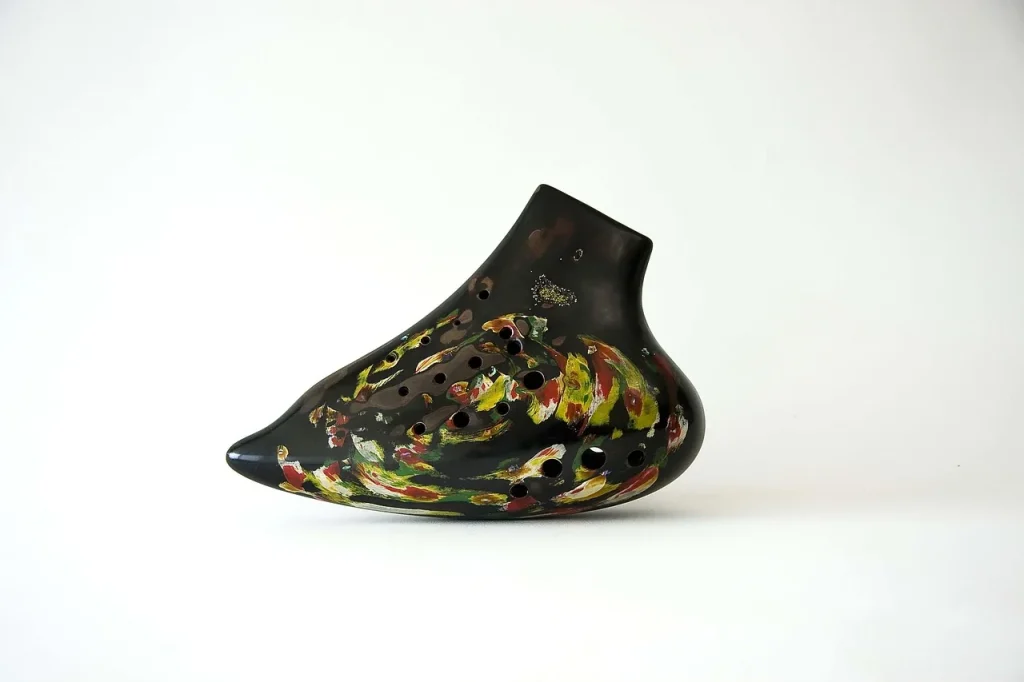
Quick introduction: the modern ocarina appeals to a wide audience thanks to The Legend of Zelda, while remaining an instrument with a history spanning thousands of years. This 2025 guide helps you choose one in France or online using practical criteria.
Key criteria: A440 tuning, ergonomics, durability, quality control and customer service. The 12-hole format covers about 21 to 22 notes and suits most methods and sheet music.
Materials affect tone: ceramic produces a warm sound, while plastic (ABS or polycarbonate) is more durable for travel. STL stands out for its wide selection and more than 300 tutorials, Focalink/Stein for its ceramic finishes, and Noble/Night for its portable models.
Buying advice: avoid general marketplaces. Choose specialist shops or established manufacturers to reduce the risk of counterfeits and tuning problems. For more practical details, see our dedicated guide.
This guide offers practical recommendations based on your skill level, repertoire and intended use. The following sections cover sound, materials, range, ergonomics, prices and reliable buying options in France.
Why compare STL, Focalink and Noble today?
The ocarina is enjoying renewed interest that brings together history and popular culture. This wind instrument, more than 12,000 years old, has returned to the spotlight through video games. Twelve-hole models remain an ideal starting point for beginners thanks to their approximately 22 notes and logical fingering progression.
In 2025, several factors make this comparison useful:
- A wider selection and new materials (composites and improved ABS).
- Abundant learning resources, including more than 300 tutorials from some manufacturers.
- Notable differences in A440 tuning, mouthpiece quality and hole finishing.
These differences directly affect learning and playing comfort. A reputable manufacturer reduces the risk of defects and makes progress easier. Depending on whether you play game music or folk, or need a portable instrument, some models will suit you better.
To choose a suitable first instrument, read our practical guide on how to choose your first ocarina.
Brand comparison: STL, Focalink and Noble
Choosing an ocarina often means balancing sound, comfort and portability. Here is a summary to guide your purchase in France according to your needs and budget.

Strengths and limitations for a first instrument
STL Ocarina offers more than 50 models starting at around €40 to €60, along with beginner packs that include a method book, case and video tutorials. These resources make it an excellent starting point for learning.
Allow for international delivery times of about 2.5 weeks and possible customs fees. Before buying, check that a fingering chart is included and that A440 tuning has been checked, as STL Ocarina recommends for its packs.
Tuning, tone and ceramic finishes
Focalink/Stein is known for the precision of its alto in C. Ceramic offers warm sound quality and excellent tuning across the instrument’s range.
Buying from a retailer in France reduces delivery times and uncertainty around imports.
Plastic, durability and playing on the go
Night by Noble favors ABS plastic for a light, durable instrument. Ideal outdoors, it also suits small hands and musicians on the move.
In summary, STL stands out for its learning resources, Focalink for its rich harmonics and ceramic finishes, and Night for its durability and portability. Choose an alto in C to use the widest range of resources and tablature. Always check tuning and hole finishing before buying.
Key evaluation criteria: sound quality, tuning and breath control
Evaluating an ocarina begins with listening to its resonance and the consistency of its sound across its range. These three criteria determine how the instrument performs in practice and how it feels to play.
Sound quality and tone
Sound quality: check note consistency, harmonic richness and projection. Ceramic produces a warm tone with depth, making it well suited to recording.
ABS plastic offers a clear sound and a stable response for outdoor playing.
Tuning risks and pitch
Tuning: ask for A440 certification or test every note with a tuner. Nearly 20% of marketplace buyers report tuning problems.
Beware of poorly drilled instruments that force you to compensate with your breath and can hinder ear training.
Breath control: response and fatigue
Breath control depends on the precision of the mouthpiece and the instrument’s internal seal. A clean attack helps keep long notes stable and sustained.
Make short recordings to assess consistent tone and breath control before choosing a reliable instrument instead of a decorative object.
Materials and construction: ceramic, plastic and hybrids
Depending on its material, an ocarina may be better suited to the studio or to travel. This choice affects tone, durability and maintenance needs.

Ceramic: projection and harmonic richness
Ceramic offers harmonic richness and good projection. Its subtle tonal shades suit recordings and solos.
Because it is fragile, it needs a padded case and care around temperature changes: avoid impacts.
ABS plastic: durability and portability
ABS plastic stands out for its durability and water resistance. Light and easy to maintain, it is ideal for rehearsals, festivals and travel.
Its tone is clearer and more distinct, often making it preferable for outdoor playing.
Hybrids and innovations: coatings and composites
Recent models combine clay, glass or durable coatings to improve moisture resistance without sacrificing acoustic quality.
Always check the seal and hole finishing: build quality remains the priority. A well-tuned plastic model is better than a poorly tuned ceramic one.
To learn more about ceramic care and its limitations, read our guide to ceramic ocarinas.
Range and tuning: alto in C, G or F for your repertoire
The range you choose often defines the ocarina’s musical role and how easy it is to learn.

The alto in C (AC/C3) remains the standard model for beginners. Most methods and tablature are written for it. A 12-hole model covers about 1.5 octaves, enough for nearly 90% of folk pieces, game themes and pop melodies.
Registers and breath
Soprano: more piercing, it calls for a light, precise breath.
Tenor and bass: their low notes are powerful, but they require more air and the instruments are larger.
Multichamber ocarinas
Two- or three-chamber models extend the range to two octaves or more. They can play demanding arrangements but require coordination and good breath technique.
Tuning and recommendations
Choose A440 tuning and check each instrument when it arrives. C offers the best compatibility; G and F provide other tonal colors and finger positions.
- Advice: first master a 12-hole model, then consider a multichamber model if your repertoire calls for one.
- Tip: the Pacchioni system promotes a more consistent sound between chambers for recording.
To choose between 6, 10 and 12 holes as you progress, read our practical guide: which ocarina to choose.
Ergonomics and handling: hands, holes and playing comfort
How well an ocarina fits your hands often determines how long and how comfortably you can play.
A suitable shape reduces tension, improves the accuracy of note attacks and helps you play connected notes consistently.

Hole spacing and hand size
Choose a model with hole spacing that suits the size of your hands. Holes that are too far apart force you to stretch your fingers and can cause air leaks.
Twelve-hole models offer a logical fingering progression that is ideal for beginners. Six- or eight-hole versions require more memorization and careful technique.
Weight, balance and stability for accurate notes
Moderate weight and good balance reduce fatigue and help keep notes steady.
Light ABS plastic models suit small hands and younger players. Ceramic feels stable but needs careful handling.
- Test your thumb positions and the mouthpiece angle to improve comfort.
- Check the edges: careful finishing makes note attacks cleaner.
- Try short, repeated playing sessions in real conditions to assess the ergonomics for your skill level.
“Put ease of handling and consistent fingering ahead of appearance.”
Price, availability and long-term value
The initial price often affects an ocarina’s perceived quality and useful life. A well-tuned instrument helps develop your ear and speeds your progress.
Price ranges: around €35 to €60 for a reliable entry-level plastic model and €80 to €200 for a quality ceramic model. Avoid instruments with tuning problems.
Reliable entry level or risky low price
Choose models supplied with A440 certification, a fingering chart and clear documentation. A beginner pack includes the essentials and helps you avoid a poor choice.
Delivery, customs and after-sales service in France
Imports take time: allow about 2.5 weeks for international shipping and account for possible customs duties. Buying from a French retailer such as Ocarina World or Musique de Terre offers traceability and local after-sales service.
“A quality instrument is worth the investment: it resells more easily and lasts longer.”
| Type | Indicative price | Advantage | Risk |
|---|---|---|---|
| Plastic (entry level) | €35 to €60 | Durable, easy to carry | Variable quality |
| Ceramic | €80 to €200 | Rich tone, suitable for recording | Fragility and cost |
| Multichamber | €200 and up | Extended range | Demanding technique and higher price |
To shop online with confidence, read our comparison of established brands to refine your choice: which ocarina brand is best.
Who is each brand best suited to?
Every musician has different priorities: learning resources, sound or portability. Here is a concise guide to choosing according to your needs in France.
Beginners and smooth learning
Recommendation: choose a pack that includes a method book and videos. Twelve-hole models cover about 1.5 octaves and are sufficient for most first pieces.
A good first ocarina combines comfortable handling, accurate tuning and learning resources to help you avoid difficulties.
Experienced enthusiasts
Choice: consider multichamber models to extend the range to two octaves or more.
Musicians seeking precision and tonal quality for recording will appreciate a ceramic finish and A440 tuning.
Small hands and playing on the go
For younger players or people with small hands, choose a light ABS instrument. This material offers durability and comfort outdoors.
Video game and pop melody fans
Tuning in C makes it easier to play Zelda themes and popular melodies. It is a motivating choice that helps you keep playing.
| Player profile | Key benefit | Recommended format | Why |
|---|---|---|---|
| Learning resources and packs | 12 holes | Quick progress and learning resources | |
| Experienced players | Tuning and tone | Two or three chambers | Suitable for demanding arrangements |
| Small hands | Durability | Lightweight ABS | Comfort and portability |
| Video game fans | Compatibility with the repertoire | Alto in C | Easy to play familiar melodies |
Tip: the right model combines comfortable handling, accurate tuning and available resources to support your progress.
Where to buy safely in France and online
Choosing a specialist seller substantially reduces the risk of instrument quality problems. Buying from a specialist provides traceability, quality control and responsive after-sales service.
Specialist shops or marketplaces: counterfeit risks
Marketplaces offer plenty of choice, but come with risks: counterfeits, imprecise drilling and complicated returns.
A useful statistic: purchases from specialist retailers have 63% fewer defects than purchases from general marketplaces.
Established brands and recommended retailers
French options: Musique de Terre offers artisan service and advice on holding the instrument and matching it to your hand size. Ocarina World distributes Focalink/Stein and offers fast delivery within France.
Direct purchase: STL Ocarina sells a large online catalog and learning packs, but allow about 2.5 weeks for delivery and possible customs fees.
“Keep your receipt and a recording made with a tuner to make an exchange easier if needed.”
- Check the specifications: A440, range, number of holes, weight and fingering chart.
- Contact the maker to check whether the model suits your hand size and skill level.
- Prioritize quality and a reliable purchase over price alone.
| Seller | Strength | Limitation |
|---|---|---|
| Musique de Terre | Workshop and advice tailored to your hands | Variable stock |
| Ocarina World | Delivery within France, ceramic models in stock | Smaller catalog |
| Direct purchase (STL Ocarina) | Wide selection and learning packs | Possible delays and customs fees |
Usage scenarios: which model suits your schedule, skill level and style?
The best ocarina for you depends as much on how often you practice as on the sound you want. Whether you often play outdoors or prepare studio recordings, material and accessories make a difference.
Playing on the go and outdoors
Recommended choice: a durable plastic model. ABS plastic versions withstand rain and minor impacts. They need little maintenance and are easy to clean.
Choose a light padded case to protect the mouthpiece and edges during transport.
Indoor playing and recording
Recommended choice: a ceramic ocarina for its warm tone and projection through a microphone. Ceramic needs more care and a reinforced case.
For group rehearsals, an alto in C makes it easier to share sheet music and play together.
- Plastic: ideal for short, frequent sessions.
- Ceramic: preferable for sessions focused on playing and recording.
- Balance weight and ease of handling to reduce fatigue during long sessions.
Tip: note how you use your instrument (indoors or outdoors, session length and frequency) to choose more effectively and improve your playing experience.
Care, longevity and resale
A few steps after each session limit moisture and changes in sound. Always empty any trapped water, wipe the mouthpiece and leave the instrument in the open air for a few minutes.
Simple steps to preserve tuning and tone
Daily routine: wipe, dry and air out the instrument. These steps limit internal corrosion and tuning problems.
Occasionally clean the holes with a mild vinegar-and-water solution and a soft brush. Avoid prolonged immersion and harsh products.
Case, transport and climate conditions
Protect ceramic: keep the instrument in a padded case and store it somewhere dry. Avoid sudden temperature changes (such as a car in the sun or freezing conditions), which can cause tiny cracks.
For minor ceramic repairs, choose epoxy rather than cyanoacrylate glue.
Resale value and practical advice
- Check A440 tuning each month and keep a photo taken on delivery to make any return easier.
- A good maintenance record increases resale value after a few years.
- ABS plastic copes better with the demands of travel, but simple care also extends its life.
Tip: a sturdy case and regular care provide years of use and better resale prospects.
Conclusion
To progress with a first ocarina, the safest choice is a 12-hole alto in C accurately tuned to A440.
2025 summary: choose a reliable instrument suited to your hands and repertoire. For sound quality, ceramic excels in the studio, while plastic makes travel easier.
Buy from a specialist: Musique de Terre, Ocarina World or STL Ocarina directly for its learning packs. Check the tuning with a tuner when the instrument arrives.
Care is simple: use a padded case, dry the instrument after each session and check its notes monthly. If you are a beginner, follow the available tutorials to steady your breath and fingering and make learning easier.