
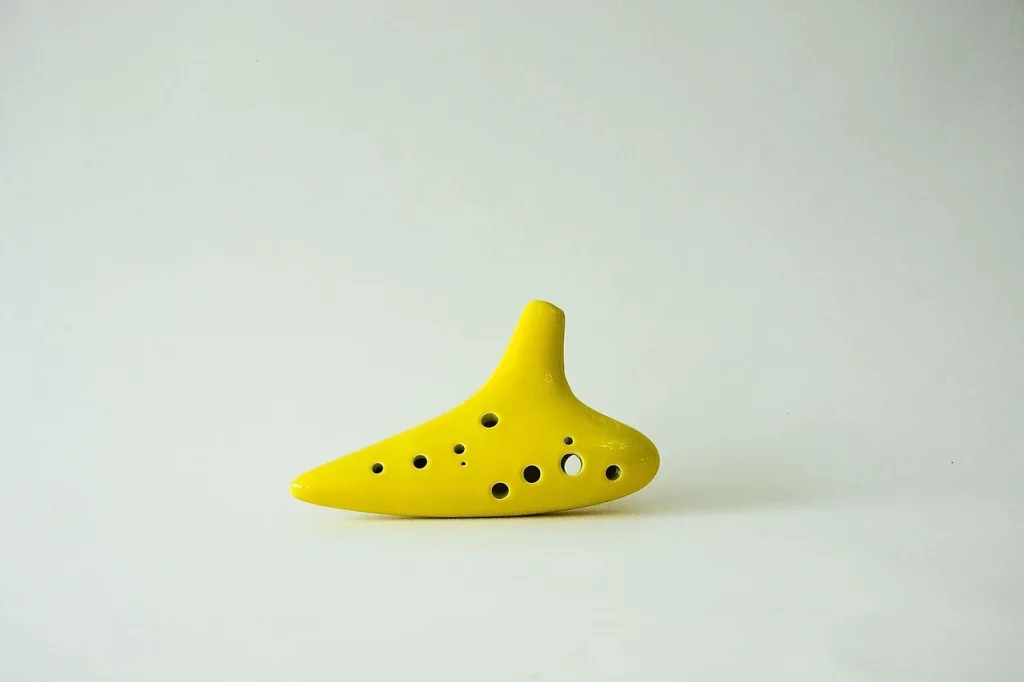
Goal: This tutorial offers a clear, step-by-step guide to playing this beloved theme on the ocarina. You will find structured tabs, breath-control tips and exercises to get started in your first session.
This guide is for curious beginners and experienced musicians who want to expand their repertoire. It shows you how to practise each passage slowly, then connect the phrases for a more fluid performance.
Included resources: PDF sheet music, interactive tabs and an explanatory video to help you work on rhythm and pitch in 3/4 time.
Background: first heard in the early games of the series, this melody remains a memorable theme. The lesson focuses on phrasing, a tempo of around 80 BPM and the use of rests to make your performance more expressive.
Method: break the melody into short sections, repeat them slowly, listen closely to your sound and gradually increase the tempo. The aim is to play the theme with control and musicality.
The background and legacy of Zelda’s Lullaby
First heard in 1991, the lullaby quickly became a central motif in the series. Its simple, moving theme became an important part of players’ memories. The 1998 version, woven directly into the gameplay, strengthened its role in the story.
From A Link to the Past to Ocarina of Time: origins and reach
The piece originated in 1991 and returned in a more immersive form in 1998. This iconic melody gained depth through its use in the games and its successive arrangements. The fuller orchestrations in Twilight Princess also heightened its evocative power.
Koji Kondo and his mark on video games
Koji Kondo writes music that is clear and memorable. This legendary composer favours melodic simplicity, making the piece easy to cover and adapt.
- Accessibility: many versions are available for different skill levels.
- Resources: PDF sheet music, tutorials and a video make learning easier.
- Lasting appeal: this music retains a gentle, contemplative quality that touches several generations.
Zelda’s Lullaby ocarina tabs: step by step
Accurate fingering and breath control are essential to playing this theme well. Start with how you hold the instrument: keep your palms relaxed and cover the holes consistently to keep the notes in tune.
Finger positions, holes and pitch accuracy: on a 12-hole instrument, follow the standard fingerings in C major. Make sure each hole is sealed to prevent air leaks that affect the pitch of individual notes.
Breath and rhythm: use a steady breath without forcing it. Set your metronome to 80 BPM in 3/4 time and stabilise your tone before increasing the tempo.
Breaking down the melody: isolate sections A and B, repeat two measures at a time, then put them together. Record yourself to spot inconsistencies and improve transitions between fingerings.

| Aspect | Practical tip | Expected result |
|---|---|---|
| Covering the holes | Firm but gentle contact; check the seal | Accurate, stable notes |
| Breath | Steady breath without forcing it | Even tone without glissando |
| Tempo and rhythm | Metronome at 80 BPM in 3/4 time; gradual changes | Rhythmic stability and musicality |
| Breaking it down | Sections A and B; repeat two measures at a time | Smooth transitions |
Ocarina sheet music and tabs: versions, PDFs and fingerings
Clear, well-annotated sheet music reduces hesitation while you play. For beginners, the “Very Easy C, 12-hole” version is a reassuring starting point. It makes the music easier to read and lets you follow each measure without undue difficulty.
Versions for 6-hole instruments offer simpler fingerings. They retain the character of the melody while reducing technical passages to make learning easier.
Resources and 16 available versions
On partition-ocarina.fr, you will find 16 versions credited to contributors such as Rinku and Brizio. Downloadable PDFs let you print the music and annotate each note.
- Complete scores in C major for beginners.
- Interactive tabs with visual guides to the holes.
- Video tutorials covering the 12-measure structure and a tempo of around 80 BPM.
| Resource | Benefit | Suggested use |
|---|---|---|
| Can be annotated | Print it and highlight where to breathe | |
| Interactive tab | Visible fingerings | Reduce hesitation |
| Video | Posture and note attack | Copy the movements slowly |
Quick method: read through the score silently, sing the melody, then play with a metronome. Choose the simplest version so you can play steadily instead of trying to read too quickly.
Improve your practice: tempo, air leaks and consistency
The quality of your practice matters more than its duration: ten focused minutes are better than a long, inattentive session.
Start each session with the metronome set around 80 BPM in 3/4 time. Keep the tempo steady before increasing the speed. Short, regular sessions support consistent progress.
Metronome, transitions and fixing air leaks
Work on transitions between notes by isolating difficult measures. Repeat each measure slowly three times without a mistake, then put it back into the piece.
To fix air leaks, check how your fingers cover the holes and adjust the angle of the mouthpiece. Ease your breath pressure slightly if the sound squeaks; this can help improve pitch accuracy.
- Structure your practice: short sessions, consistency and a metronome.
- Transitions: anticipate finger movements and avoid unnecessary motion.
- Track progress: record yourself and compare your takes.

For concrete examples and guided sheet music, see this dedicated tutorial.
Detailed tutorial and sheet music
Other instruments and adaptations: kalimba, guitar and variations
The melody takes on another dimension when played with different sounds. Instruments such as the kalimba and guitar give it a new colour while preserving the gentle character of the original theme.

On a standard-tuned 17-key kalimba, focus on the arpeggio and thumb coordination. Practise short, repeated patterns to steady your sound and give the music a lighter feel.
On guitar, pay attention to legato and the balance between voices. A light fingerstyle approach preserves the melody’s dreamlike quality. Simple chords in C major provide support without weighing down the motif.
Why tabs in several formats help: the same motif can be read from staff notation or through guides suited to each instrument. Tabs ranging from beginner to advanced let you adjust the difficulty.
- Kalimba technique: slow arpeggios and coordinated thumbs.
- Guitar technique: legato and control of each voice’s dynamics.
- Learning approach: start on a familiar instrument, then gradually apply what you have learned to another.
A comparison video can help: watch a slow performance, then a livelier version to find a pace that suits you. To make it easier to move between instruments, consult the shared simplified score.
Finally, let your ear guide your choice of dynamics. Placing the theme back in its game context helps you recapture its atmosphere and play the melody expressively and naturally.
Conclusion
This approach helps you move from careful reading to a natural performance.
Start with this score in C, follow the tabs and make sure the holes are sealed to keep each note stable.
A few minutes of daily practice can quickly improve your breath control, rhythm and steadiness. Work on the piece in sections, strengthen the transitions, then connect them.
Follow the recommended tempo and the phrasing of legendary composer Koji Kondo. Compare at least two of the 16 available versions to find the one that suits you.
For a very easy approach and guided sheet music, see the easy score. Mastering this lullaby means bringing together accurate pitch, control and expression to make the melody come alive.