

This article explains how simple, safe, regular care can preserve an ocarina’s warm tone and accurate tuning.
Since Giuseppe Donati’s work in 1853, the modern ceramic version has become an accessible instrument for musicians. Its porosity gives it a mellow tone but makes it vulnerable to moisture.
Practical goal: adopt simple habits at home and when travelling. Use a microfiber cloth, lukewarm water and mild soap. Never immerse the instrument or put it in a dishwasher.
After playing, clean and disinfect the mouthpiece to protect players and keep notes sounding clearly. A clean instrument regains stability and projection, whether played solo or in an ensemble.
Popular in recent years thanks to video games and popular culture, this musical instrument needs a simple care routine to last for years.
Understanding a clay ocarina for better sound
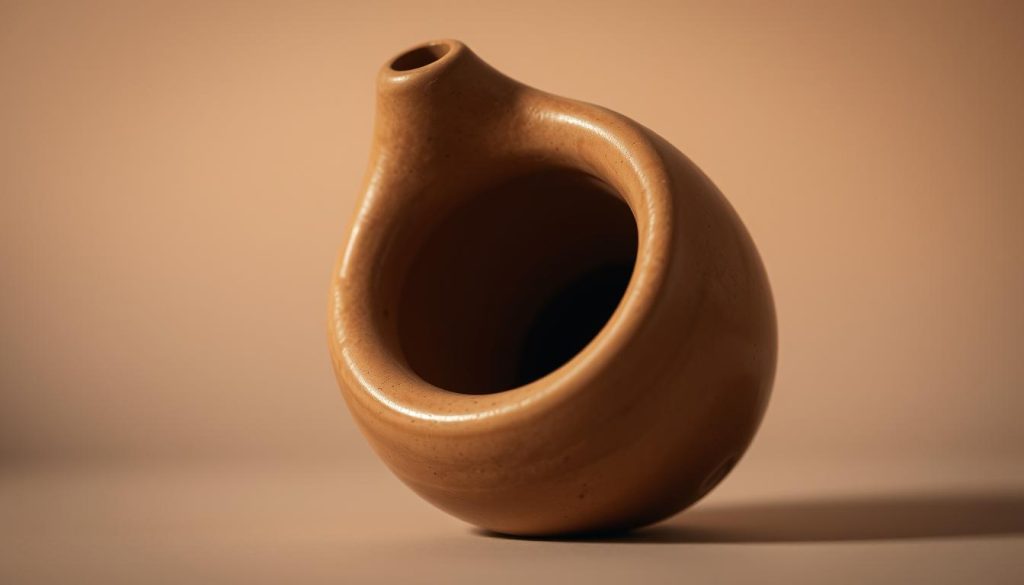
The vessel flute is a small, egg-shaped resonator. Air passes through a duct before striking an internal edge. This mechanism produces a quick, stable response characteristic of enclosed-chamber wind instruments.
How to hold it: the position is natural. Place the mouthpiece against your lips without pressing. A relaxed grip gives you better breath control.
Number of holes and its effect on playing
Common models have 4, 6, 8, 10 or 12 holes. The number of holes affects the range, fingerings and ease of playing in tune.
- 4 to 6 holes: ideal for beginners and simple melodies.
- 10 to 12 holes: a wider range, with fingerings that allow you to play across two octaves.
- 12-hole ceramic alto: recommended for learning.
“Covering the holes completely with your fingertips produces stable notes.”
| Aspect | 4 to 6 holes | 10 to 12 holes |
|---|---|---|
| Range | Limited | Extended |
| Fingerings | Simple | Complex but consistent |
| Learning | Quick | Gradual; recommended |
| Precision | Less flexible | Better intonation |
To learn more about shapes and materials, see the types and models. Start by practising simple fingerings, then combine them to make quick progress.
Acoustics and tone colour: the Helmholtz resonator
The clear sound comes from an enclosed chamber that works as a Helmholtz resonator.
The fundamental frequency depends on the chamber’s volume and the area of its openings. This mechanism creates stable resonance, much like blowing across a bottle. The result is pure notes with few unwanted overtones.
The tone remains mellow and rounded. Focused resonance gives it a consistent colour throughout its usable range. Compared with a tubular flute, its sound is more songlike and less coloured by overtones.
Air, breath control and long notes
The flow of air controls the energy in the chamber. Blow too hard and the note whistles; blow too softly and the resonance fades. A steady breath keeps the instrument in tune.
Practising long notes helps you find the best point of resonance. Try this simple exercise:
- Play a complete scale slowly while keeping the air pressure constant.
- Vary the intensity slightly to hear how it affects pitch.
- Stand or sit upright, align your airflow with the mouthpiece and keep your shoulders relaxed.
| Element | Effect on sound | Practical tip |
|---|---|---|
| Chamber volume | Determines the fundamental frequency | Measured breathing and long notes |
| Area of the openings | Refines pitch and projection | Pay attention to fingerings and airtight coverage |
| Airflow | Stability or whistling | Find the best breath pressure |
Comparing materials and tones: clay, ceramic, plastic, wood and metal
Material alone does not determine the sound. Construction, mouthpiece design and consistent hole placement strongly affect tuning and stability.
Clay and ceramic: roundness and warmth
Clay and ceramic produce a rounded tone and controlled warmth. Their porosity makes these models sensitive to moisture.
Avoid immersion and dishwashers. Cleaning specific areas is enough to preserve the chamber.
Plastic and wood: resilience and projection
Plastic stands up well to water; it is durable and affordable. Its sound often seems drier, but it suits lessons and travel.
Wood offers a rich, organic tone. It does, however, need care to prevent cracks and warping.
How construction affects the player
More than the material, mouthpiece design and consistent hole placement affect how the instrument plays. These features determine the attack, response and sustain of notes.
- Projection: plastic has a crisp attack; ceramic has a softer attack; wood offers rich nuances.
- Use: choose plastic for travel, a well-made ceramic instrument for studio and stage, or wood for tonal colour, with appropriate care.
- Models: compare hole spacing and tuning stability across the whole range before buying.
To learn more about construction and uses, see this page on the definition and uses.
Clay ocarina: sound and care
After every playing session, careful cleaning extends your instrument’s life.
Safe exterior cleaning
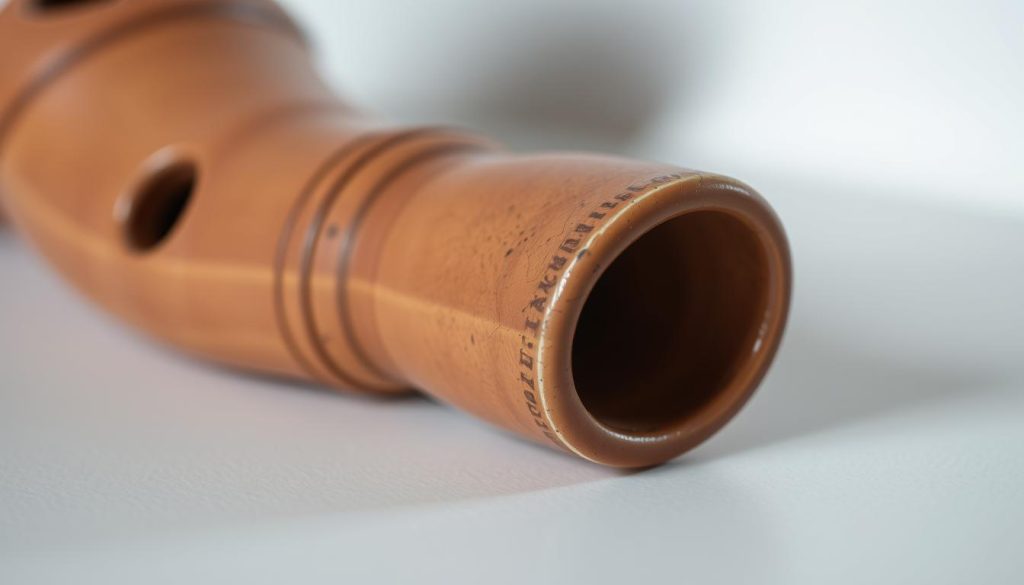
Get a microfiber cloth, lukewarm water and mild soap. Gently wipe the outside without letting water enter the chamber.
Never immerse it
Never submerge a ceramic or clay ocarina in water. Moisture can put the instrument out of tune and affect its resonance. Avoid the dishwasher too.
Cleaning the mouthpiece and holes
For the mouthpiece, insert a strip of thin paper suited to the air duct to dislodge dirt without scratching it. Repeat until the duct looks clean.
Clean the holes with a cotton swab or thin, flexible pipe cleaners. This prevents deposits that can distort notes.
Removing debris
Finish with a controlled puff of air, a can of compressed air or careful suction. Covering the sound opening before blowing forcefully protects your hearing.
Advice by material: plastic models can take a quick wash in soapy water; for wood, use very little water and dry it immediately.
A regular care routine in France: after each use and over the months
Making a habit of quick care after each use protects the chamber and holes.
After each session, wipe the exterior and mouthpiece with a clean cloth to remove moisture. Clean the mouthpiece with mild soap; avoid alcohol and solvents, which can damage the finish or material.
Wash your hands before playing. Clean hands reduce the oils and dust that enter the holes and settle on the surface.
For regular maintenance, plan a thorough cleaning every three months if you play moderately. Clean more often if you play heavily or notice sound problems.
If you lend the instrument to someone, disinfect the mouthpiece after each loan: this is essential for players’ hygiene.

| Action | Frequency | Why |
|---|---|---|
| Wipe the surface and mouthpiece | After each use | Prevents moisture and deposits |
| Gentle disinfection | After each use or loan | Maintains hygiene and protects players |
| Thorough cleaning | Every three months, or more often | Maintains tuning and projection |
| Visual inspection | Regularly | Reveals deposits, chips and damage to the finish |
Mistakes to avoid and essential precautions
Some habits can quickly affect the instrument’s stability.
Never do this: immerse a ceramic model. Absorbed moisture can put the chamber out of tune and affect resonance. Avoid the dishwasher too: heat and detergents can damage the finish and tuning.
Avoid solvents and alcohol on the mouthpiece. These products can damage protective coatings and the material beneath them.

Do not use abrasive tools in the holes, such as needles or other hard objects. Choose suitably thin paper or flexible pipe cleaners to remove dirt without scratching.
- Take care with wood: too much moisture causes swelling or cracks. Wipe it and dry it promptly.
- Before blowing hard to remove a deposit, cover the sound opening to protect your hearing.
- Do not overlook how well your fingers seal the holes: leaks produce wrong notes. Check your finger placement before blaming the instrument.
- Remember the after every use habit: a quick wipe prevents most deposits and odours.
| Mistake | Risk | Solution |
|---|---|---|
| Immersion or dishwasher | Loss of tuning, damaged finish | Clean specific areas with a sponge |
| Solvents on the mouthpiece | Damage to the material | Mild soap and a microfiber cloth |
| Abrasive objects in the holes | Scratches, wrong notes | Thin paper, flexible pipe cleaners |
To compare precautions for different materials, see the guide to choosing wood or ceramic.
Storage, transport and preserving its appearance
A padded case, UV protection and humidity control
Choosing the right case prevents fine scratches and dust buildup.
Choose a padded case lined with soft fabric. Add silica gel packets if the air is humid. This protects ceramic and wood, even though their colours may naturally fade over the years.
Temperature and knocks: good habits for durability
Store the instrument in a place with a moderate temperature, away from radiators and windows. Avoid sudden temperature changes that can weaken the material.
- Safe transport: secure the instrument firmly in its case so it cannot move around.
- Match the case to the model: a hard case is better for valuable or heavy instruments.
- Maintaining its appearance: wipe the instrument after handling it to reduce marks and deposits.
“A well-chosen case often saves an instrument from an avoidable accident.”
These simple habits keep the instrument looking good for years and ready to play again.
Getting notes back in tune: quick diagnosis and solutions
A simple check of the mouthpiece and holes solves most problems.
Wrong notes caused by dirt: inspect the mouthpiece and holes for dust or deposits. Thin paper in the air duct and flexible pipe cleaners in the holes can remove dirt without causing damage.
After cleaning, remove loose debris with a controlled puff or a can of compressed air. This often restores the instrument’s resonance and projection.
Adjust your breath and check fingerings and holes
Check that your fingers seal the holes: even a tiny leak can produce a wrong note. Cover each hole fully and adjust your finger placement.
Practise long notes to stabilise pitch. A tuner helps you distinguish a technique problem from a fault in the instrument.
When to consult a specialist or consider another model
If tuning remains unstable after cleaning and despite good technique, have the instrument’s construction checked: the edge, holes or chamber may be at fault.
For a player who struggles to hold the instrument, trying another model that is easier to hold and more stable in pitch is a practical solution.
| Problem | Action | Expected result |
|---|---|---|
| Deposits in the mouthpiece or holes | Clean specific areas and remove debris | Clearer notes |
| Leaks caused by finger placement | Adjust finger placement | Accurate tuning restored |
| Persistent instability | Consult a specialist or change models | A lasting solution |
Conclusion
A few quick habits are enough to preserve your instrument’s tuning and projection.
Remember: wipe the instrument after every use, disinfect the mouthpiece and plan a thorough cleaning every three months. These steps maintain its tone colour, resonance and note stability.
Thanks to the standardisation begun by Giuseppe Donati, modern models, particularly 12-hole instruments, play reliably when their design is sound and they are held correctly.
Popular culture and video games draw new players to the instrument, but a simple care routine and suitable storage remain essential. To choose a first model that suits your needs, see this practical guide: choosing your first ocarina.