
Measuring around 90 cm, this size, also called Cadette, is reassuring to hold. It suits children aged 7 to 11, as well as adults who travel frequently.
Its smaller size makes travel, practice at home and first lessons easier. The right size supports comfort, sound and progress, whatever the musician’s level.
This guide offers simple pointers before you buy. Half-size, Cadette, seven-eighths and full-size guitars are compared. You will learn how scale length, neck, strings, body, weight, budget and accessories affect the choice.
That makes the decision clearer than price alone can. A visit to a specialist store can also help, thanks to advice from a team available Monday to Friday, 9 a.m. to 6 p.m., and Saturday, 10 a.m. to 6 p.m.
This approach draws on recommendations published by Nassim Pascotto on September 12, 2025, with a practical look at the French market.
3/4 Acoustic Guitar: Who Is It For and How Do You Choose One?
This compact size is primarily for children aged 7 to 11. Its smaller footprint also appeals to adults who travel.
At nearly 90 cm long, it is easier for small hands to hold. This remains the most popular size among young students and travelers.
Who benefits from this compact size?
A beginner gets a light instrument that is easy to hold. The shorter neck makes the first finger positions easier. A classical guitar with nylon strings can also reduce fingertip soreness.
Playing comfort matters from the first lesson. A poorly fitting guitar can cause discomfort in the wrist, shoulder or back. Skill level, age and posture should guide the decision.
Benefits for beginners and travelers
- An adult can use a 1/2-size guitar as a travel instrument.
- 1/8- and 1/4-size guitars can often be carried as cabin baggage.
- Less weight makes learning easier during the first few years.
- The guitar can be kept until the player’s body size changes.
| Size | Recommended for | Main advantage | Consideration |
|---|---|---|---|
| 3/4 | Children and adults who travel | Good balance of comfort and sound | Less full-bodied sound than a full-size guitar |
| 1/2 | Adults who travel | Easy to transport | Lower volume |
| 1/8 or 1/4 | Very young children | Close to cabin-baggage size | Often used only temporarily |
Understanding guitar size and scale length
Overall length alone does not define a guitar’s size. Scale length is a more useful measurement when choosing an instrument. It is the distance from the nut to the bridge: the vibrating length of the strings.
Scale length, from nut to bridge
Typical measurements range from about 44 cm for a 1/8-size guitar to 65 cm for a 4/4. A 3/4-size guitar has a scale length of nearly 58 cm, compared with 53 cm for a 1/2-size guitar. A shorter scale requires less finger pressure and makes stretches slightly easier.

How the neck and body affect playing
On smaller guitars, the neck is narrower and the body more compact. These proportions encourage a natural posture and smoother playing.
How size affects string tension and tone
A shorter scale reduces tension but may make unwanted buzzing more likely. A longer scale puts the strings under more tension and often produces a brighter tone. Size therefore matters as much as comfort.
“A good setup turns a small guitar into a valuable learning companion.”
What age and body size suit a 3/4 guitar?
Age is a useful starting point, but the player’s build matters more. A child should be able to rest an arm comfortably, reach the strings with ease and keep their back straight. Comfort helps children learn from their first lessons.
Children and preteens with small hands
A 1/4-size guitar, 75 to 78 cm long, suits children aged 4 to 7. A 1/2-size model, measuring 83 to 85 cm, often suits children aged 6 to 9. Its dimensions better match their developing fingers.
The Cadette size, at nearly 90 cm, generally suits children aged 7 to 11. Depending on their build, it may suit children aged 9 to 12 who are 1.37 m to 1.50 m tall. The neck should never force a child to stretch their arm.
- An oversized instrument makes good posture harder.
- A lighter guitar gives young beginners more confidence.
- The right guitar size makes first chords easier.
Before buying, compare the size guidelines. Guitars for very young children start at around 74 cm. Above 1.55 m in height, a full-size guitar often becomes suitable.
Classical, folk or acoustic guitar: which should you choose?
Let the music you want to play guide this choice. A compact body, suitable neck and flexible strings can make first chords more pleasant. Size matters, but so does how the guitar feels.
Nylon strings make learning easier
A classical guitar has nylon strings, which are often gentler on the fingers. Its wide neck helps keep notes distinct. Its smaller body produces a rounded sound suited to classical music, flamenco and some South American styles.
This is a good choice for a beginner who is sensitive to initial discomfort. It supports calm, precise playing with simple finger positions.
Steel strings for folk, pop and rock
A folk guitar uses steel strings, a slim neck and a larger body. It produces a louder sound with a clear attack. It works well for pop, rock, blues, country and French songs.
For a smaller guitar, a player already used to steel strings can choose a steel-string acoustic model. Read this acoustic guitar buying guide before comparing brands.
Assess playing comfort before buying
Before buying, a few simple checks can show whether a guitar suits its future player. An oversized guitar makes distant frets hard to reach. A light guitar supports a stable posture, especially for a child.

Check neck width and access to chords
In the store, place one hand near the nut. Your fingers should reach the first frets without bending your wrist. Neck width determines the space between the strings. A slimmer neck often feels less intimidating to a beginner. A wider one may better suit some hands or techniques.
Form a few simple chords. Moderate pressure should normally be enough. Playing should feel comfortable right away, without finger pain.
Check weight, posture and handling
Try guitars while seated, then standing with a strap. Notice the position of your back, shoulder and wrist. Excess weight soon causes fatigue. A trial session lets you judge stability, access to the neck and actual comfort.
“The best instrument is one you barely notice holding because playing feels so natural.”
| Check | Good sign | Warning sign |
|---|---|---|
| Neck | Chords without strain | Bent wrist |
| Weight | Stable posture | Tired shoulder |
| Size | Frets within reach | Arm stretched too far |
Quality checks for a 3/4 acoustic guitar
A visual check quickly reveals the care taken in making an instrument. Examine the joints, finish, visible bracing and neck finish. A well-assembled body has no gaps or excess glue. This check helps prevent unpleasant surprises.

Wood, soundboard and richness of sound
A spruce top offers a clear, bright tone suited to chords and picking. Mahogany adds warmth, richness and good projection. Cedar responds gently, making it ideal for fingerstyle players. The choice depends on your level, repertoire and desired playing experience.
The body should produce even resonance from every string, without unwanted buzzing or weak bass notes. Some entry-level guitars may lack depth. Try several models to assess their actual quality.
Small parts with a real impact
The nut should be well finished, with no uncomfortable sharp edges. The bridge transfers vibrations, contributes to intonation and affects comfort. Reliable tuners keep the guitar in tune while you play. Each note then gains another layer of resonance. Consult this guide to choose the right acoustic guitar.
Comparing the 3/4 guitar with other sizes
Between small guitars and standard-size bodies, each size serves a purpose. A 3/4 guitar combines a 58 cm scale length with an overall length of nearly 90 cm. This balance offers good comfort, an accessible neck and enough volume for practice or accompaniment.
A 1/8-size acoustic guitar measures about 74 cm. A 1/4-size model reaches 75 to 78 cm, while a 1/2-size guitar ranges from 83 to 85 cm. These sizes can suit children according to their build, although they often project less sound.

A 7/8-size guitar, about 95 cm long, can be an excellent solution for an adult who is 1.40 m to 1.60 m tall. A standard-size model generally suits someone over 1.55 m tall. Travelers should note one limitation: a 3/4 guitar rarely fits as cabin baggage. A 1/8 or 1/4 guitar is easier to carry. Read this dedicated buying guide before deciding.
| Size | Scale length | Overall length | Recommended use |
|---|---|---|---|
| 1/8 | 44 cm | 74 cm | Very young child |
| 1/4 | 48 cm | 75 to 78 cm | Small child |
| 1/2 | 53 cm | 83 to 85 cm | Young beginner |
| 3/4 | 58 cm | 90 cm | Children, travel |
| 7/8 | Varies | 95 cm | Smaller adult |
| 4/4 | 65 cm | Standard | Rock, classical music |
Choosing a brand, setting a budget and selecting accessories
The right choice depends on skill level, age, musical style and budget. A beginner benefits from trying several guitars in a store, paying attention to the neck, weight and comfort.
Brands suited to beginners
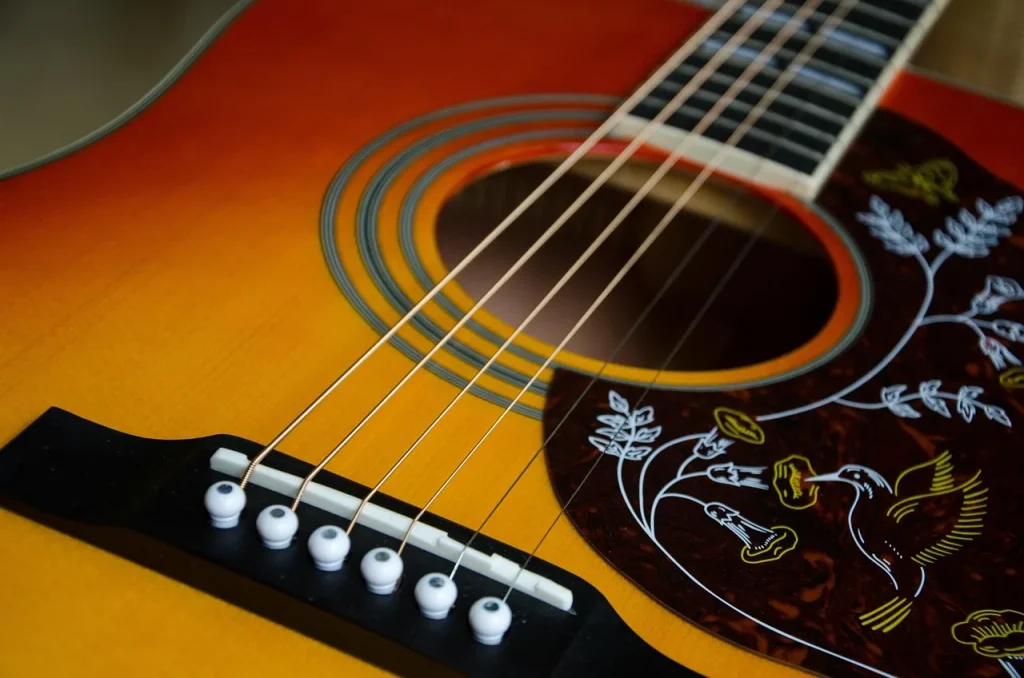
Yamaha, Cordoba and Fender offer beginner-friendly guitars in several sizes. Cort appeals through its value and balanced sound. Epiphone captures the spirit of the Gibson J-45 and Hummingbird. A classical guitar suits nylon-string playing, while a folk guitar lends itself to pop, blues or rock.
Set a budget that suits your level
Prices range from about €40 to more than €1,000. A €40 model may suffice for occasional use. To make progress, plan to spend around €150 to €200 instead. The Fender CD-60S offers a clear tone. The LAG T70D provides good projection. The Gibson SJ-200 is aimed at professionals, collectors and experienced musicians.
Allow for a tuner, picks and a carrying case
- Tuner: quick tuning before each session.
- Picks: an attack suited to each piece.
- Gig bag or case: protection during travel.
A useful buying guide can help you refine your choice.
Conclusion
A Cadette-size guitar is a good compromise for children, smaller players and adults who travel. Its scale length of nearly 58 cm often reduces string tension, making first chords easier. Also read this guitar size guide before buying.
Your decision should account for body size, musical style, neck width, weight and build quality. Nylon works well for learning. Steel strings are better suited to folk, pop or rock. It is therefore useful to try an acoustic guitar before buying it.
Yamaha, Cordoba, Fender, Cort and Epiphone offer dependable options at different skill levels and prices. Take time to try several models in a store. The right instrument is one that feels comfortable, sounds clear and makes you want to play every day.