
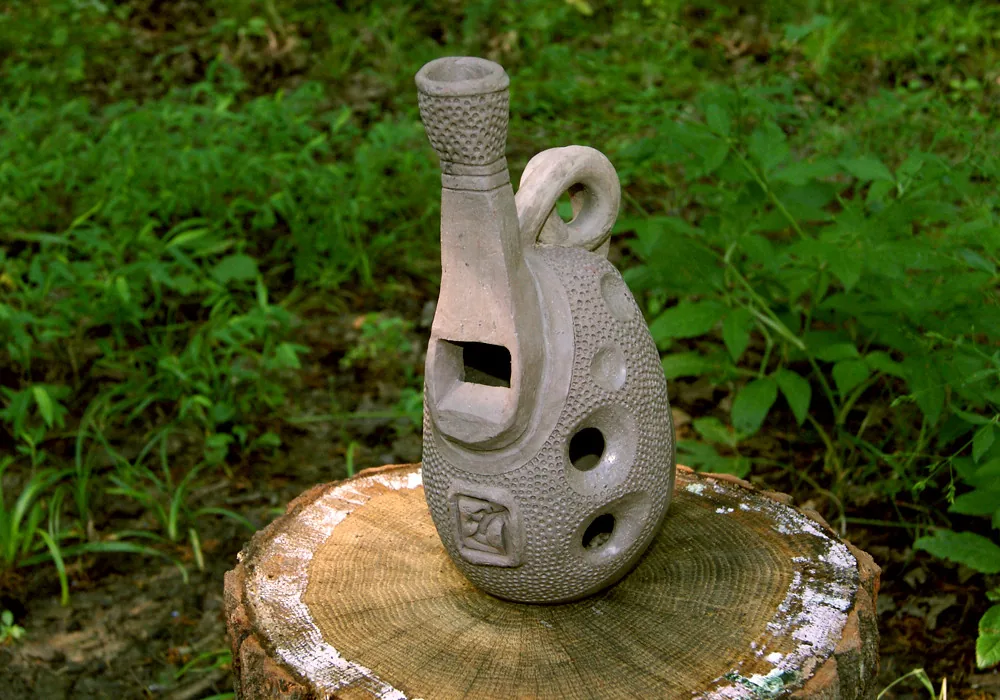
Learn step by step to play the iconic melody from The Legend of Zelda on a 12-hole ocarina. This beginner-friendly tutorial offers a clear, practical progression for improving breath control and pitch accuracy.
Composed by Koji Kondo, the theme appears in Ocarina of Time and Majora’s Mask. Its short, memorable melody is ideal for a first piece and for strengthening articulation.
The lesson uses an ocarina in C so the fingerings are consistent across 12-hole models. It covers counting, breathing between phrases, hand placement and covering the holes to produce an even tone.
Available variations: several transcriptions (Rinku, BeelTatsumi, melycat, Petitefilleàl’ocarina) offer different fingerings and ornaments. We will introduce each segment, then connect them with a short daily practice routine.
A later section explains the notes, fingerings and how to correct common mistakes. Listen to the original version of Epona’s Song to adjust your intonation and memorize its melodic inflections, even if you practice in short sections.
Background and essentials for playing Epona’s Song on a 12-hole ocarina
Composed by Koji Kondo, the melody appears in The Legend of Zelda: Ocarina of Time and Majora’s Mask. Its simple motif makes it perfect for beginners exploring video game music.
Origins and place in the series
The piece plays a recurring role in the series’ musical storytelling. It is memorable and provides an introduction to Koji Kondo’s characteristic motifs.
Recommended instrument and initial checks
Minimum requirements: use an instrument tuned to C so the fingerings and pitches described match the tutorials. If your model is tuned differently, the sounding pitch will change; consult the manufacturer’s fingering chart, such as the STL Ocarina booklets.
- Posture: left hand above the right, with your thumbs helping to steady the instrument.
- Hole coverage: cover each hole completely to prevent air leaks.
- Metronome: set it to 60–72 bpm for your first exercises.
- Tuner: check against A4 = 440 Hz and play a short scale before starting.
| Aspect | Why it matters | Practical tip |
|---|---|---|
| Difficulty | Limited range and repeating motif | Focus on pitch accuracy and breath control |
| Tuning | C keeps the fingerings consistent | Consult the manufacturer’s fingering chart if your instrument is tuned differently |
| Resources | Several versions are available | Compare the transcriptions and choose one that suits you |
Before playing, listen to the original version of Epona’s Song to absorb its melodic shape. To develop your playing, also consult sheet music and a performance guide such as this arrangement.
Epona’s Song tablature for 12-hole ocarina
Before playing, make sure your instrument is tuned to C and its pitch remains stable across several notes. Play a reference note (C), then repeat the exercise with three or four notes to check that your airflow is steady.

Posture, breath and grip
Keep your chin in a natural position, the instrument slightly tilted and your shoulders relaxed. Cover each hole carefully to avoid airy notes.
Notes and motif: step-by-step landmarks
Break the melody into two or three short segments. Practice slowly and memorize what you hear: the opening, the distinctive interval and the return to the anchor note.
Fingerings and reading the tablature
Match each fingering symbol to the corresponding holes on your instrument. If you are unsure, consult the manufacturer’s fingering chart, such as the STL Ocarina booklets.
Tempo, articulation and breathing
Start at 60–66 bpm. Begin notes gently with a “tu” articulation and maintain steady airflow. Plan your breaths between phrases to preserve the melodic line.
Common mistakes and corrections
For airy notes, overly forceful attacks or unsteady breath, slow down, check that the holes are covered and adjust your air pressure.
| Element | Common problem | Quick solution |
|---|---|---|
| Tuning | Unstable pitch | Play three or four reference notes and adjust your mouth position |
| Finger placement | Air leaks | Reposition your fingers and cover the holes carefully |
| Tempo | Imprecise transitions | Slow down to 60 bpm, then increase the tempo gradually |
| Version | Uncomfortable fingerings | Compare Rinku, BeelTatsumi, melycat and Petitefilleàl’ocarina |
Resources and variations to help you progress
To improve, compare manufacturers’ fingering booklets. Consult the fingering chart provided by the manufacturer, such as the STL Ocarina booklets, to check which holes correspond to each note before you begin playing.
Using fingering diagrams
Check each finger position, note any variations and compare them with your chosen transcription. Annotating the fingerings reduces hesitation while you play.
Versions and progression
Compare Rinku, BeelTatsumi, melycat and Petitefilleàl’ocarina to learn different note transitions and breathing patterns. First master the melody at a slow tempo, then add light ornaments and work on keeping a steady beat.
- Recommended pieces to learn next: Zelda’s Lullaby, Song of Time, Zelda’s Theme, Song of Healing.
- Keep a practice journal to record troublesome holes, target tempos and your preferred fingerings.
- Record yourself and compare your playing with the metronome to correct small timing errors.
For more transcriptions and resources, consult this list of versions and transcriptions.
Conclusion
Bring everything together by combining posture, breath control and fingerings to play the theme confidently. Keep a stable position, maintain steady airflow and check your finger placement to stay in tune.
Always check that your instrument is tuned to C and compare community versions to find the most comfortable fingerings. Practice slowly with a metronome, increasing the tempo only when you can play accurately.
Track your progress with short recordings and a practice journal, and consult the manufacturer’s booklets. Then expand your repertoire with other well-known tunes to develop your ear and musicality.
Remember: musicality comes first. Gentle note attacks and smooth transitions bring the motif to life. Just a few minutes of practice each day can lead to lasting progress.