
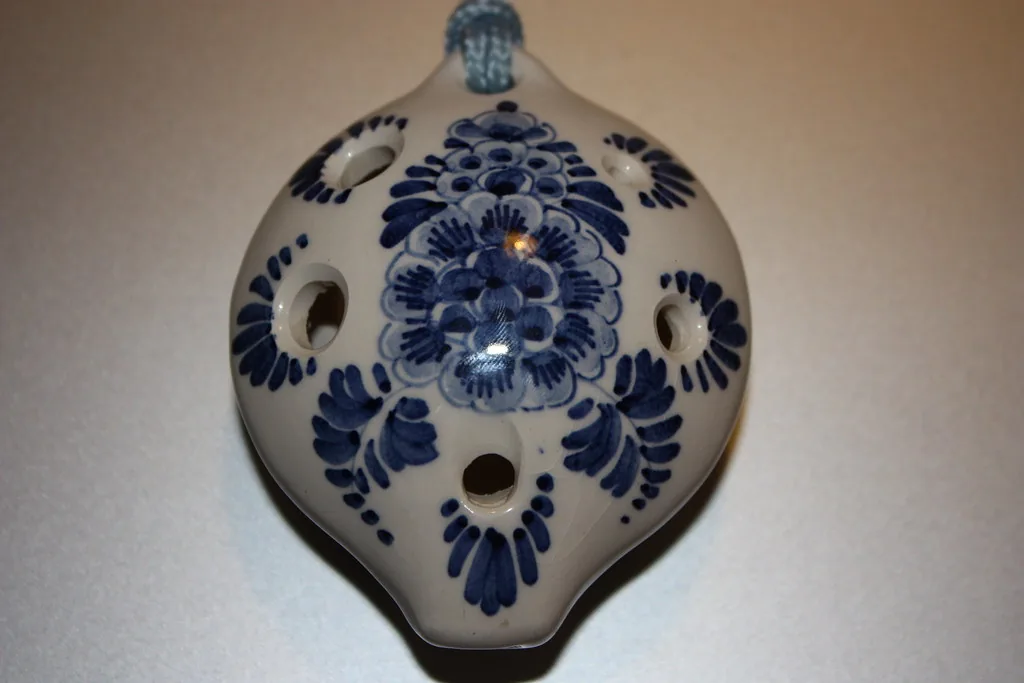
Discover how to play the main melody of My Heart Will Go On on your instrument, step by step. This guide is for beginners and intermediate players who want a lyrical sound faithful to the original soundtrack.
Musical context: community scores commonly use C, and the difficulty is listed as “None.” Have a 12-hole or double ocarina ready, along with printable sheet music if needed.
Practical points: learn to time your entrance at around 0:20 if the tablature omits the introduction. We cover how to hold the instrument, fingerings in C, and adapting the piece for a double ocarina.
Finally, you will find phrasing and legato tips for a singing tone. The guide also explains where to find reliable scores, how to print them clearly, and how to join discussions in the online community.
Prepare your ocarina and understand the style of the Titanic theme
Preparation matters as much as practice. Before you begin, check the instrument’s tuning, make sure the holes are clean, and steady your breath. The main melody is broad and flowing; it calls for an even tone and smooth transitions.
Choose between a 12-hole and a double ocarina
12-hole ocarina in C: ideal for learning the piece for the first time. A community version reposted in 2016 lists the difficulty as “None” and offers a layout optimized for printing.
Double ocarina in C: useful for varying the tone and managing breaths. The version published in 2013 may contain a few inaccuracies; read the notes before printing it.
- Timing your entrance: if the score begins at around 0:20, synchronize with an audio cue.
- Style: steady breath, gentle attacks, and softly rounded note endings.
- Before printing, choose a compact layout that remains comfortable to read.
Titanic: play the theme on the ocarina step by step
Here is a clear method for practicing the essential notes, fingerings, and connected passages. Work slowly, one measure at a time, isolating recurring motifs.
Notes and fingerings in C for a 12-hole ocarina
Start by identifying the range in C and the melody’s main scale degrees. Repeat common note sequences in short loops to improve your intonation.
Tip: use a score in C to check sustained passages and grace notes. Practice in groups of 4 to 8 measures.

Adapt the melody for a double ocarina: breathing and transitions
On a double ocarina, plan chamber changes at the ends of phrases to conceal breaths. Anticipate the breath pressure each chamber needs to maintain a steady airflow.
Synchronize your fingering changes to avoid breaks in tone.
Manage the introduction’s tempo and your entrance at around 0:20
If your version begins at around 0:20, count the beats before your entrance precisely. Practice counting while you wait and follow the tempo of the reference recording.
Practice the introduction with a metronome: start slowly, then gradually increase to the target tempo.
Phrasing and legato tips
Favor legato: gentle attacks, connected transitions, and softened note endings. Plan breaths between phrases without interrupting a connected passage.
Musical expression: add subtle changes in volume (crescendo and decrescendo) and restrained vibrato to approach the sound of the original soundtrack.
Sheet music, tablature, and printing: where to find them and how to take part
Where can you find reliable tablature, and how should you prepare a printout for practice?
Community sources
Two useful versions are available: a 12-hole version in C (reposted by Spipfire from Rom2708, February 15, 2016), designed for printing with reduced spacing, and a version for double ocarina in C (black-butterfly, April 17, 2013), which starts after the introduction (around 0:20) but notes some uncertainties.
Check before printing
- Check the instrument, key, difficulty, and publication date.
- Choose a compact layout so you do not have to turn pages too often.
- If any bar lines or notes seem doubtful, compare them with a recording.
Rate and leave a review
Both pages are public, but neither has received feedback. To add a rating or write a comment, you must log in. Set up your account and help improve the tablature by flagging ambiguous passages.
| Version | Author | Date | Key points |
|---|---|---|---|
| 12-hole in C | Spipfire (Rom2708) | February 15, 2016 | Printable format, reduced spacing, 0 comments |
| Double in C | black-butterfly | April 17, 2013 | Missing beginning (around 0:20), warning about errors, 0 comments |
| Practical tip | Download the scores, mark the fingerings, and keep the printouts in a dated binder | ||
To view and download one of the pages mentioned, follow this link: 12-hole version. To join broader discussions, visit the forum.
Conclusion
Keep the key points in mind to turn your practice into a convincing performance.
You now have a clear method: choose your instrument, practice the notes in C, manage your breath, and develop your legato.
The 12-hole version (Spipfire, February 15, 2016) remains ideal for beginners thanks to its print-friendly layout.
On a double ocarina (black-butterfly, April 17, 2013), anticipate the entrance at around 0:20 and make smooth chamber changes to preserve the continuity of the melodic line.
Practice slowly, then increase the tempo. Print in a compact format and record your sessions to refine your vibrato, dynamics, and connected passages.
Finally, share a comment after logging in: your feedback on fingerings, tempo, and readability will help the community.