

When starting out, the main thing is to find the right balance between comfort, musical style, and budget. This guide covers useful points to help you navigate the many models available in France. For a first purchase, generally budget €150 to €300, then add a tuner, picks, and a gig bag.
The terminology can be confusing. “Folk” often means a steel-string guitar, while a classical guitar uses nylon strings. An acoustic-electric guitar retains its natural tone while allowing you to connect it to a PA system or audio interface.
In the 19th century, Christian Frederick Martin played a major role in developing the folk guitar and the rise of steel strings. Your fingertips may remain sensitive for three to six weeks. With regular practice, calluses gradually form.
The range can seem vast: Thomann listed 2,123 items in its dedicated category at the time of writing. This buying guide helps explain body shapes, woods, and comfort. For more guidance, see these tips for beginners.
The best choice is the guitar that makes you want to play often, with a comfortable neck and a sound that suits your music.
How to Choose an Acoustic Guitar for Your Musical Style and Skill Level
Musical style often guides a first purchase. Skill level matters too: comfort, neck width, and string tension affect every practice session. If you are starting out, prioritize a guitar that feels good to play over one chosen for its looks.
Classical, Folk, or Electric Guitar: What Is the Difference?
A folk guitar has steel strings and a slim neck. Its nut is about 43 mm wide. A classical guitar has nylon strings and a wider neck, with a nut around 52 mm wide. It can be a good choice for beginners with sensitive fingertips.
For metal or heavily distorted solos, an electric guitar is better suited. An acoustic-electric guitar offers more versatility, however, because it can be connected to an amplifier.
Styles Suited to Acoustic Guitar
A folk guitar works well for pop, rock, blues, and country. Robert Johnson shaped the blues with his metallic sound. In the 1960s, Bob Dylan made the folk guitar iconic. Open chords make accompaniment and fluid playing easier.
| Player profile | Recommended type | Main advantage |
|---|---|---|
| Versatile beginner | Folk | Chords and accompaniment |
| Classical repertoire | Classical | Gentler strings |
| Metal and distorted solos | Electric | Power and effects |
Understanding the Essential Parts of an Acoustic Guitar
Before buying, identify the instrument’s three main parts: the headstock, neck, and body. This distinction helps you understand comfort, tuning, and sound production.
The Neck, Fretboard, Frets, and Nut
The neck generally carries six strings. Its fretboard, often made of rosewood and a few millimeters thick, holds the frets. These metal strips divide the fretboard into positions and show where notes are played.
The nut keeps the strings aligned near the headstock. The tuning machines adjust string tension for accurate tuning. For comfortable playing, pay particular attention to neck width and how easily your fingers move along it. This folk guitar guide offers more useful pointers.

The Body, Soundboard, Sound Hole, and Bridge
The resonant body amplifies vibrations. The soundboard transfers energy to the air, while the sound hole lets sound escape. The bridge connects the strings to the soundboard and contributes to projection.
- Headstock: tuning and support for the tuning machines.
- Neck: notes, frets, and comfort.
- Body: volume, projection, and tone.
Looking closely at each part makes it easier to compare guitars and spot defects before buying.
Choosing a Body Shape and Size
Body size changes the sound and how the guitar feels under your arm. To find the right size, consider your favorite styles and playing posture, then consult this body-shape guide.
Dreadnought, Jumbo, Auditorium, and Concert
The Dreadnought offers a balanced, warm tone with rich bass. Its versatility suits folk music, chord playing, and singing. The Jumbo has the largest body and delivers plenty of low-end power.
The Auditorium appeals to blues, soul, bossa nova, and fingerstyle players. Its prominent midrange supports a relaxed playing style. The Concert sits between the Jumbo and Auditorium and offers an appealing compromise.
| Shape | Sound | Suggested use |
|---|---|---|
| Dreadnought | Balanced | Versatile playing |
| Jumbo | Powerful | Rhythm playing |
| Auditorium | Delicate | Fingerstyle |
| Concert | Intermediate | All-around comfort |
Small Bodies, Travel Guitars, and Upper-Fret Access
Smaller guitars are easier to transport and can reduce fatigue over time. A large body projects more sound but takes up more space. On a folk guitar, a cutaway makes the upper frets easier to reach without substantially changing the sound. The Martin 012-28 Modern Deluxe illustrates this choice with 12 frets clear of the body, compared with 14 on many models.
What Size Acoustic Guitar Should You Choose?
The right size often becomes clear as soon as a child rests the guitar on their leg. A 1/4-size guitar suits beginners aged 5 to 8. Its small body limits fatigue and makes it easier to hold.
| Size | Approximate age | Advantage |
|---|---|---|
| 1/4 | 5 to 8 years | Light and easy to handle |
| 1/2 | 7 to 9 years | Good balance |
| 3/4 | 10 to 13 years | Accessible neck |
| 4/4 | Teenagers and adults | Standard size |
A 1/2-size guitar suits children aged 7 to 9. A 3/4-size guitar often suits preteens aged 10 to 13. It reduces the distance between the body and the arm.
For teenagers and adults, 4/4 remains the standard. However, body shape, body weight, and arm length matter as much as age.
- Check the neck width and wrist position.
- Test comfort while seated, without straining your shoulder.
- Compare several guitars before deciding.
Trying a guitar is therefore essential. These beginner tips can help you narrow your choice.
Selecting Woods for the Sound You Want
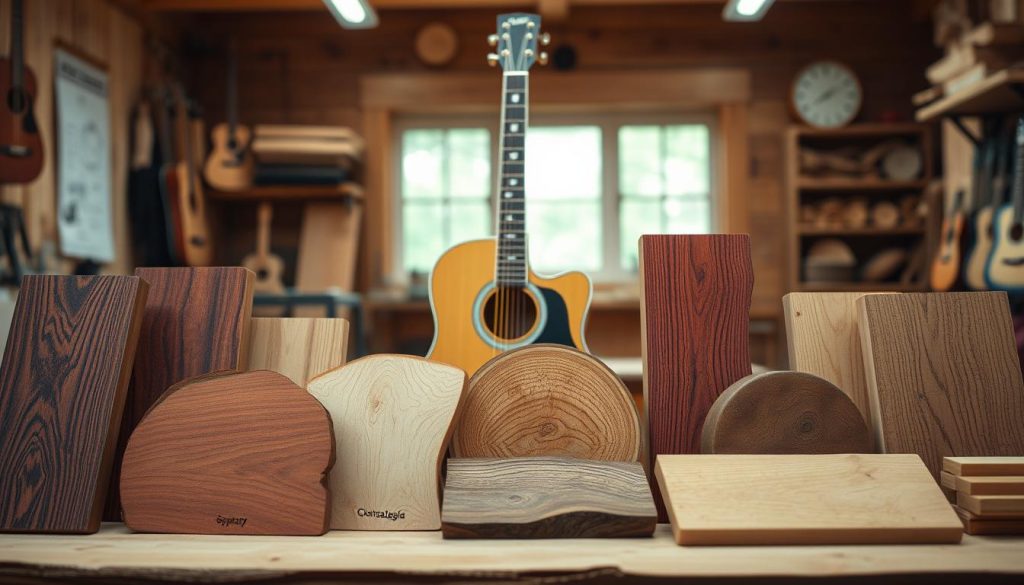
Wood influences a guitar’s response, volume, and tonal character. When choosing a guitar, start with the style you play rather than its appearance. Each wood has its own character.
Spruce, Cedar, Mahogany, Maple, and Other Woods
Sitka spruce remains a common choice for the soundboard. Rarer Adirondack spruce offers a clear, balanced response. Cedar responds gently and suits fingerstyle. Mahogany emphasizes the midrange with a dark, warm sound. Rosewood brings slightly scooped mids and a refined response.
For the back and sides, maple produces a bright, almost cutting sound. Koa, sapele, okoume, and bunya also broaden the range of acoustic guitars available.
Wood cannot replace skill, but it can inspire every practice session.
Solid or Laminate Top: What Difference Does It Make?
A solid wood top often develops a richer sound over the years. Laminate costs less and withstands changes in humidity well. It can therefore suit a first instrument, while solid wood is a more lasting choice.
| Wood | Tonal character | Suggested use |
|---|---|---|
| Spruce | Clear and dynamic | Versatile accompaniment |
| Mahogany | Warm and present | Blues and rhythm playing |
| Cedar | Soft and responsive | Fingerpicking |
| Maple | Bright and precise | Clear projection |
Comparing Strings and Playing Comfort
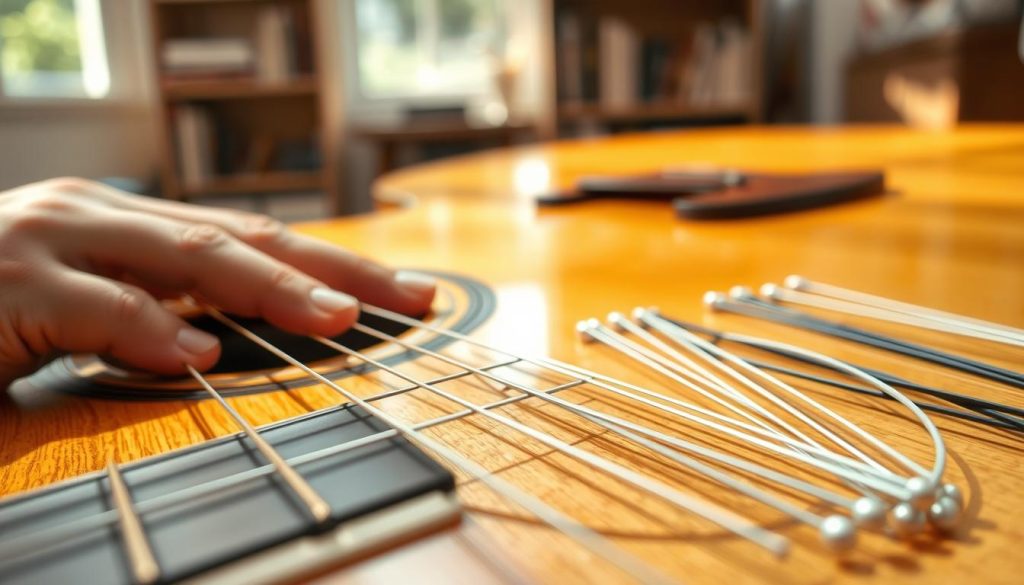
How the strings feel under your fingers makes a big difference. Take your time testing them, especially when playing your first chords. Comfort depends on string material, the neck, and the guitar’s overall setup.
Steel Strings or Nylon Strings
A folk guitar uses steel strings. Their higher tension suits rock, blues, and rhythm playing. A classical guitar uses softer nylon strings, suited to classical music and sensitive fingertips.
The nut is about 43 mm wide on a folk guitar, compared with 52 mm on a classical guitar. Wider string spacing helps with fingerpicking, while a narrow neck makes quick chord changes easier. An electric guitar suits other styles and allows the use of additional effects.
Adjusting String Tension and Action
For beginners, extra-light 10/47 or light 11/52 string gauges reduce tension. Action set too low causes fret buzz. Ask for a balanced setup to preserve comfort and accurate intonation.
- Try each type of guitar string.
- Play for a few minutes without forcing your fingers.
- Allow three to six weeks to adjust.
With patience, discomfort gradually gives way to enjoyment.
| Feature | Folk | Classical |
|---|---|---|
| Strings | Steel, higher tension | Nylon, softer feel |
| Nut | About 43 mm | About 52 mm |
| Suggested gauge | 10/47 or 11/52 | Standard tension |
Acoustic or Acoustic-Electric Guitar: Which Should You Choose?
Whether you need to plug in depends mainly on how you play. At home, a guitar without electronics often provides enough volume and remains simple to use.
An acoustic-electric guitar has a built-in pickup, but it differs from a solid-body electric guitar. It retains the body, strings, and sound of a folk guitar. Connected to a PA system or audio interface, it becomes useful onstage, with a band, or in the studio.
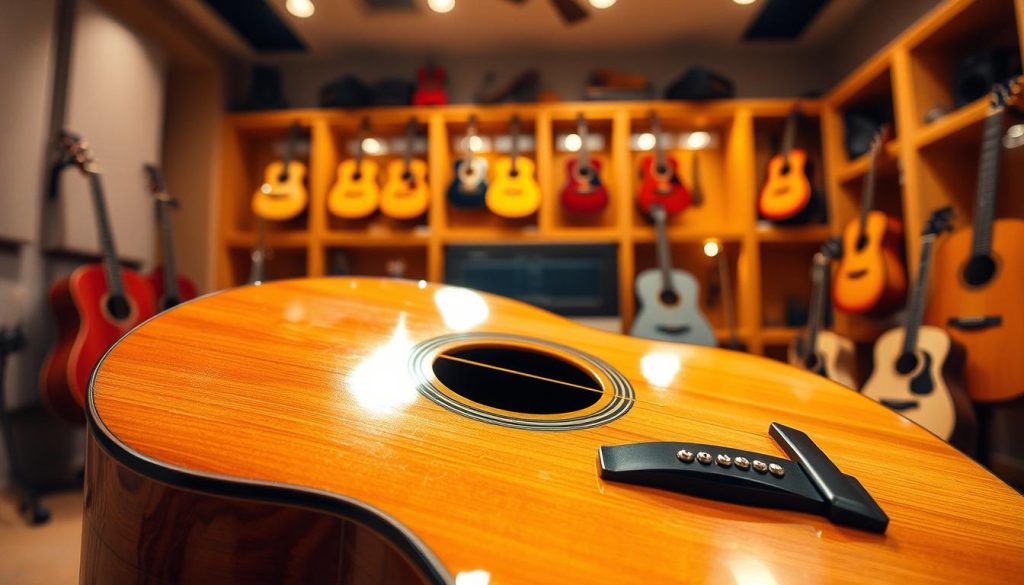
Guitarists coming from rock may appreciate being able to plug in while keeping the natural feel of a folk guitar. For home use, however, amplification offers few advantages.
A system can also be added later. The L.R. Baggs Element Active System VTC is listed at €215. This approach lets you start with a simple guitar and upgrade it as your needs change.
The right type therefore depends on where you play, as well as the price.
| Use | Suitable option | Advantage |
|---|---|---|
| Home | Acoustic guitar | Simplicity |
| Concert | Acoustic-electric guitar | Direct connection |
| Studio | Acoustic-electric guitar | Audio-interface connection |
Setting a Budget and Finding Suitable Models
A budget gives you a framework, but it should not limit your progress. For a beginner, allow €150 to €400. This range includes several reliable guitars with reasonable comfort and balanced sound.
What Price Range Suits Beginners and Advancing Players?
The Fender CD-60S makes learning chords easier. The dreadnought-shaped LAG T70D offers more versatility for rock, blues, and folk. These models suit beginners exploring several styles.
A guitarist moving from electric guitar might budget €400 to €1,000. The Taylor 214ce favors fingerstyle playing with its slim neck. The Martin DX-2E works well for accompanying vocals, with a full folk sound. Also consult this detailed buying guide.
Well-Known Brands and Popular Models
Yamaha, Fender, Cort, and Epiphone often offer good value. Martin, Gibson, and Taylor focus more on higher price ranges. Before choosing, compare woods, especially spruce, along with comfort, sound, and how the guitar might support your progress.
A brand’s prestige matters less than your desire to play.
Trying and Checking a Guitar Before Buying
Trying a guitar in a store often tells you more than photos or a specification sheet. Take time to play several models, first seated and then standing. Compare their shapes and sizes to judge how comfortable they really are.
What to Check in the Finish and Hardware
Look inside the sound hole with a light. Check for glue marks, cracks, and uneven finishing. The frets should be seated properly and should not protrude from the sides of the neck. Gently run a finger along the edges to spot any problems.
Pluck each open string. A clear sound suggests a sound setup, while buzzing may point to fret buzz or a nut problem. Also check the tuning machines, bridge, and tuning stability. This guide to buying pitfalls adds useful checks.
A comfortable instrument makes you want to play, even after a short session.
Essential Accessories for Getting Started
- Tuner: quick, accurate tuning.
- Pick: consistent attack for folk guitar.
- Carrying case: protection from knocks and moisture.
These accessories cost little relative to the total price and make your first sessions easier. Brand reliability matters, but the condition of the individual guitar comes first.
Conclusion
Your final choice depends on musical style, skill level, body size, budget, and comfort. Looks matter less than ease of playing and the desire to practice. Your acoustic guitar should support your everyday music-making.
For chords, pop, rock, blues, or singing, a steel-string folk guitar is highly versatile. Its body and projection work well for folk accompaniment.
A classical guitar, with its nylon strings, is better suited to classical music, flamenco, and some South American tunes. An electric guitar is more suited to metal and amplified solos. Onstage, an acoustic-electric guitar offers a convenient connection.
Try several body shapes: Dreadnought, Auditorium, Concert, and Jumbo. Compare models such as the Fender CD-60S and LAG T70D. They can provide a lasting instrument that keeps you motivated. Read our guide to choosing an acoustic guitar before buying.