
Goal: this guide helps parents choose an instrument suited to their child’s hand size, skill level and musical needs. It aims to turn an interest in learning into a lasting, rewarding experience.
Consider the instrument a genuine educational option. Choose specialist brands such as STL Ocarina, Musique de Terre or Ocarina World / Stein-Focalink to avoid the poorly tuned models found on general marketplaces.
For learning, the 12-hole transverse ocarina in alto C (AC/C3, A440) remains the standard, although a 6-hole model may suit small hands. Plastic offers a realistic starting price (€35 to €60); ceramic costs more and produces a richer tone. Allow around two and a half weeks for delivery from the United States, and check the A440 tuning when the instrument arrives.
This first article covers the essential criteria: ergonomics, number of holes, materials, quality and where to buy. You will find practical advice for choosing an instrument suited to beginners.
The key point in one minute: choosing a child’s first ocarina
The main criterion comes down to one sentence: a comfortable grip and stable tuning.
For beginners, choose a 12-hole transverse ocarina in alto C (AC/C3), tuned to A440. This format offers around 22 notes and a logical fingering pattern that is easy to learn.
Beginner profile: 12 holes, alto C (AC/C3, A440)
A 12-hole model offers the best balance: a useful range, logical fingering (opening a hole raises the pitch) and plenty of learning materials. Test its tuning when it arrives with a digital tuner so a child does not learn on an out-of-tune instrument.
Small hands: compact, lightweight models made from reliable plastic
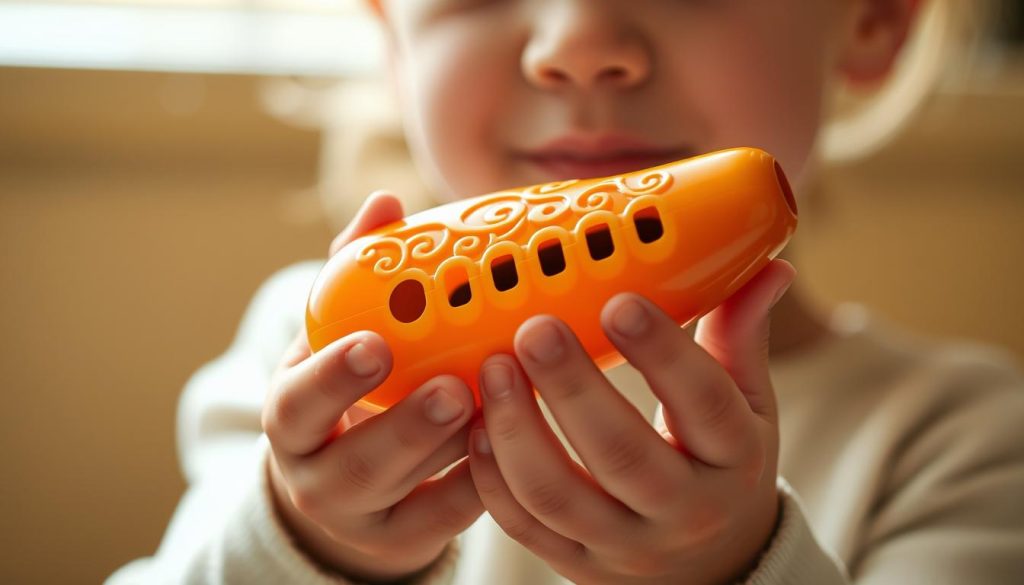
For children aged 8 to 12, choose quality plastic models such as Night by Noble. They are light, durable and respond consistently when a note begins, making them practical for school or outdoor use.
“A well-chosen first ocarina helps maintain motivation and makes regular practice easier.”
| Need | Recommendation | Why |
|---|---|---|
| Beginner | 12-hole transverse ocarina in alto C (A440) | Range, available learning materials, intuitive fingering |
| Small hands | Compact plastic model (Night by Noble) | Light, durable, easy to handle |
| Starter kit | Case, fingering chart, instruction book | Helps with the first steps and protects the instrument |
Quick tip: prioritize hand comfort and hole spacing over appearance. Brands such as STL Ocarina offer well-documented beginner models of good quality.
Ocarina for children: how to choose the right one
A good instrument stands out first for its stable tuning and comfortable grip.
Pitch accuracy (A440 tuning): check the tuning as soon as the instrument arrives. An out-of-tune instrument forces the student to compensate with their breath and distorts their developing ear.
Ergonomics: choose a lightweight instrument with comfortably spaced holes and a natural mouthpiece position. These features make it easier to hold and reduce fatigue.
Budget and quality: allow €35 to €60 for a reliable entry-level model from a recognized brand. STL Ocarina, Musique de Terre and Ocarina World (Stein-Focalink) provide documentation and clear information about returns.
Resources: include fingering charts and videos (Part’Ocarina, OCTalk, Gina Luciani, Tristan Laurens, STL) with the purchase to encourage independent learning.
“A reliable first choice prevents repeat purchases and makes music much more enjoyable.”
| Criterion | Action | Why |
|---|---|---|
| Tuning | Check A440 tuning with a tuner | Stable intonation |
| Ergonomics | Test hole spacing and weight | Comfort during longer sessions |
| Seller | Choose specialists | Documentation and reliable returns |
Four, six, ten or twelve holes, or multiple chambers: which should you choose for a child?
The number of holes often determines the learning curve and the range of sounds available.
A 4-hole model suits very young children playing nursery rhymes. Its range is very limited, and a child who wants to play more pieces may soon become frustrated.
A 6-hole model (John Taylor fingering) offers around 17 to 18 notes. It is compact and easy to carry. However, its fingering takes more memorization, and keeping high notes steady requires regular practice.
Why the 12-hole model remains the standard
A 12-hole model offers around 21 to 22 notes and a logical progression. Its fingering is more intuitive, transitions feel natural, and its range allows children to tackle folk music, game themes and film tunes within their first few months.
Multiple chambers: doubles and triples
Two- or three-chamber instruments extend the range to two octaves or more. They demand more breath, coordination and advanced technique.
- Asian fingering: maximum continuity between chambers.
- Pacchioni fingering: overlapping ranges for a consistent tone.
“An unsuitable first choice makes progress harder.”
In practice, match the number of holes to the child’s level. Save double- and triple-chamber instruments for children working with a teacher or already playing at an advanced level.
Range and tuning: alto, soprano, bass; C, G, F
Range directly affects a young musician’s options and playing comfort. The register determines the tone, volume and ease of playing in tune.
Alto C (AC/C3): the standard for learning
Alto C (AC/C3) remains the standard for beginners. This register covers a useful range, makes the C scale easier to read and limits fatigue from blowing.
Tip: some manufacturers call this instrument “Tenor in C.”
Soprano or bass: tone, volume and comfort
The soprano is higher and more piercing. Its compact size suits simple tunes, but it may demand greater finger agility.
The bass has a warm, full sound. It requires more breath, weighs more and often costs more.
Checking A440: stable intonation
Check A440 tuning as soon as the instrument arrives. Confirm that its stated fundamental note matches its actual register.
A simple tuner test lets you check note stability from low to high. Allow a few weeks to stabilize breath control and fingering on an alto C ocarina.
“A suitable register shortens the learning period and keeps motivation strong.”
| Register | Practical advantage | Drawback |
|---|---|---|
| Soprano | Bright tone, compact size, suitable for simple melodies | More piercing sound, demanding fingering, sometimes tiring |
| Alto C (AC/C3) | Balance, useful range across multiple octaves, ideal for beginners | Less piercing sound than the soprano |
| Bass | Warm, deep sound with a strong presence | Heavier and requires more breath and space |
Ocarinas tuned in G or F offer different sounds, but they slightly change some fingerings and positions.
If you are unsure, choose alto C and consult dedicated resources such as guides and reviews to check that the stated key matches the actual register.
Materials and tone: ceramic, plastic and clay ocarinas
The material strongly affects the instrument’s tone and durability. Consider where it will be used: at home, at school or outdoors.
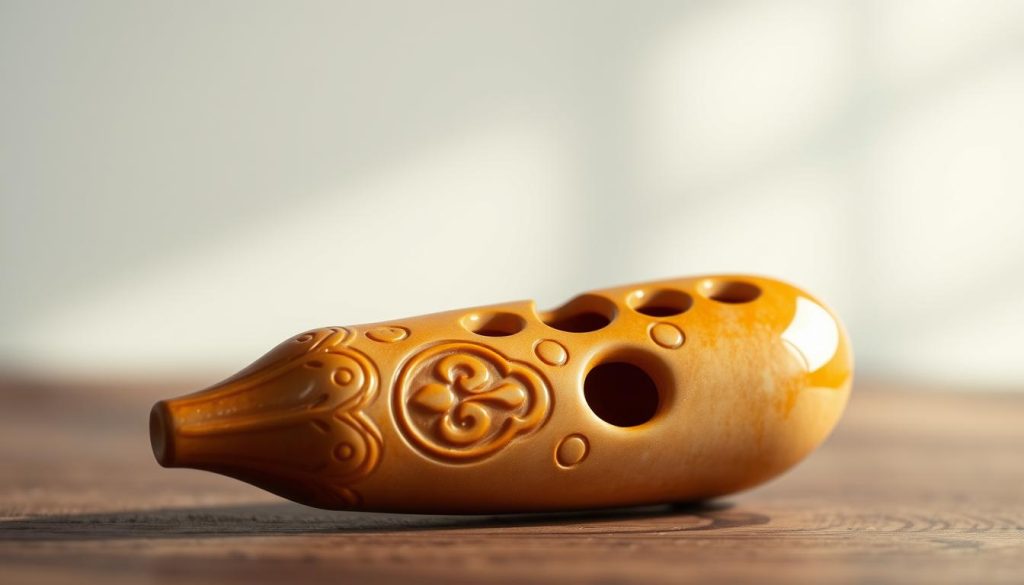
Ceramic: harmonic richness and a need for care
Ceramic offers a warm tone and good projection. Glazed models from Musique de Terre, Focalink/Stein or STL come in varied colors and produce a rich sound.
These ceramic ocarinas owe their rich sound to the material, but they remain fragile: protection and a hard case are recommended.
Plastic: durable and practical for school
Plastic is ideal for carrying around. Models such as Night by Noble are durable, affordable and offer acceptable pitch accuracy.
Always check quality: hole alignment, airtightness, a clean attack and careful finishing. A well-tuned instrument is better than an attractive object that is difficult to play.
“Good tuning always matters more than appearance.”
- Compare tone, projection and durability for the intended use.
- Get a case if you choose ceramic.
- Match the material to how carefully the child can handle the instrument.
Ergonomics for children: hole spacing, weight and grip
How an instrument feels in the hands often determines whether a young musician keeps playing. Check the distance between holes: if they are too far apart, the child cannot cover them properly and their hands tire quickly.
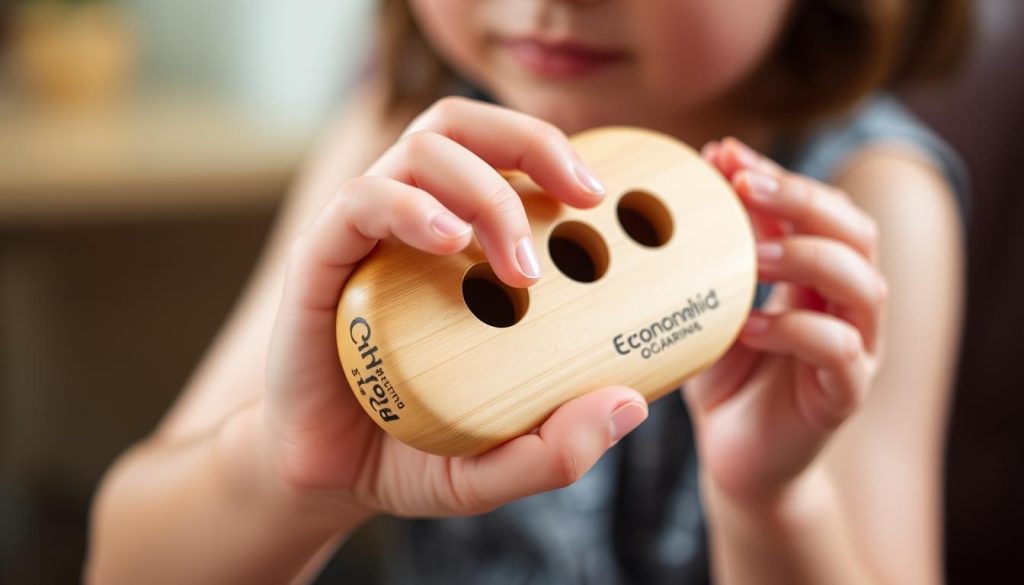
Weight affects posture. A heavy instrument pulls on the shoulders and shortens practice sessions. Compact plastic versions such as Night by Noble reduce strain and air leaks.
Try several models if possible. Otherwise, ask for their exact dimensions online. Some reputable brands publish diagrams showing hole spacing.
Check the shape of the mouthpiece and how consistently notes begin: these features make sound production easier and prevent early frustration.
- Choose compact ocarinas for small hands.
- Choose plastic if you want a light, durable instrument.
- Start with short, frequent sessions.
Film the child’s hands at first to spot air leaks and adjust finger position. Good ergonomic quality speeds up progress and keeps playing enjoyable.
Quality and reliability: how to avoid an out-of-tune instrument
A few simple checks when the instrument arrives protect your investment. Start by checking A440 tuning with a digital tuner.
Quick checks to make
- Check the A440 reference pitch.
- Play every note in a sequence, from low to high, without stopping.
- Watch the tuner for deviations and note any irregularities.
Signs of a defect
An unstable tone, notes that jump or a nasal sound often indicate unevenly drilled holes or poor adjustment.
- Film a short ascending and descending passage as evidence.
- Ask for a suitable fingering chart and, if possible, an A440 certificate.
- Keep the packaging and receipt for a few weeks to make a return easier.
“If one or two notes remain out of tolerance despite steady breath, contact the seller before deciding what to do.”
| Action | Purpose | Suggested time |
|---|---|---|
| A440 tuning check | Check pitch accuracy | 5 to 10 minutes |
| Continuous low-to-high test | Spot a poorly drilled hole | 10 minutes |
| Film the scale | Provide evidence for a return | 1 minute |
Caution: instruments sold on low-price marketplaces often have tuning and drilling problems. If in doubt, compare the instrument with a second reliable model or consult a trusted instruction book.
To learn more about choosing the number of holes and the recommended range, read this article.
Where to buy in France and online: sellers, delivery times and customs
Buying from a specialist makes choosing easier and protects your budget. Look for sellers that provide technical specifications, a return policy and information about A440 tuning.
Sellers in France
Musique de Terre is a French craft workshop: direct contact is useful for advice about ergonomics, hole spacing and hand size.
Ocarina World (a Stein/Focalink retailer) offers alto C models from around €42 and fast delivery to France.
International options
STL Ocarina has a large catalogue, but allow around two and a half weeks for delivery and possible customs charges. Spencer focuses on premium instruments. Dinda (Etsy) offers handmade pieces with variable availability.
Order the case and instruction book together to make shipping costs worthwhile. Always check the A440 specification, fundamental note and actual register before completing your purchase.
“Choosing established brands also makes resale easier if the child progresses.”
| Source | Advantage | Typical delivery time |
|---|---|---|
| France (Musique de Terre) | Workshop advice, fast delivery | A few days |
| Retailer (Ocarina World) | Stein/Focalink, affordable alto C | 1 week |
| International (STL Ocarina) | Wide selection, varied prices | About two and a half weeks (plus possible customs charges) |
Brands and models to consider for beginners
Good brands let children start without out-of-tune notes or frustration.
- STL Ocarina — wide selection (Water, Dragon, Phoenix, Zelda). STL Ocarina offers themed ranges that remain easy to play.
- Musique de Terre — French workshop, follow-up support and personalized advice.
- Stein-Focalink through Ocarina World — affordable ceramic alto C (around €42).
Practical models
Night by Noble (plastic): durable, light and ideal for school or outings.
Ceramic alto C: an educational standard with good tuning and a rich tone.
Water / Dragon (STL): varied finishes and colors without sacrificing ergonomics.
“Choose solid construction, a consistent attack and a clear fingering chart.”
A 12-hole model covers around 21 to 22 notes and often an octave and a half, enough for a broad repertoire. Before buying, compare the weight, dimensions and fingering chart to choose a model suited to the student’s level and hands.
Budget, bundles and accessories: buying wisely
A well-chosen bundle makes the first few weeks of practice easier.
As a guide, expect to pay around €35 to €60 for a quality plastic model. Ceramic instruments generally cost more, especially if a workshop has checked their A440 tuning.
Why choose a bundle? A padded case protects the instrument. A printed or PDF instruction book gives learning a structure. YouTube resources (OCTalk, Gina Luciani, Tristan Laurens, STL) and Part’Ocarina offer tablature and playlists to help sustain motivation.
Consider adding a tuner app, a soft cloth and a cleaning kit. These simple accessories extend the instrument’s life and help avoid later costs.
“A little extra spent at the outset often prevents an expensive replacement and hours of wasted effort.”
| Item | Advantage | Guide price |
|---|---|---|
| Tuned plastic model | Durable, light | €35 to €60 |
| Checked ceramic model | Rich tone, better feel | > €60 |
| Bundle (case + instruction book + chart) | Everything needed to start | €45 to €80 |
| Accessories (tuner, cloth) | Care and tuning | €5 to €20 |
Final tip: choose models sold by specialists who provide a fingering chart and an A440 certificate. This precaution protects your purchase and makes learning with a suitable method easier.
Care and first steps: instruction, breath and resources
A few simple, regular habits are enough to preserve tone and pitch accuracy.
Simple routine
After each session, tilt the instrument to drain moisture and wipe the mouthpiece. Let it air-dry away from heat.
For gentle cleaning, dab it with a cloth moistened with a diluted vinegar-and-water solution. Avoid prolonged immersion and harsh products. Protect the instrument from impacts and temperature changes.
Starting to play
Fifteen to twenty minutes of daily practice is enough: C scales, breath control and short melodies. This approach helps stabilize notes and develop the ear.
Work through the melody slowly, then increase the speed. Record yourself in audio or video to spot mistakes and save time.
Useful resources
- YouTube channels: OCTalk and Gosselink. STL Ocarina also has an extensive video library.
- Part’Ocarina offers tablature and methods suited to beginners.
“A wind instrument takes consistency and careful listening: relaxed posture and steady fingering over the holes make all the difference.”
| Action | Purpose | Frequency |
|---|---|---|
| Dry after playing | Prevent mold and corrosion | After every session |
| Gentle cleaning (vinegar and water) | Remove residue without damaging the instrument | Once a month |
| Recording | Track progress and refine the attack | Once a week |
Conclusion
This summary helps make the purchase the start of relaxed, lasting music practice.
Choose a 12-hole alto C tuned to A440, with ergonomics suited to the child’s hands and documentation included. Check every note with a tuner, from low to high, as soon as it arrives.
The alto’s range gives beginners more useful scales and octaves. Ceramic produces a rich tone but is fragile; plastic is durable and easy to carry. Night by Noble models, ceramic alto C ocarinas, and the Water and Dragon models are possible starting points.
Choose reliable brands such as STL Ocarina and Musique de Terre, or Ocarina World/Stein-Focalink, to avoid unpleasant surprises. Consider multichamber instruments and Pacchioni fingering later, once the child’s skills have developed.
Discover the best ocarinas and take things step by step: regular practice, enjoyment and a quality instrument support lasting progress.